
Rosy bonnet Mycena rosea
poisonousAlso poisonous; stronger smell of radish.
No matching species found.
Mycena pura (Pers.) Quél. · Mycenaceae
Where is it growing now? Open the map Mushroom alert for this species How the mushroom alert works
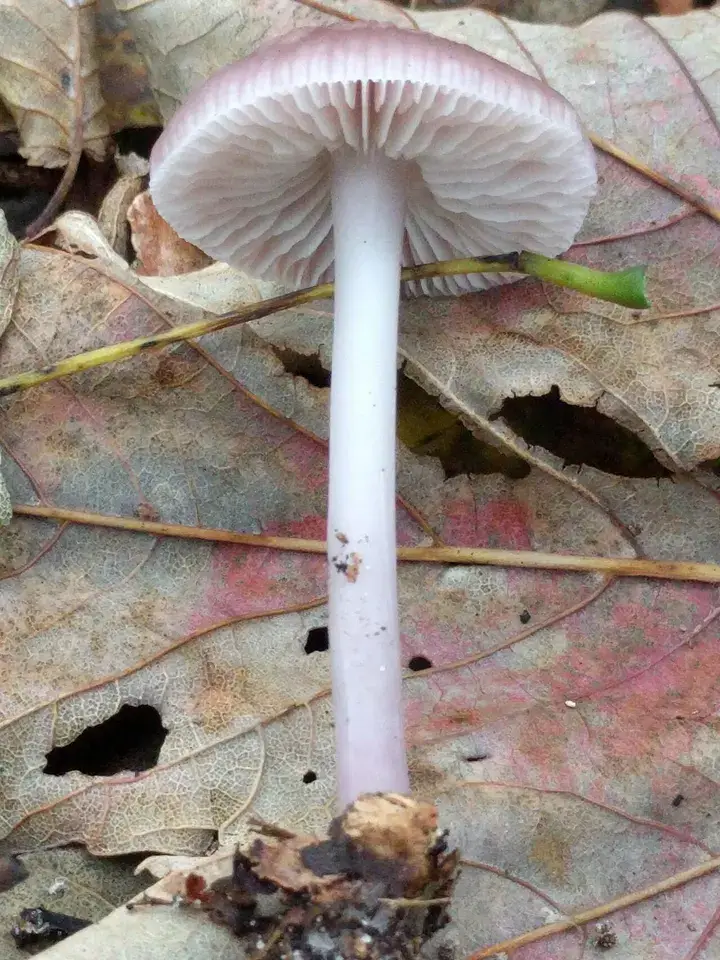
The lilac bonnet is a violet bonnet with a distinct smell of radish. It is poisonous and is often confused with the edible amethyst deceiver.
Lilac bonnet with a pink to violet cap; poisonous and easily mistaken for the edible amethyst deceiver.
Also poisonous; stronger smell of radish.
Grows in clusters, inedible.
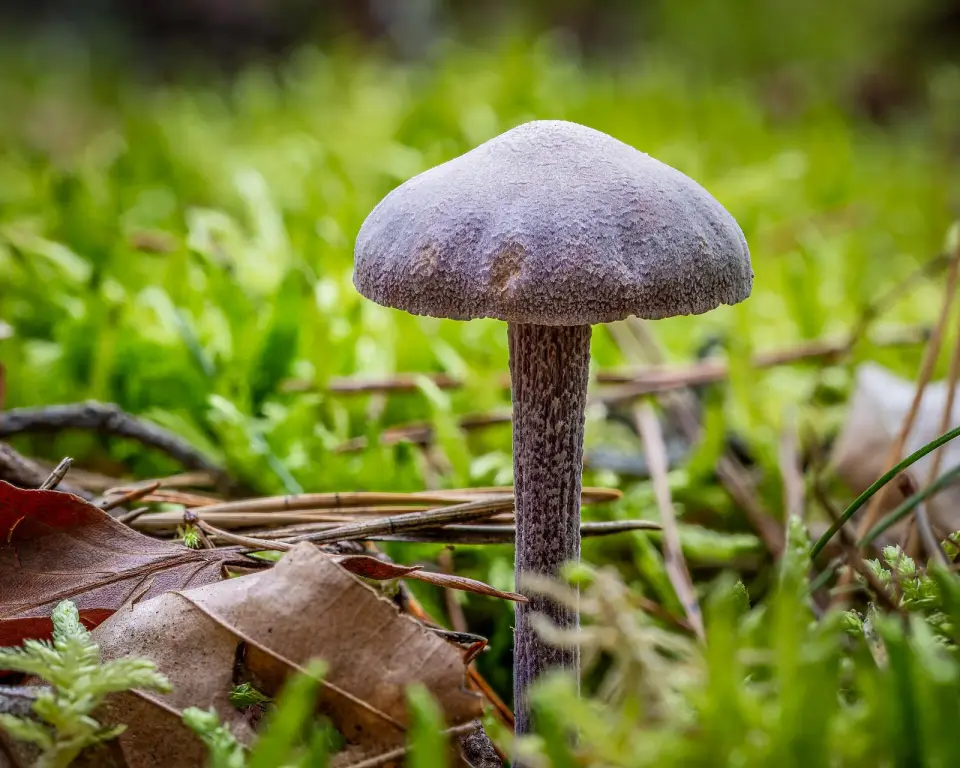
Edible; funnel-shaped, glossy, no smell of radish.
View on the map| Lilac bonnet | Rosy bonnet | Clustered bonnet | Amethyst deceiver | |
|---|---|---|---|---|
| Cap | violet, 2 to 6 cm, ribbed | pink | brown olive | amethyst-violet, funnel-shaped |
| Underside | violet-tinged gills | whitish gills | brown gills | violet-tinged gills |
| Stem | violet, smooth | slender | clustered | thin, glossy |
| Flesh | thin-fleshed, smell of radish | thin-fleshed | tough | fragile, odourless |
| Edibility | Poisonous | poisonous | inedible | edible |
Humus-rich woodland soils. Lowlands up to mountain woods.
Deciduous and coniferous woods, in the litter under trees.
possible good main season
Long season in the woods.
There are no records per region for this species yet. The country pages lead to all regions with a daily forecast.
Poison centre:
Emergency: 112 · 999
Poison centre:
Emergency: 112
Mushroom advice: DGfM: find a mushroom expert. Certified mushroom experts of the German Mycological Society (DGfM).
Collecting rules: Mushrooms that are not specially protected may be collected in small quantities for personal use unless a protected area or ban applies. Certain specially protected edible species (e.g. cep, chanterelle, birch bolete) may be collected in small quantities for personal use.
Poison centre:
Emergency: 112 · 144
Mushroom advice: Austrian Mycological Society (ÖMG): mushroom advice. Mushroom advice by the Austrian Mycological Society or regional services such as municipal market offices.
Collecting rules: At most 2 kg of mushrooms per person per day unless the forest owner has prohibited collecting; organised collecting events are prohibited. Additional state rules apply (collecting hours, closed seasons), e.g. Carinthia, Tyrol, Vorarlberg, Salzburg.
Not specially protected.
Salzburg: Collecting poisonous mushrooms is banned, except single specimens for identification.
No, it is poisonous.
The bonnet has a radially ribbed cap and smells of radish; the amethyst deceiver is funnel-shaped.
Call the emergency number and the poison centre.
No substitute for having your finds checked in person. No guarantee of accuracy. Updated: 17.10.2026.
