
Death cap Amanita phalloides
deadly poisonous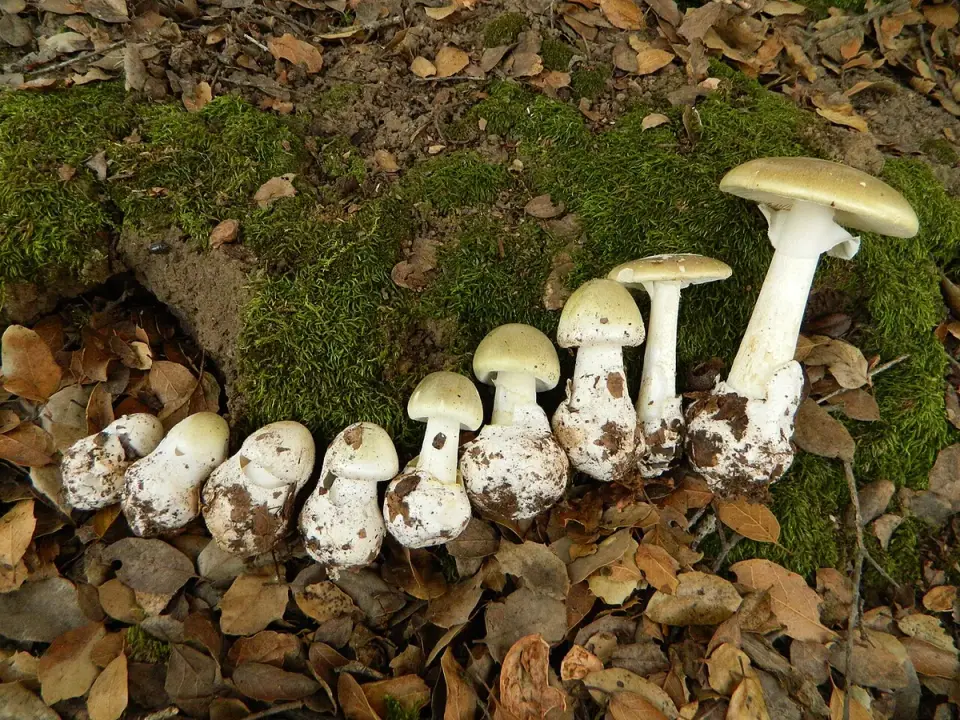

It has white gills, a ring and a bulbous volva at the base of the stem. Deadly poisonous.
View on the map
No matching species found.
Tricholoma frondosae Kalamees & Shchukin · Tricholomataceae
Where is it growing now? Open the map Mushroom alert for this species How the mushroom alert works
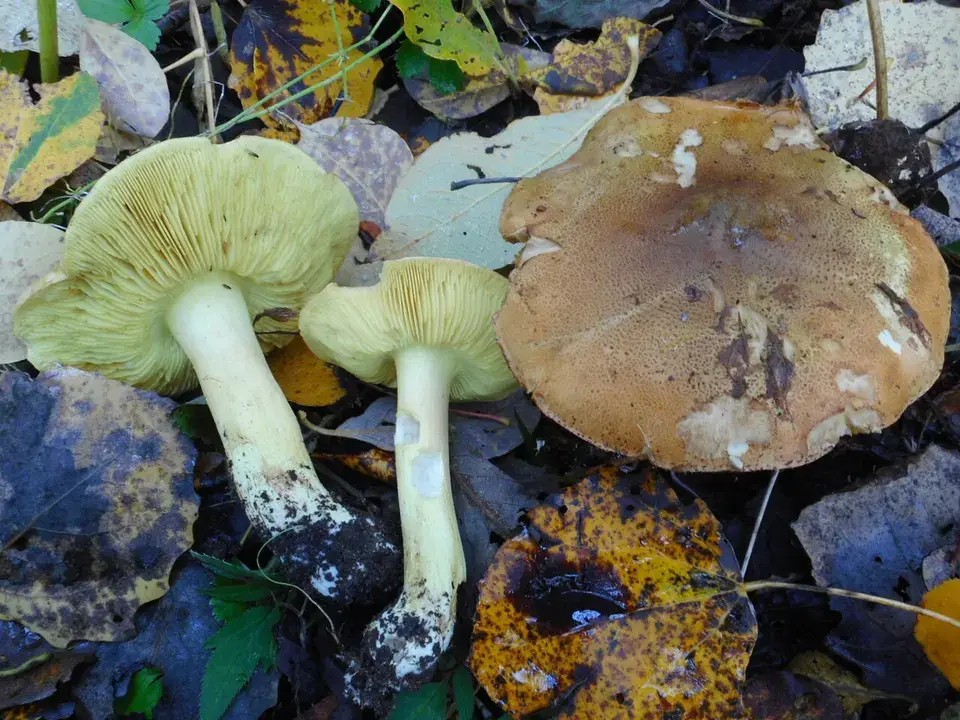
Tricholoma frondosae is a yellow-green knight with concentric scales under aspens and poplars. It belongs to the man on horseback complex and is poisonous, because repeated consumption can cause severe muscle damage.
A yellowish, scaly man on horseback under aspens and poplars, close to the pine form. It is considered poisonous like Tricholoma equestre and must not be eaten.
It has white gills, a ring and a bulbous volva at the base of the stem. Deadly poisonous.
View on the map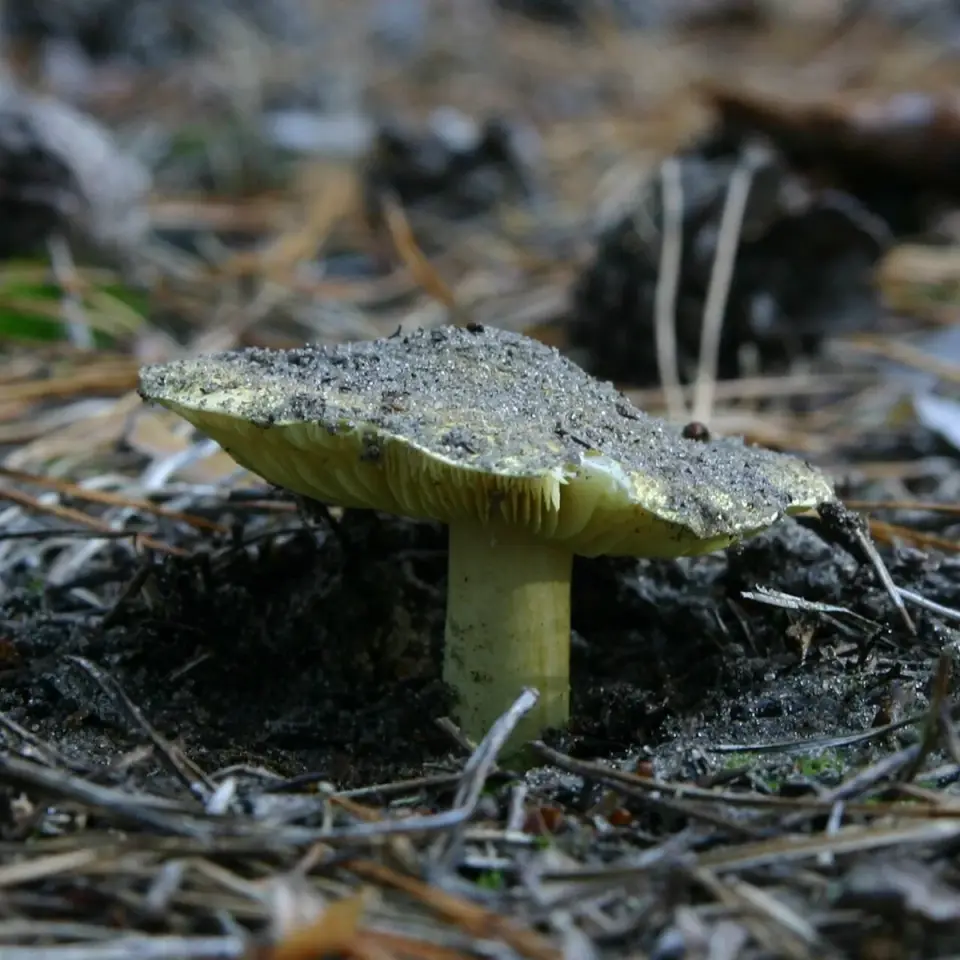
It grows under pine on sandy soils, is more sturdily built and is often more olive-yellow, without the strong cap scaling of the poplar form. Also poisonous.
View on the mapTricholoma portentosum has a grey cap with radial fibres and smells strongly mealy. Culinary value disputed.
Tricholoma populinum is grey to brownish, not yellow-green scaly; it is mostly listed as edible in the literature. Use only mushrooms identified with certainty.
| Tricholoma frondosae | Death cap | Man on horseback | Charbonnier | Tricholoma populinum | |
|---|---|---|---|---|---|
| Cap | yellow-green, scaly, 5 to 10 cm | olive-green to yellow-green | yellow-green, often smooth, 5 to 12 cm | grey, radially fibrous | grey to brownish, less yellow |
| Underside | sulphur-yellow gills | white gills | sulphur-yellow gills | whitish gills | whitish gills |
| Stem | slender, straw to sulphur-yellow | with a ring and volva | short, sturdy, yellow | grey-white | grey-white, central |
| Flesh | fleshy, mealy smell | fleshy | fleshy | mealy | firm |
| Edibility | Poisonous | deadly poisonous | poisonous | edible with restrictions | edible |
Humus-rich, nutrient-rich to chalky soils in floodplain and mixed woods. Lowlands up to low mountain ranges.
Aspen, poplars and other deciduous trees, occasionally spruce too.
possible good main season
Late summer and autumn in woods rich in deciduous trees.
There are no records per region for this species yet. The country pages lead to all regions with a daily forecast.
Poison centre:
Emergency: 112 · 999
Poison centre:
Emergency: 112
Mushroom advice: DGfM: find a mushroom expert. Certified mushroom experts of the German Mycological Society (DGfM).
Collecting rules: Mushrooms that are not specially protected may be collected in small quantities for personal use unless a protected area or ban applies. Certain specially protected edible species (e.g. cep, chanterelle, birch bolete) may be collected in small quantities for personal use.
Poison centre:
Emergency: 112 · 144
Mushroom advice: Austrian Mycological Society (ÖMG): mushroom advice. Mushroom advice by the Austrian Mycological Society or regional services such as municipal market offices.
Collecting rules: At most 2 kg of mushrooms per person per day unless the forest owner has prohibited collecting; organised collecting events are prohibited. Additional state rules apply (collecting hours, closed seasons), e.g. Carinthia, Tyrol, Vorarlberg, Salzburg.
Not specially protected.
Salzburg: Collecting poisonous mushrooms is banned, except single specimens for identification.
No. Tricholoma frondosae is considered poisonous like the man on horseback under pine. Do not collect it for eating.
It grows under aspens and poplars, is more slender and bears conspicuous yellowish-brown cap scales. The man on horseback mostly grows under pine on sand.
No. Tricholoma populinum is grey to brownish and a different species. Tricholoma frondosae is yellow-green and poisonous.
Call the emergency number and the poison centre immediately, even if there are no symptoms yet.
No substitute for having your finds checked in person. No guarantee of accuracy. Updated: 17.10.2026.
