
European destroying angel Amanita virosa
deadly poisonous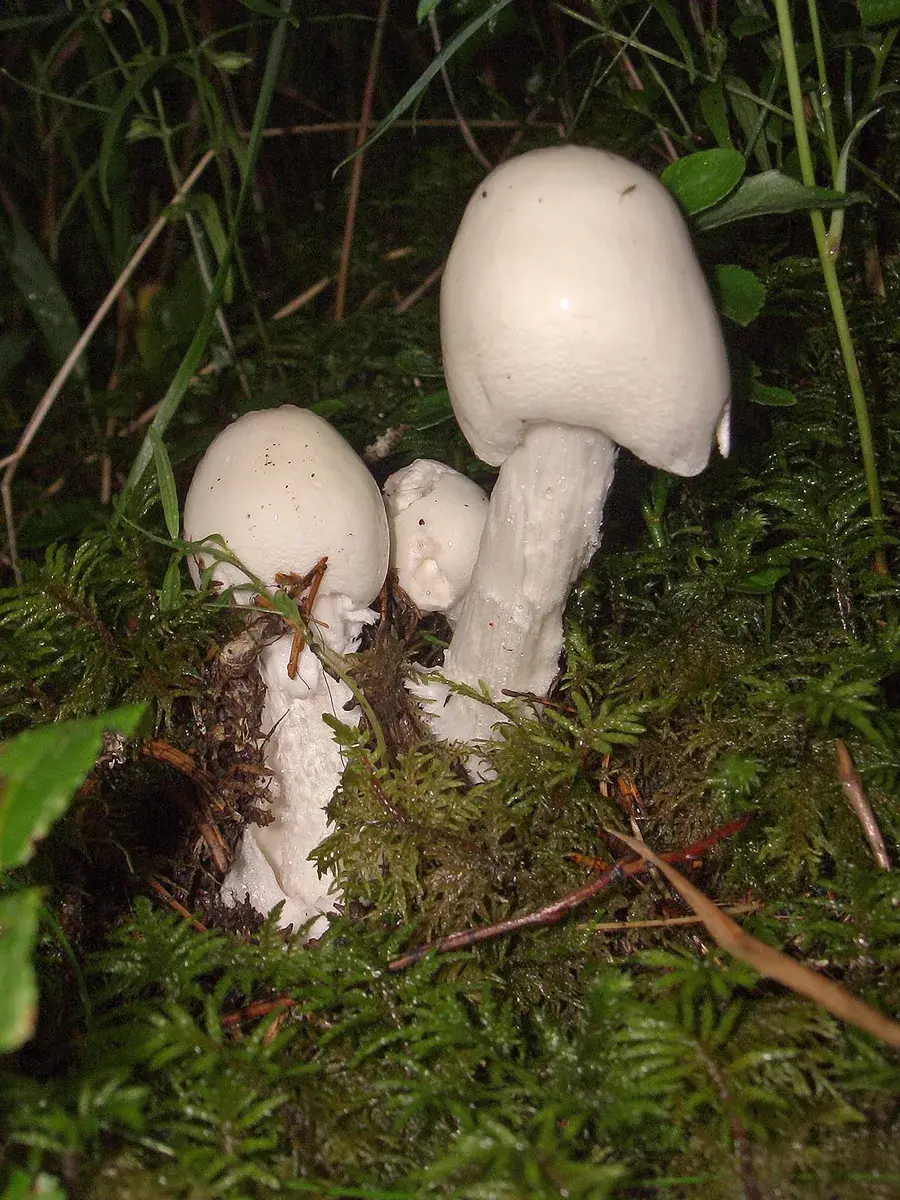

It has a smooth cap without warts, with a membranous ring and a sac-like volva. Deadly poisonous.
View on the map
No matching species found.
Amanita solitaria (Bull.) Fr. · Amanitaceae
Where is it growing now? Open the map Mushroom alert for this species How the mushroom alert works
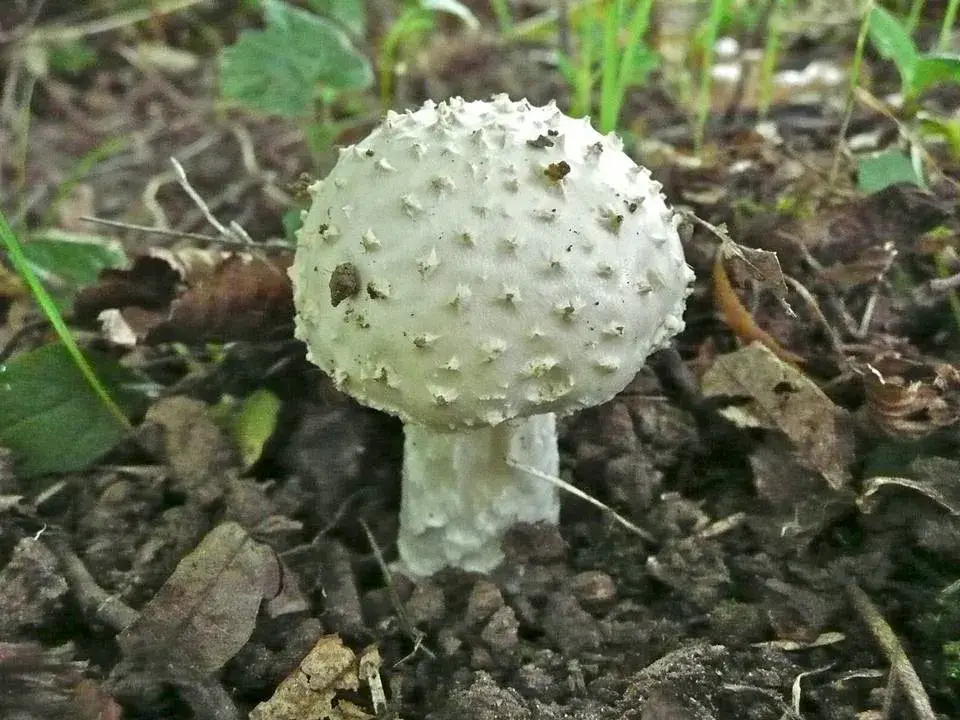
Amanita solitaria is a large, white Amanita with pyramid-shaped warts on the cap and thick, lengthwise ribbed ridges on the stem. It is poisonous and must not be eaten.
A large, white Amanita with thick, lengthwise ribbed ridges on the stem and pointed veil remnants on the cap. Poisonous and easily mistaken for edible Amanitas or deadly destroying angels.
It has a smooth cap without warts, with a membranous ring and a sac-like volva. Deadly poisonous.
View on the map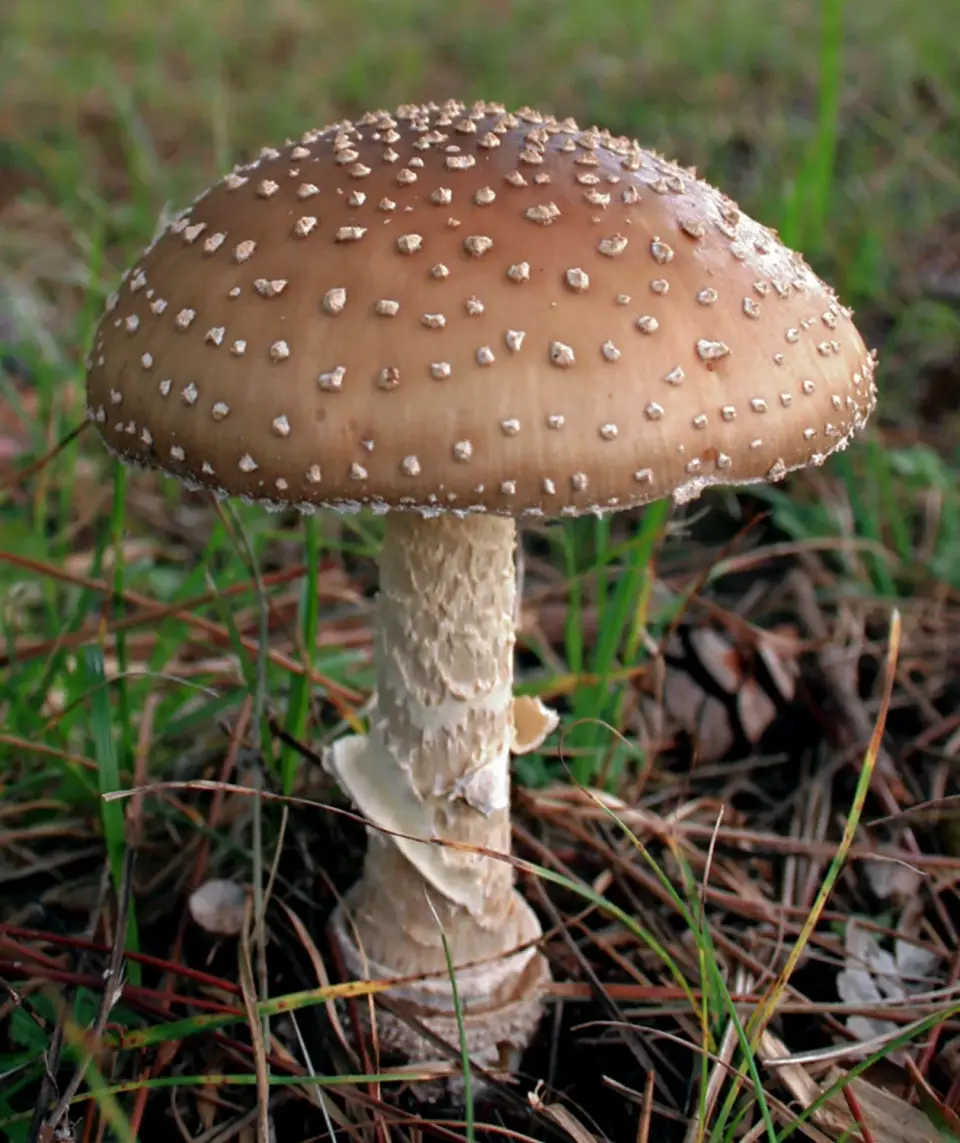
Brown, scaly cap and slimmer stem; contains muscarine. Poisonous.
View on the map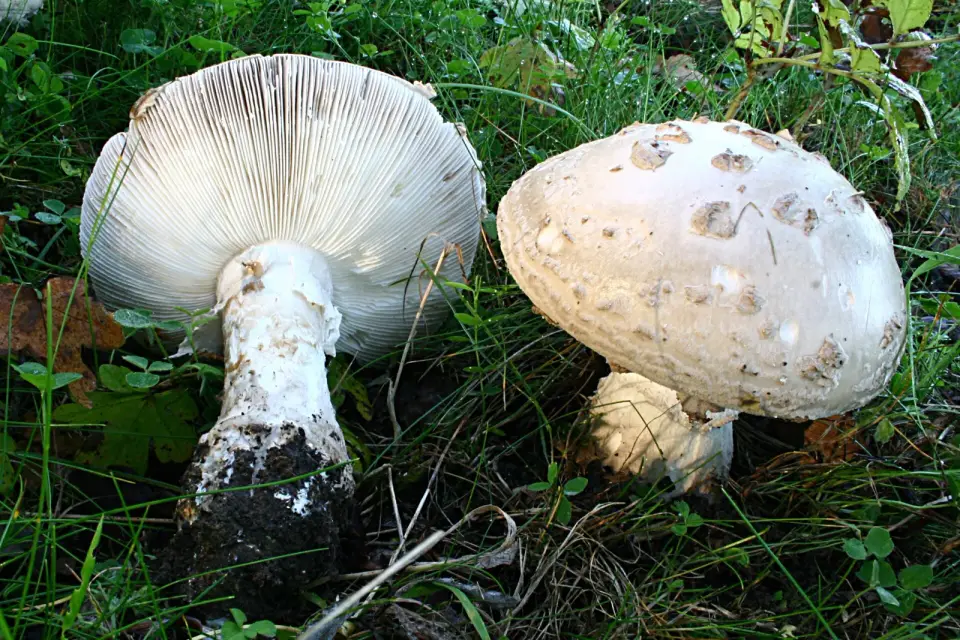
It has flat, grey veil patches and fringed veil remnants on the cap margin, not pointed warts. Edible with restrictions, for the experienced only.
View on the map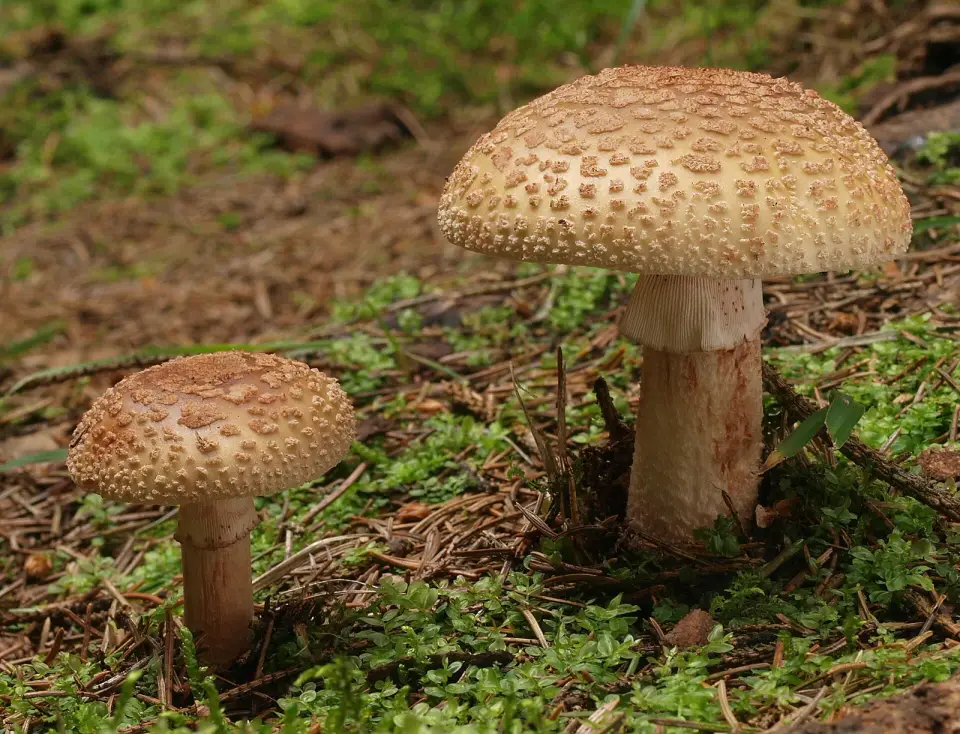
It is brownish and turns reddish brown when cut. Edible.
View on the map| Amanita solitaria | European destroying angel | Panther cap | Warted amanita | Blusher | |
|---|---|---|---|---|---|
| Cap | white, pyramid-shaped warts, 8 to 20 cm | white, smooth, conical | brown scaly, 5 to 12 cm | grey-white with flat patches | brownish, 8 to 15 cm |
| Underside | white gills | white gills | white gills | white gills | whitish to pink gills |
| Stem | thick, ring, ribbed volva | membranous ring, sac-like volva | slender, hanging ring | ring, rooting bulb | ring, stem turns red |
| Flesh | firm, white | white | white | firm, white | turns brown |
| Edibility | Poisonous | deadly poisonous | poisonous | edible with restrictions | edible |
Lime-rich to neutral forest soils. Lowlands to mountain forest.
Deciduous trees, especially oak and beech.
possible good main season
Autumn in lime-rich deciduous woods.
There are no records per region for this species yet. The country pages lead to all regions with a daily forecast.
Poison centre:
Emergency: 112 · 999
Poison centre:
Emergency: 112
Mushroom advice: DGfM: find a mushroom expert. Certified mushroom experts of the German Mycological Society (DGfM).
Collecting rules: Mushrooms that are not specially protected may be collected in small quantities for personal use unless a protected area or ban applies. Certain specially protected edible species (e.g. cep, chanterelle, birch bolete) may be collected in small quantities for personal use.
Poison centre:
Emergency: 112 · 144
Mushroom advice: Austrian Mycological Society (ÖMG): mushroom advice. Mushroom advice by the Austrian Mycological Society or regional services such as municipal market offices.
Collecting rules: At most 2 kg of mushrooms per person per day unless the forest owner has prohibited collecting; organised collecting events are prohibited. Additional state rules apply (collecting hours, closed seasons), e.g. Carinthia, Tyrol, Vorarlberg, Salzburg.
Not specially protected.
Salzburg: Collecting poisonous mushrooms is banned, except single specimens for identification.
Yes, it is considered poisonous and should not be eaten.
Most likely for the warted amanita, which is edible with restrictions, or for deadly poisonous destroying angels without warts on the cap.
Call the emergency number and the poison centre immediately; keep the mushroom remains.
No substitute for having your finds checked in person. No guarantee of accuracy. Updated: 17.10.2026.


