
Grey knight Tricholoma terreum
edible with restrictions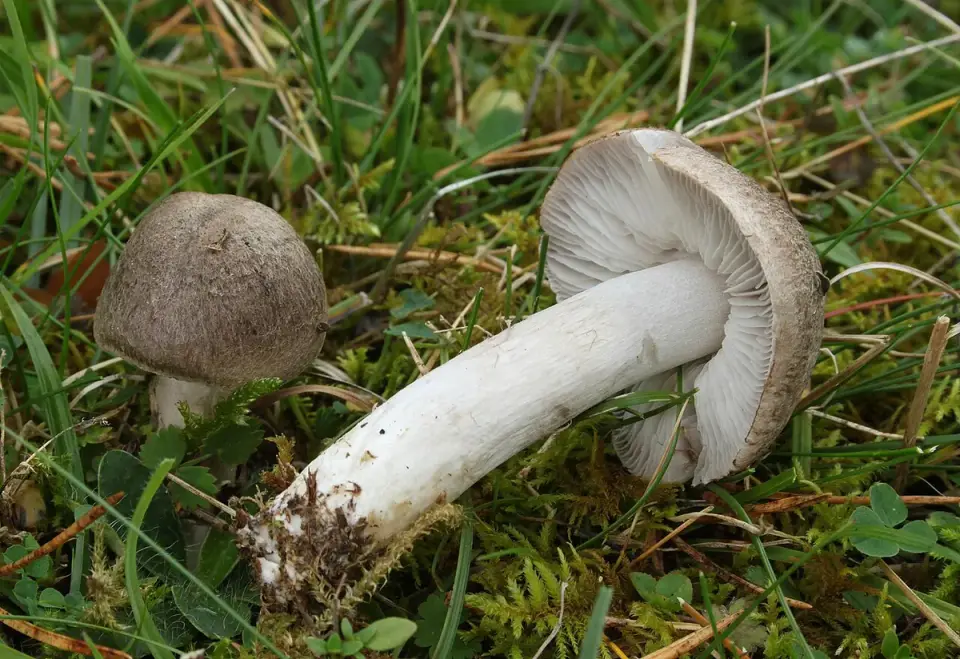

It has a grey, felty cap without pink tones and no banded stem.
View on the map
No matching species found.
Lepiota brunneoincarnata Chodat & C.Martín · Agaricaceae
Where is it growing now? Open the map Mushroom alert for this species How the mushroom alert works
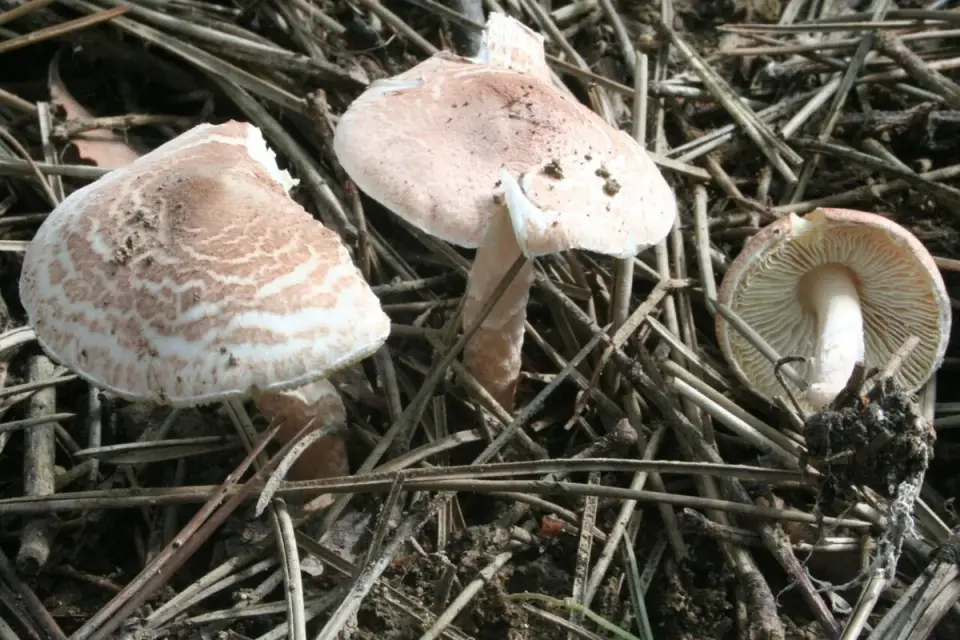
The deadly dapperling is a small parasol with reddish-brown scales on a pink-brown background and a banded stem. It grows on lawns and in parks and is deadly poisonous.
Contains amatoxins like the death cap. Never eat small parasols.
It has a grey, felty cap without pink tones and no banded stem.
View on the map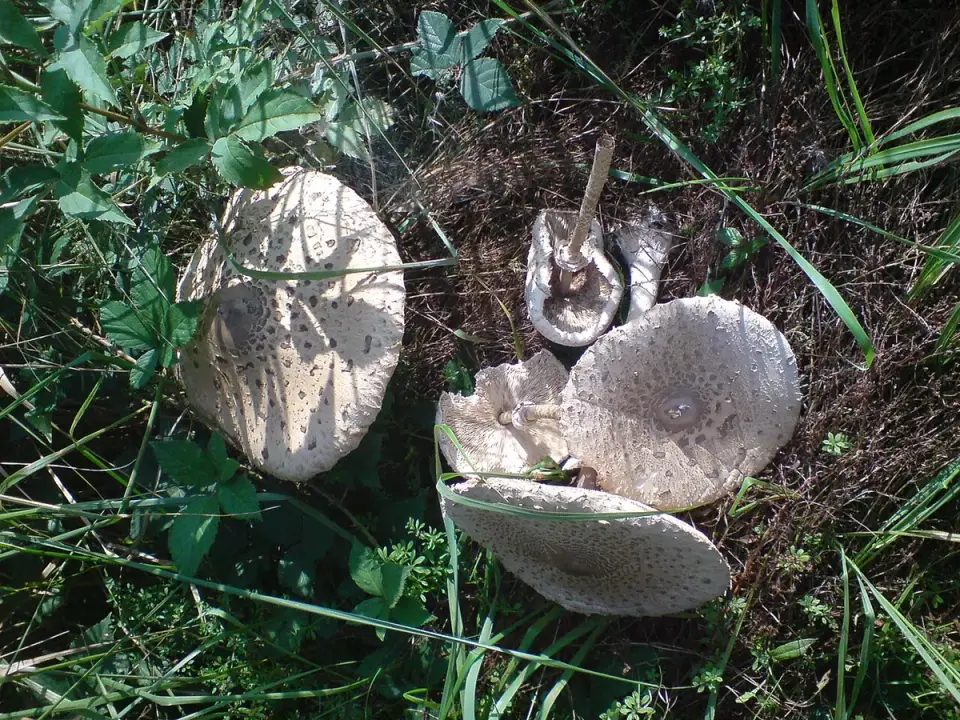
Young parasols are much larger, have a snakeskin-patterned stem and a movable ring; collect only caps larger than 10 cm.
View on the map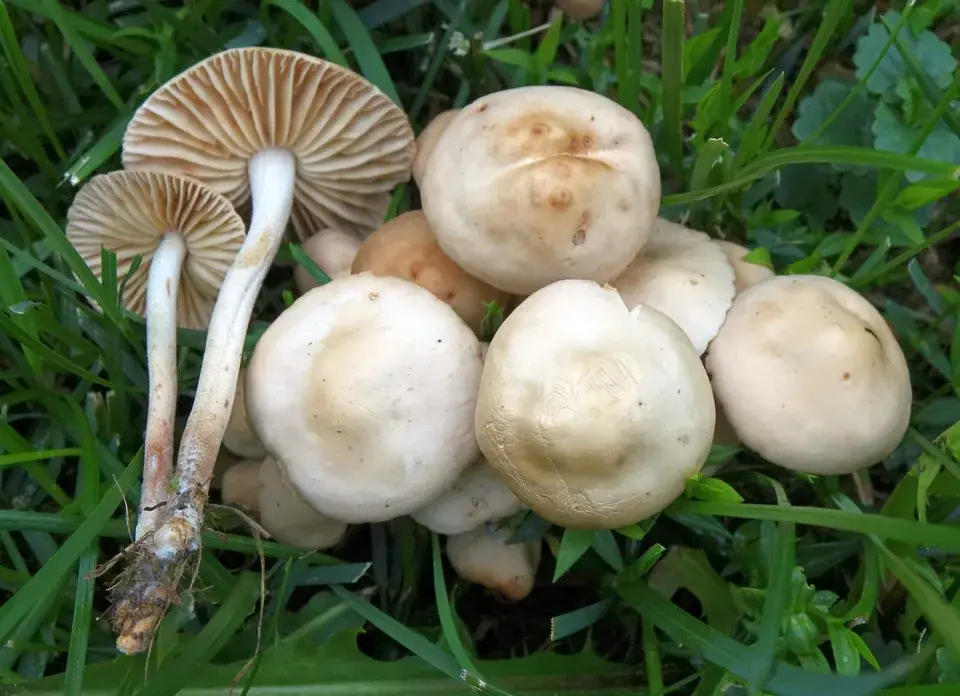
It has a smooth, scaleless cap and widely spaced gills.
View on the mapGrassy, nutrient-rich soils. Warmer, lower sites; in Europe more common in the south.
No tree partner; lawns, parks, gardens, roadsides.
possible good main season
There are no records per region for this species yet. The country pages lead to all regions with a daily forecast.
Poison centre:
Emergency: 112 · 999
Poison centre:
Emergency: 112
Mushroom advice: DGfM: find a mushroom expert. Certified mushroom experts of the German Mycological Society (DGfM).
Collecting rules: Mushrooms that are not specially protected may be collected in small quantities for personal use unless a protected area or ban applies. Certain specially protected edible species (e.g. cep, chanterelle, birch bolete) may be collected in small quantities for personal use.
Poison centre:
Emergency: 112 · 144
Mushroom advice: Austrian Mycological Society (ÖMG): mushroom advice. Mushroom advice by the Austrian Mycological Society or regional services such as municipal market offices.
Collecting rules: At most 2 kg of mushrooms per person per day unless the forest owner has prohibited collecting; organised collecting events are prohibited. Additional state rules apply (collecting hours, closed seasons), e.g. Carinthia, Tyrol, Vorarlberg, Salzburg.
Not specially protected.
Salzburg: collecting poisonous mushrooms is banned.
Red List Germany: Least concern
No, it is deadly poisonous. Contains amatoxins like the death cap. Never eat small parasols. Even a suspicion that you ate it is an emergency: call the emergency number and the poison centre immediately (numbers for your country below).
In Central Europe the season runs from July to October. Partner and habitat: no tree partner; lawns, parks, gardens, roadsides. Soil: grassy, nutrient-rich soils. Altitude: warmer, lower sites; in Europe more common in the south.
The most important one to rule out is the grey knight (Tricholoma terreum, edible with restrictions): it has a grey, felty cap without pink tones and no banded stem. Other lookalikes: parasol mushroom, fairy ring champignon.
No substitute for having your finds checked in person. No guarantee of accuracy. Updated: 17.10.2026.

