
Deadly dapperling Lepiota brunneoincarnata
deadly poisonous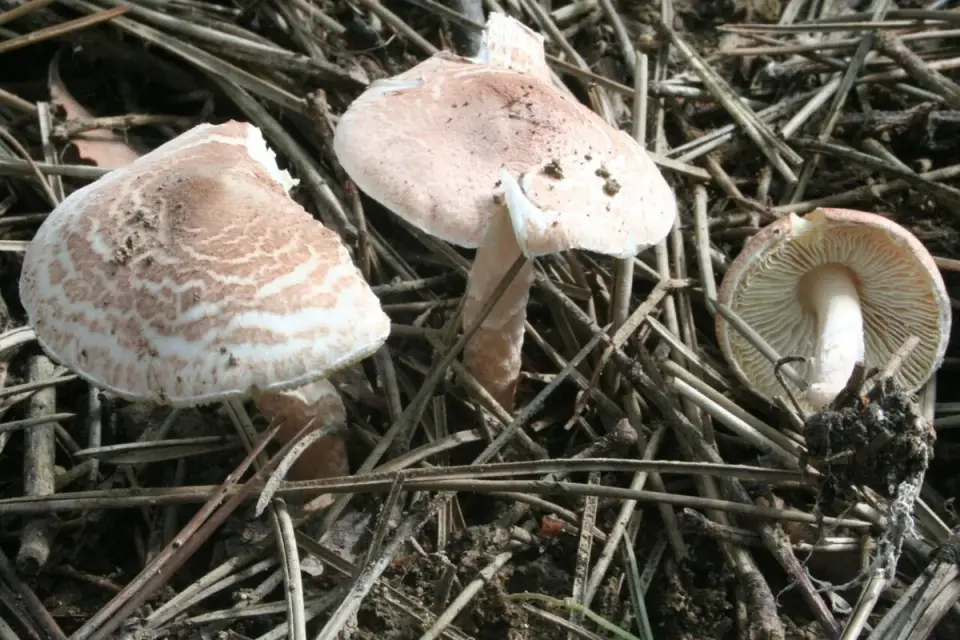

It has a ring, a scaly, ochre to red-brown cap and crowded gills. The fairy ring champignon has widely spaced gills and no ring. Deadly poisonous, despite its small size.
View on the map
No matching species found.
Marasmius oreades (Bolton) Fr. · Marasmiaceae
Also: Fairy ring mushroom, Scotch bonnet
Where is it growing now? Open the map Mushroom alert for this species How the mushroom alert works
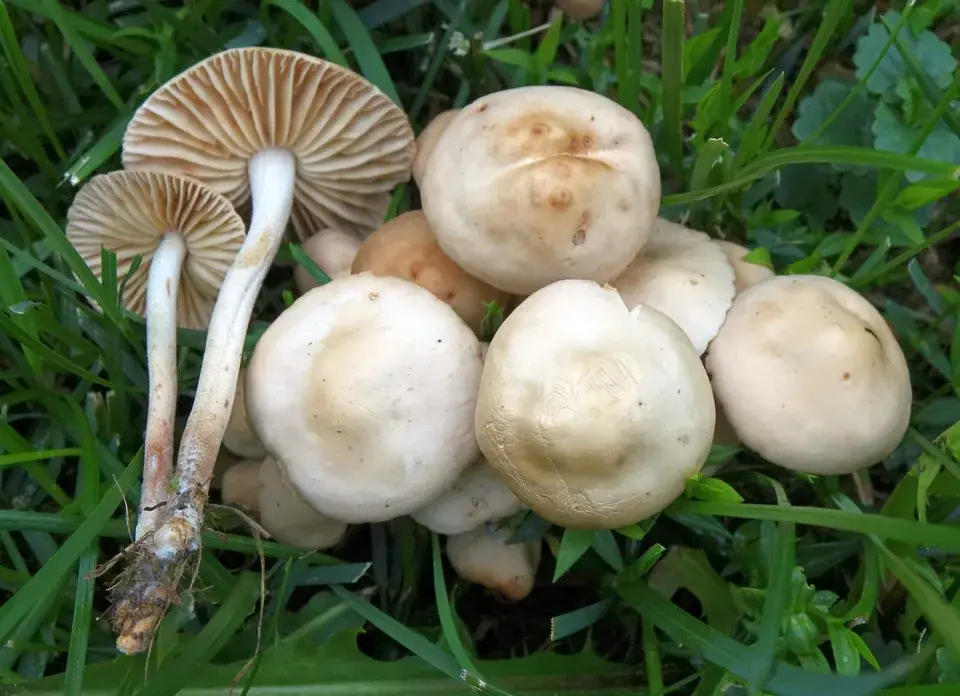
The fairy ring champignon is a small meadow mushroom with a cream to buff cap, widely spaced gills and a tough, elastic stem. It likes to grow in rings and rows on meadows, lawns and path verges and is a popular seasoning mushroom. It contains small amounts of hydrogen cyanide (prussic acid) and must therefore be cooked thoroughly.
The fairy ring champignon is a small, edible mushroom that often grows in fairy rings on meadows. It has poisonous look-alikes, including whitish funnel caps (poisonous) and the deadly dapperling (deadly poisonous). So identify it with certainty.
It has a ring, a scaly, ochre to red-brown cap and crowded gills. The fairy ring champignon has widely spaced gills and no ring. Deadly poisonous, despite its small size.
View on the map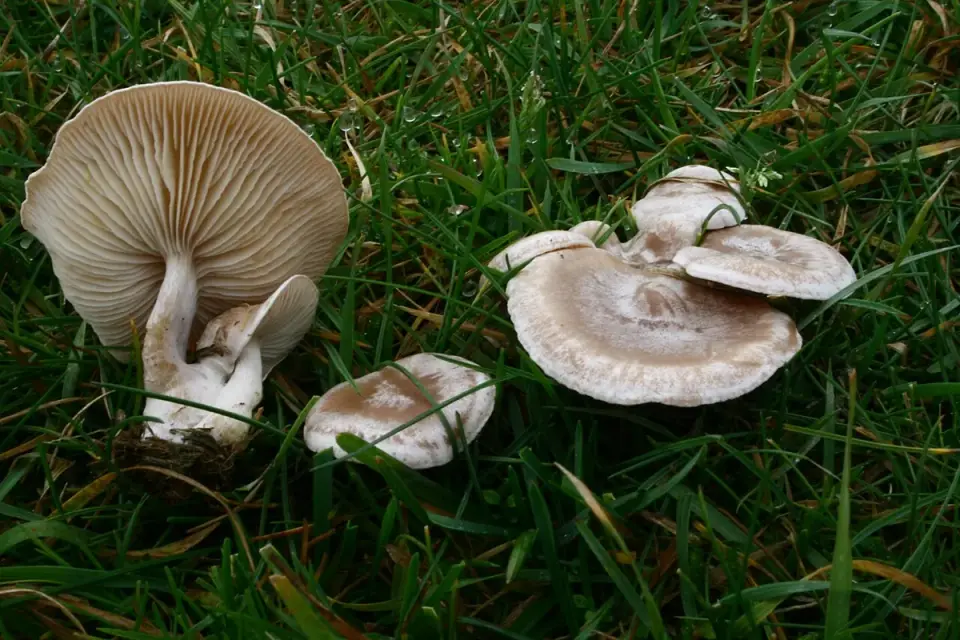
It is grey-brown to whitish, with decurrent, more crowded gills and a mealy smell. The fairy ring champignon has free, widely spaced gills. Poisonous, contains muscarine.
View on the mapAlso pale, with no tough stem and with decurrent gills. It often grows in similar places to the fairy ring champignon. Poisonous, contains muscarine.
View on the map| Fairy ring champignon | Deadly dapperling | Fool's funnel | Clitocybe quisquiliarum | |
|---|---|---|---|---|
| Cap | 2 to 6 cm, cream to buff, with a bump | flesh-brown, with fine scales | grey-brown to whitish, flat to dented | pale brown to whitish, funnel-shaped |
| Underside | widely spaced, cream-coloured gills | crowded, white gills | decurrent, more crowded gills | decurrent, more crowded gills |
| Stem | slender, tough and elastic, no ring | with a ring zone, not tough and elastic | slender, not tough and elastic | slender, soft, not tough and elastic |
| Flesh | thin-fleshed, tough | thin-fleshed, tender | soft, thin-fleshed | soft, thin-fleshed |
| Edibility | Edible | deadly poisonous | poisonous | poisonous |
Meadows, lawns, pastures and path verges, often in fairy rings. No reliable information.
None; it grows as a saprotroph on grassland.
possible good main season
Rough estimate; the fruiting period depends on the weather. After rain, several flushes often appear.
There are no records per region for this species yet. The country pages lead to all regions with a daily forecast.
How good are the chances of finding this species where you are right now? We calculate it from weather, soil moisture, altitude and forest at your location.
Poison centre:
Emergency: 112 · 999
Poison centre:
Emergency: 112
Mushroom advice: DGfM: find a mushroom expert. Certified mushroom experts of the German Mycological Society (DGfM).
Collecting rules: Mushrooms that are not specially protected may be collected in small quantities for personal use unless a protected area or ban applies. Certain specially protected edible species (e.g. cep, chanterelle, birch bolete) may be collected in small quantities for personal use.
Poison centre:
Emergency: 112 · 144
Mushroom advice: Austrian Mycological Society (ÖMG): mushroom advice. Mushroom advice by the Austrian Mycological Society or regional services such as municipal market offices.
Collecting rules: At most 2 kg of mushrooms per person per day unless the forest owner has prohibited collecting; organised collecting events are prohibited. Additional state rules apply (collecting hours, closed seasons), e.g. Carinthia, Tyrol, Vorarlberg, Salzburg.
Not specially protected.
Use only the caps with the top of the stem; remove the tough stem. Good for seasoning sauces, soups and pan dishes. It can also be fried briefly, but do not undercook it. Cook for at least 15 minutes.
Dries well; dried mushrooms are used as a seasoning mushroom. Contains small amounts of hydrogen cyanide (prussic acid), so cook thoroughly. Use only specimens identified with certainty. The deadly dapperling is deadly poisonous.
Yes, it is considered a good seasoning mushroom. It contains small amounts of hydrogen cyanide (prussic acid) and must therefore be cooked thoroughly. It must not be eaten raw.
By the small, cream to buff cap, the widely spaced gills and the tough, elastic stem. It often grows in rings on meadows.
With poisonous funnel caps and the deadly dapperling, which is deadly poisonous. These have more crowded gills and no tough, elastic stem.
No substitute for having your finds checked in person. No guarantee of accuracy. Updated: 17.10.2026.
