
Auriculariopsis ampla
inedible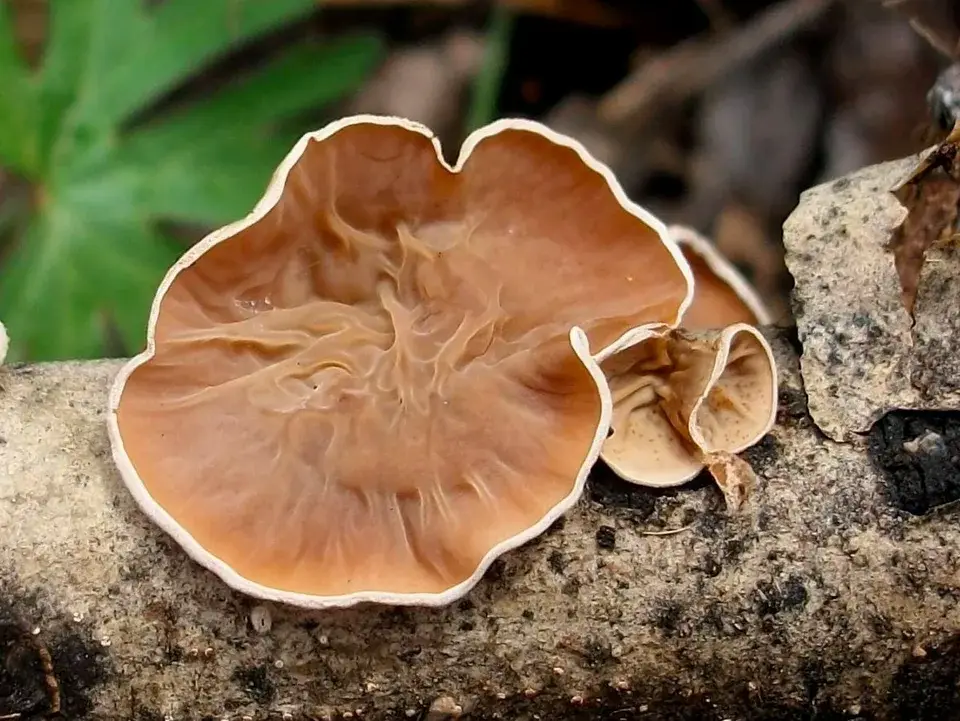

It is cup-shaped and has no gills.
View on the map
No matching species found.
Schizophyllum commune Fr. · Schizophyllaceae
Also: Gillies, Split-gills
Where is it growing now? Open the map Mushroom alert for this species How the mushroom alert works
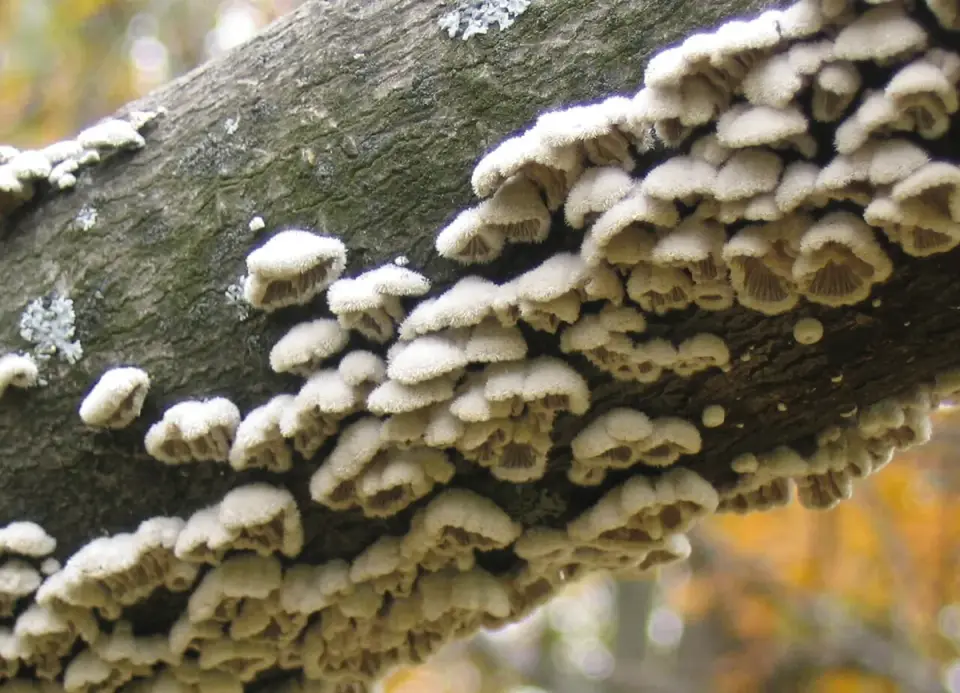
The splitgill is a small, fan-shaped, felty grey-white wood fungus with gills that are split lengthways. It is found worldwide and grows all year round on dead wood.
Not an edible mushroom in Central Europe; very rarely it causes infections in people with weakened immune systems.
It is cup-shaped and has no gills.
View on the map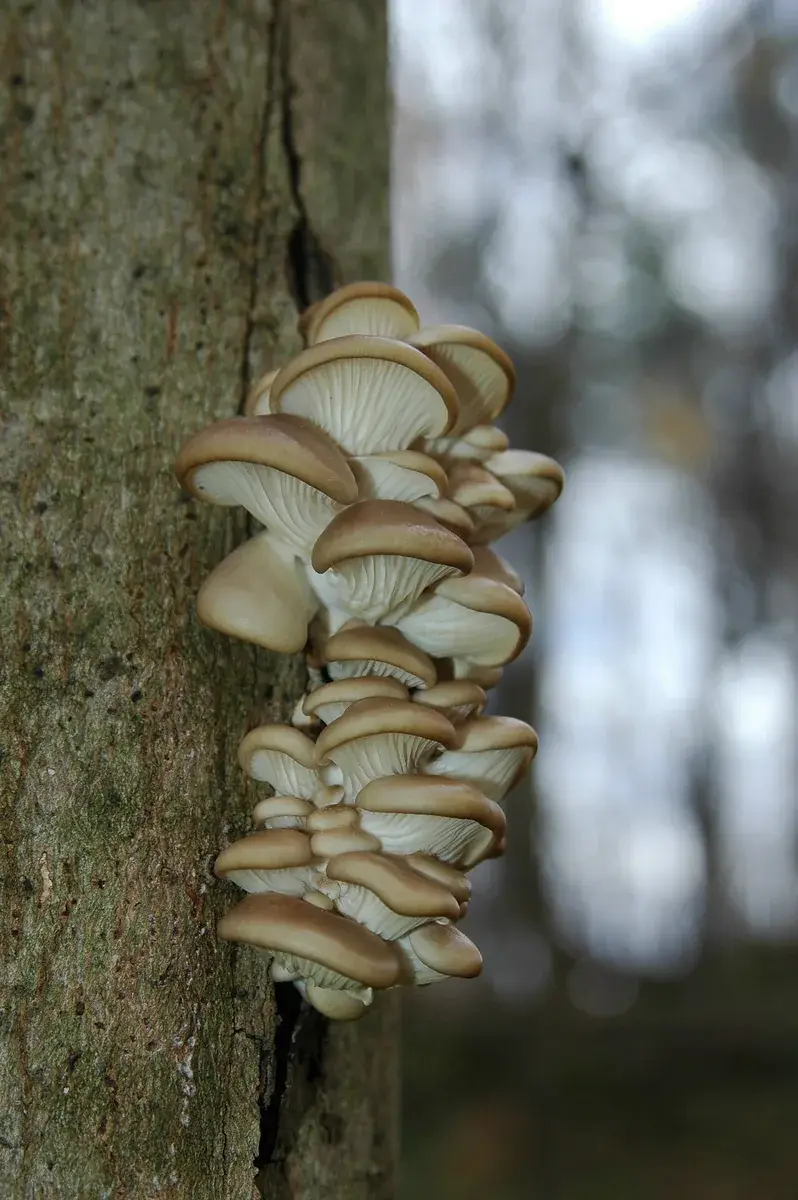
It is much larger, has unsplit gills and a smooth cap skin.
View on the mapWood; sunny, dry spots. From the lowlands to the hills and mountains.
Dead broadleaved wood, less often conifer wood, also worked timber and straw bales.
possible good main season
All year round; the fruiting bodies survive dry spells.
There are no records per region for this species yet. The country pages lead to all regions with a daily forecast.
Poison centre:
Emergency: 112 · 999
Poison centre:
Emergency: 112
Mushroom advice: DGfM: find a mushroom expert. Certified mushroom experts of the German Mycological Society (DGfM).
Collecting rules: Mushrooms that are not specially protected may be collected in small quantities for personal use unless a protected area or ban applies. Certain specially protected edible species (e.g. cep, chanterelle, birch bolete) may be collected in small quantities for personal use.
Poison centre:
Emergency: 112 · 144
Mushroom advice: Austrian Mycological Society (ÖMG): mushroom advice. Mushroom advice by the Austrian Mycological Society or regional services such as municipal market offices.
Collecting rules: At most 2 kg of mushrooms per person per day unless the forest owner has prohibited collecting; organised collecting events are prohibited. Additional state rules apply (collecting hours, closed seasons), e.g. Carinthia, Tyrol, Vorarlberg, Salzburg.
Not specially protected.
Salzburg: collecting inedible mushrooms is banned.
Red List Germany: Least concern
Tough and with no food value. German Wikipedia describes it as non-poisonous and used as an edible mushroom in Mexico.
Do not collect it to eat.
No, it is regarded as inedible. Not an edible mushroom in Central Europe; very rarely it causes infections in people with weakened immune systems.
It can be found all year round. All year round; the fruiting bodies survive dry spells. Partner and habitat: dead broadleaved wood, less often conifer wood, also worked timber and straw bales. Soil: wood; sunny, dry spots. Altitude: from the lowlands to the hills and mountains.
The most important one to rule out is Auriculariopsis ampla (inedible): it is cup-shaped and has no gills. Other lookalikes: oyster mushroom.
No substitute for having your finds checked in person. No guarantee of accuracy. Updated: 17.10.2026.
