
Jack-o'-lantern mushroom Omphalotus olearius
poisonous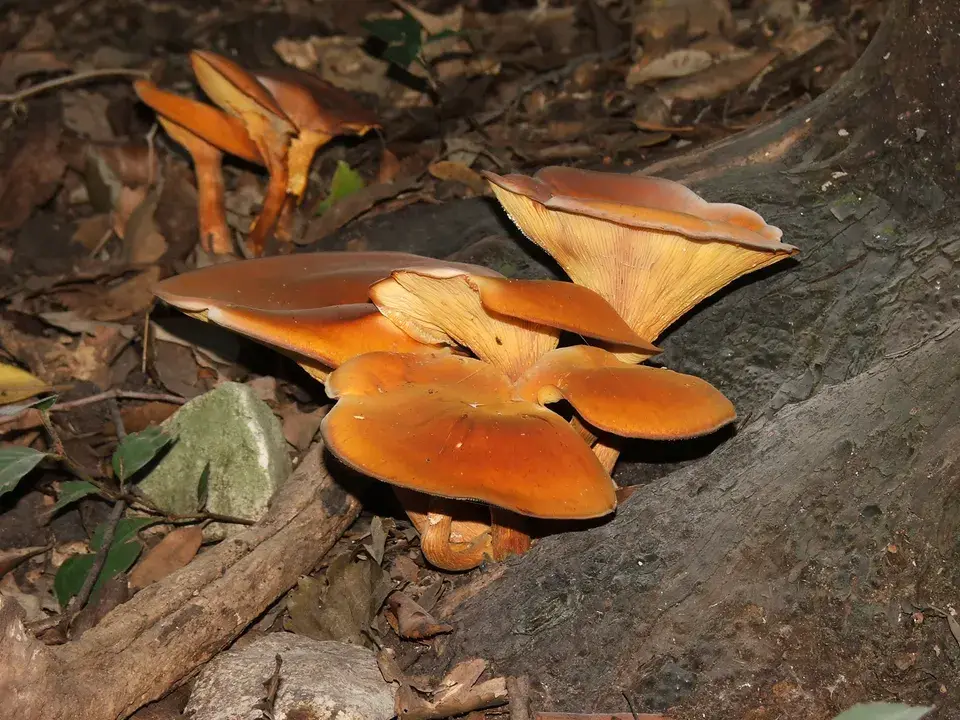

It grows in clusters on broadleaved wood and is larger.
View on the map
No matching species found.
Hygrophoropsis aurantiaca (Wulfen) Maire · Hygrophoropsidaceae
Where is it growing now? Open the map Mushroom alert for this species How the mushroom alert works
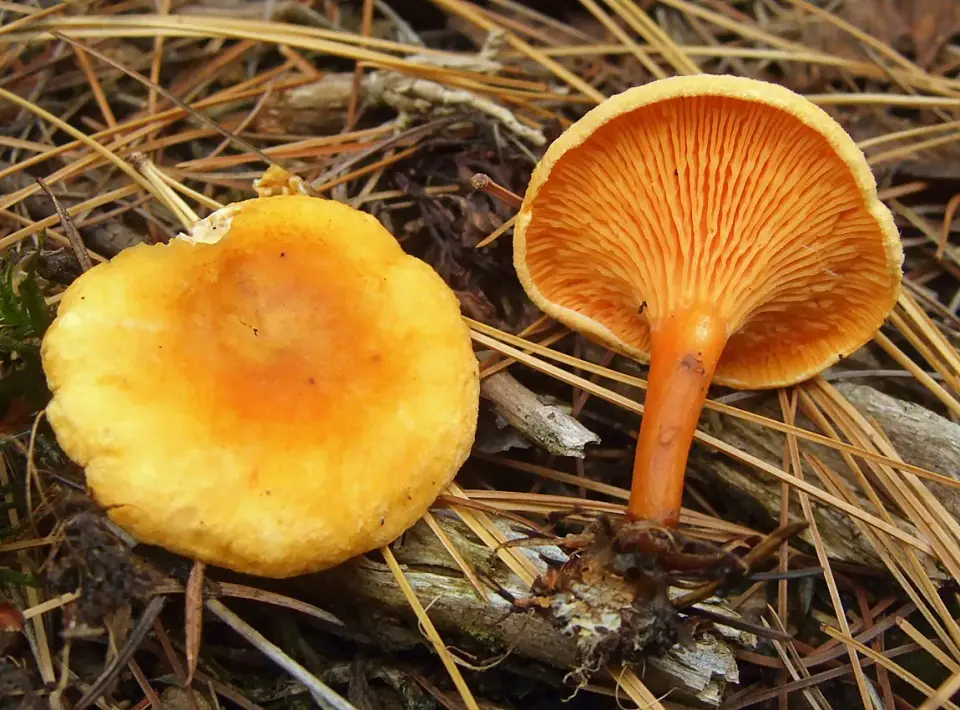
The false chanterelle is an orange funnel-shaped mushroom with true, thin, forked gills. It grows on conifer litter and rotting wood and is often mistaken for a chanterelle.
Not an edible mushroom; some people cannot tolerate it in larger amounts.
It grows in clusters on broadleaved wood and is larger.
View on the map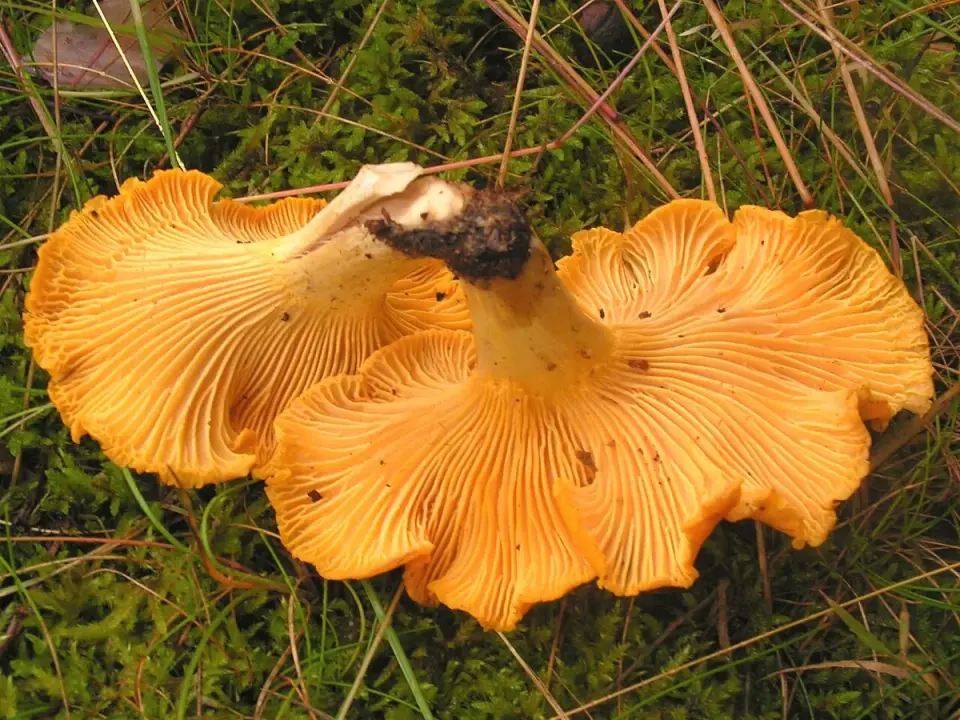
It has blunt, thick ridges instead of thin gills and firm, fruity-smelling flesh.
View on the mapAcidic soils, conifer litter, rotting wood. From the lowlands to the hills and mountains.
Coniferous woods, heaths; pine, spruce.
possible good main season
Especially after dry summers.
There are no records per region for this species yet. The country pages lead to all regions with a daily forecast.
Poison centre:
Emergency: 112 · 999
Poison centre:
Emergency: 112
Mushroom advice: DGfM: find a mushroom expert. Certified mushroom experts of the German Mycological Society (DGfM).
Collecting rules: Mushrooms that are not specially protected may be collected in small quantities for personal use unless a protected area or ban applies. Certain specially protected edible species (e.g. cep, chanterelle, birch bolete) may be collected in small quantities for personal use.
Poison centre:
Emergency: 112 · 144
Mushroom advice: Austrian Mycological Society (ÖMG): mushroom advice. Mushroom advice by the Austrian Mycological Society or regional services such as municipal market offices.
Collecting rules: At most 2 kg of mushrooms per person per day unless the forest owner has prohibited collecting; organised collecting events are prohibited. Additional state rules apply (collecting hours, closed seasons), e.g. Carinthia, Tyrol, Vorarlberg, Salzburg.
Not specially protected.
Salzburg: collecting inedible mushrooms is banned.
Red List Germany: Least concern
Low food value; in larger amounts it causes mild gastrointestinal upset in some people.
Do not collect it to eat.
No, it is regarded as inedible. Not an edible mushroom; some people cannot tolerate it in larger amounts.
In Central Europe the season runs from August to December. Especially after dry summers. Partner and habitat: coniferous woods, heaths; pine, spruce. Soil: acidic soils, conifer litter, rotting wood. Altitude: from the lowlands to the hills and mountains.
The most important one to rule out is the jack-o'-lantern mushroom (Omphalotus olearius, poisonous): it grows in clusters on broadleaved wood and is larger. Other lookalikes: chanterelle.
No substitute for having your finds checked in person. No guarantee of accuracy. Updated: 17.10.2026.
