
Death cap Amanita phalloides
deadly poisonous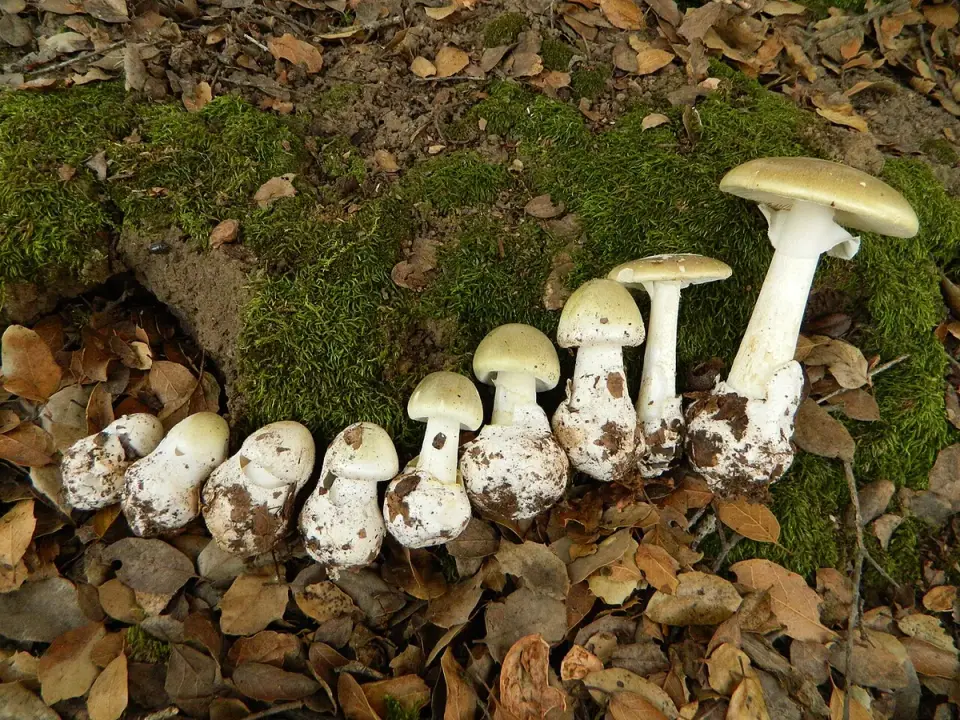

In a lengthways cut you can see the outlines of the cap, gills and stem.
View on the map
No matching species found.
Lycoperdon nigrescens Pers. · Agaricaceae
Where is it growing now? Open the map Mushroom alert for this species How the mushroom alert works
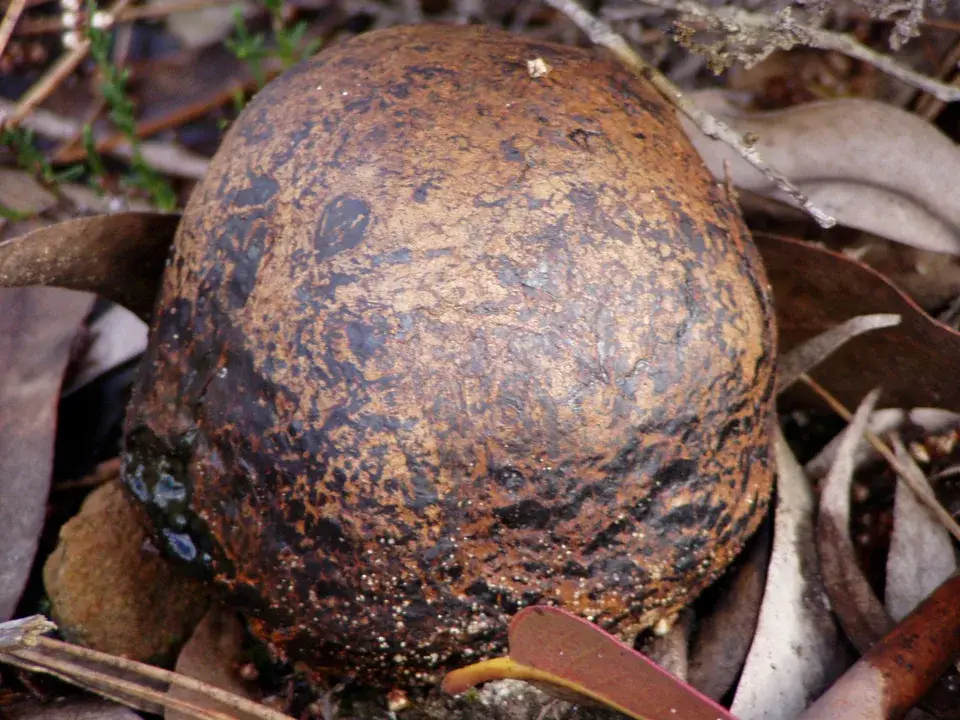
The dusky puffball is a puffball with a bristly, warty surface that darkens as it ripens and smells unpleasant. It is inedible.
Related puffballs are edible when young, but this species is inedible, and old or uncertainly identified puffballs do not belong in the kitchen.
In a lengthways cut you can see the outlines of the cap, gills and stem.
View on the map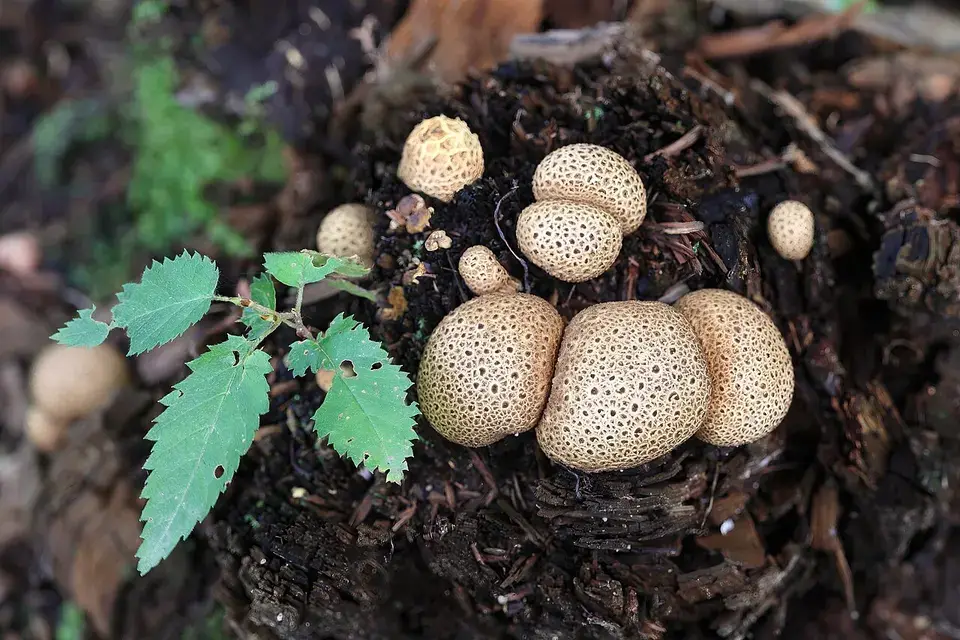
Its skin is thick and scaly-patterned, and the inside is marbled black-violet early on.
View on the map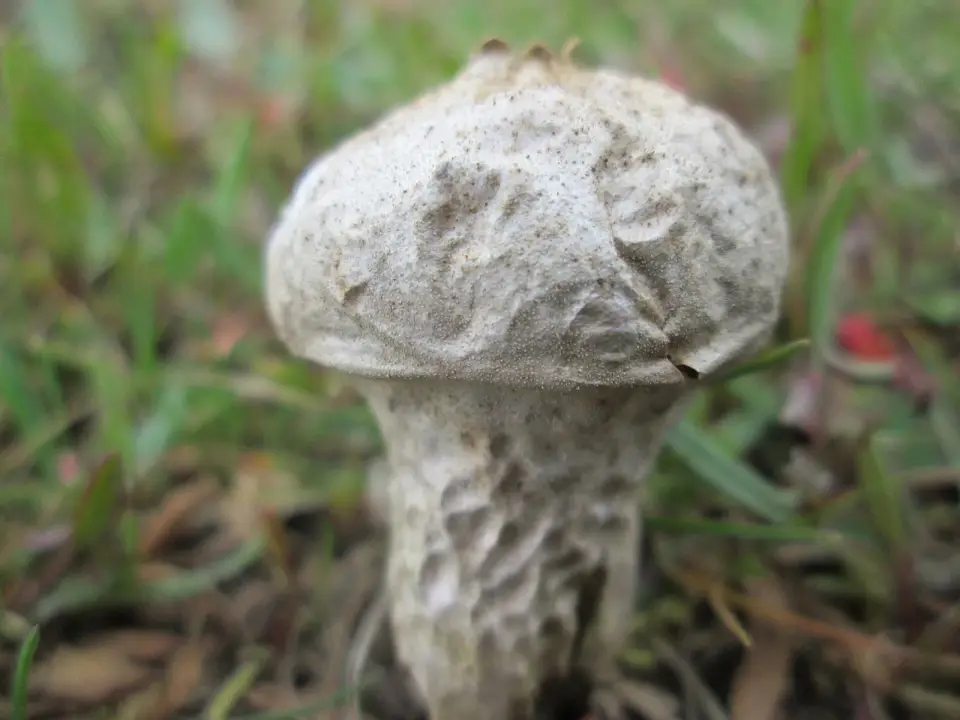
It smells inoffensively mushroomy and has white warts that fall off easily; its spore print is olive-brown. The dusky puffball, by contrast, has dark spines that lean together in groups and smells unpleasant.
View on the map| Dusky puffball | Death cap | Common earthball | Common puffball | |
|---|---|---|---|---|
| Cap | fruiting bodies 2 to 4 cm wide, pear-shaped | egg-shaped, 3 to 5 cm, enclosed in a white sac | 3 to 10 cm, lumpy, yellow-brown, scaly-patterned | 3 to 8 cm tall, pear-shaped, spiny warts |
| Underside | no gills, inside turns into olive-brown spore dust | lengthways cut shows the gill primordia | no gills, inside marbled black-violet early on | no gills, inside olive-brown when ripe |
| Stem | only a short, stem-like area | lengthways cut shows the stem primordium with bulb | stalkless or with a short rooting base | lower part stem-like, sterile, chambered |
| Flesh | flesh turns olive-brown and powdery | white, with clear structure when cut | hard, thick skin, dark inside early on | pure white when young, olive-brown and powdery when ripe |
| Edibility | Inedible | deadly poisonous | poisonous | edible |
Acidic, humus-rich woodland soils, path verges. From the lowlands up to the hills and mountains.
Deciduous and coniferous woods.
possible good main season
On acidic woodland soils.
There are no records per region for this species yet. The country pages lead to all regions with a daily forecast.
Poison centre:
Emergency: 112 · 999
Poison centre:
Emergency: 112
Mushroom advice: DGfM: find a mushroom expert. Certified mushroom experts of the German Mycological Society (DGfM).
Collecting rules: Mushrooms that are not specially protected may be collected in small quantities for personal use unless a protected area or ban applies. Certain specially protected edible species (e.g. cep, chanterelle, birch bolete) may be collected in small quantities for personal use.
Poison centre:
Emergency: 112 · 144
Mushroom advice: Austrian Mycological Society (ÖMG): mushroom advice. Mushroom advice by the Austrian Mycological Society or regional services such as municipal market offices.
Collecting rules: At most 2 kg of mushrooms per person per day unless the forest owner has prohibited collecting; organised collecting events are prohibited. Additional state rules apply (collecting hours, closed seasons), e.g. Carinthia, Tyrol, Vorarlberg, Salzburg.
Unpleasant smell, no culinary value when ripe.
Do not confuse it with young common puffballs.
No, the dusky puffball is not edible. Related puffballs are edible when young, but this species is not, and old or doubtfully identified puffballs do not belong in the kitchen.
The dusky puffball grows from July to November on acidic, humus-rich soils in deciduous and coniferous woods and on path verges.
You can confuse it with the common puffball, the death cap in the egg stage and the common earthball. The common puffball smells inoffensively mushroomy and has white warts that fall off easily, whereas the dusky puffball has dark spines that lean together in groups. In a death cap in the egg stage, a lengthways cut shows the outlines of the cap, gills and stem. The common earthball has a thick, scaly-patterned skin, and its inside is marbled black-violet early on.
The spore print is olive-brown. The fruiting bodies are 2 to 4 cm wide, pear-shaped, whitish at first with dark, erect spines.
No substitute for having your finds checked in person. No guarantee of accuracy. Updated: 17.10.2026.

