FungiFindFungiFind

FungiFind › Mushroom species

Trametes ochracea

Trametes ochracea (Pers.) Gilb. & Ryvarden · Polyporaceae

Inedible

Where is it growing now? Open the map Mushroom alert for this species How the mushroom alert works

Identification in 5 steps

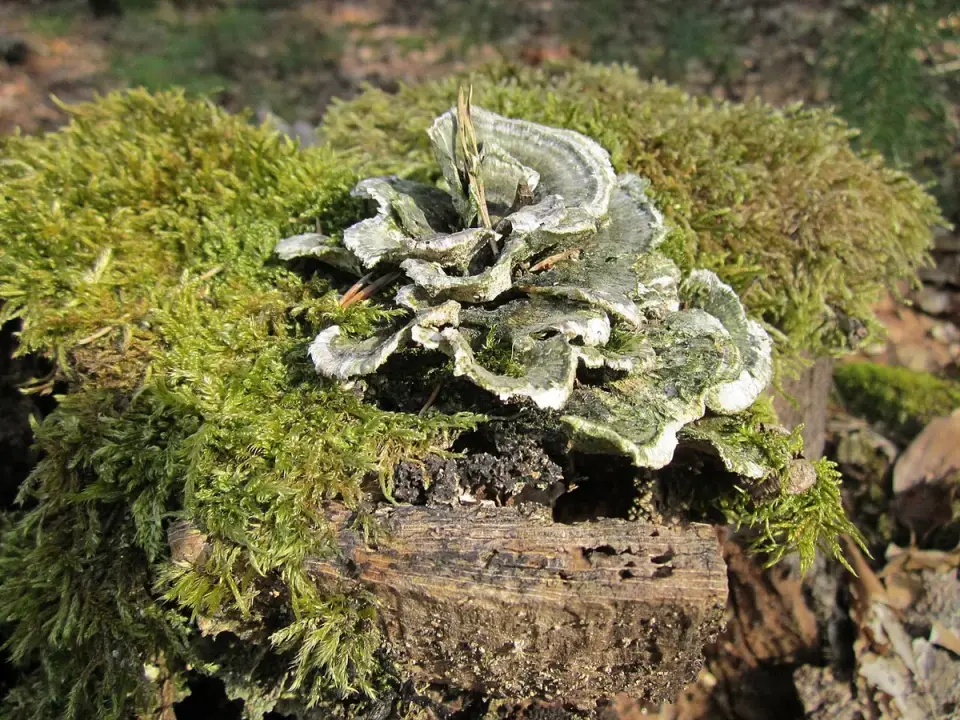
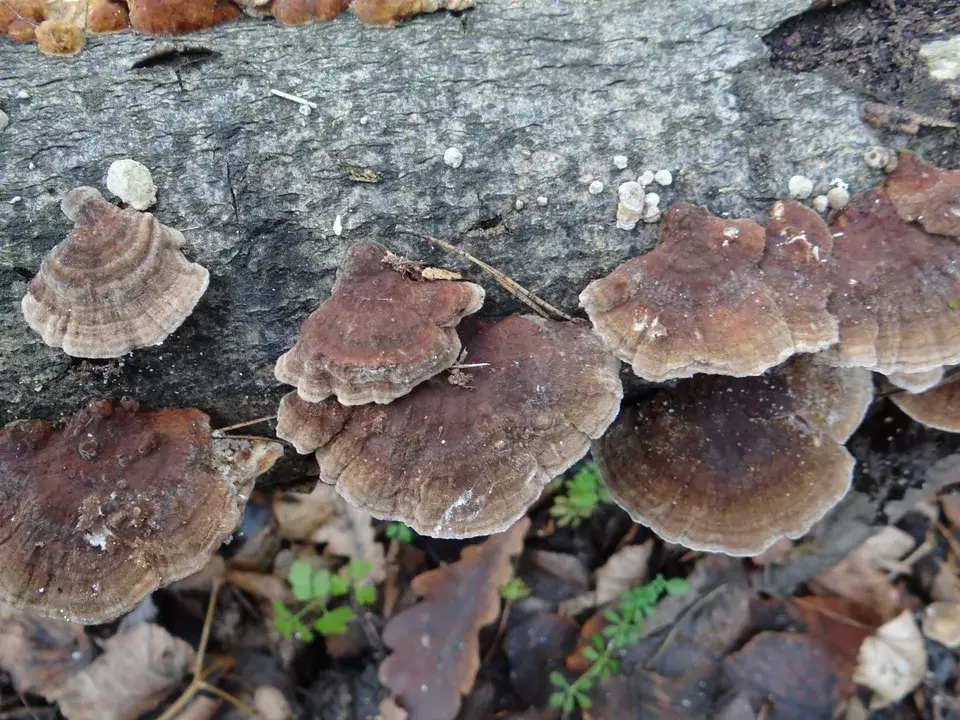
Trametes ochracea is a thin bracket fungus with ochre zones and no silky gloss. It grows on dead deciduous wood and is inedible.

Seasonall year round
Spore printwhite
FamilyPolyporaceae
  1. Cap. The caps are 3 to 10 cm wide, thin, concentrically zoned ochre to brown, dull without a silky gloss.
  2. Underside. The pores are whitish and fine.
  3. Stem, ring and volva. There is no stem; the cap sits on the wood with a thick point of attachment.
  4. Smell and taste. It has no striking smell or taste.
  5. Flesh and colour change. The flesh is tough and whitish.

Lookalikes

It is tough and inedible and has ochre zones without a gloss.

Side by side

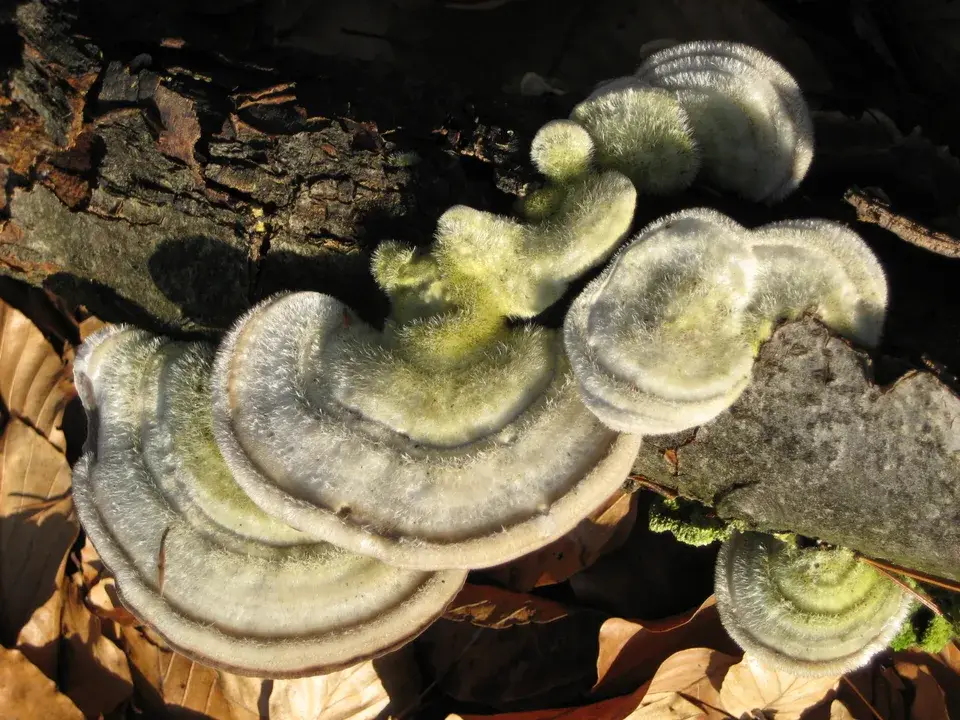
Trametes ochraceaTurkey tailHairy bracket
Capcaps 3 to 10 cm wide, thin3 to 8 cm, thin, colourfully zoned, velvety3 to 8 cm, thin, grey, coarsely bristly-haired
Undersidepores whitish, finepores whitish to cream, very finepores whitish to grey, round
Stemno stem, thick point of attachment to the woodabsent, attached in overlapping tiers to the woodabsent, attached at the side to the wood
Fleshtough, whitishthin, tough, whitewhite, tough, thin
EdibilityInedibleinedibleinedible

Habitat & Season

Stumps and fallen trunks. From the lowlands up to the hills and mountains.

Host trees

Dead deciduous wood, often beech and oak.

Season

possible good main season

All year round on dead wood.

Mushroom regions with a daily forecast

There are no records per region for this species yet. The country pages lead to all regions with a daily forecast.

All mushroom regions →

Safety

Never eat a mushroom you have not identified with certainty. Not an edible mushroom: do not collect it for the kitchen.

Advice for your country

United Kingdom

Poison centre:

NHS 111 (England)111

Emergency: 999 · 112

Ireland

Poison centre:

National Poisons Information Centre (public line)(01) 809 2166

Emergency: 112 · 999

Germany

Poison centre:

Giftnotruf Berlin030 19240Giftinformationszentrum München089 19240GIZ-Nord Göttingen0551 19240

Emergency: 112

Mushroom advice: DGfM: find a mushroom expert. Certified mushroom experts of the German Mycological Society (DGfM).

Collecting rules: Mushrooms that are not specially protected may be collected in small quantities for personal use unless a protected area or ban applies. Certain specially protected edible species (e.g. cep, chanterelle, birch bolete) may be collected in small quantities for personal use.

Austria

Poison centre:

Vergiftungsinformationszentrale (VIZ)01 406 43 43

Emergency: 112 · 144

Mushroom advice: Austrian Mycological Society (ÖMG): mushroom advice. Mushroom advice by the Austrian Mycological Society or regional services such as municipal market offices.

Collecting rules: At most 2 kg of mushrooms per person per day unless the forest owner has prohibited collecting; organised collecting events are prohibited. Additional state rules apply (collecting hours, closed seasons), e.g. Carinthia, Tyrol, Vorarlberg, Salzburg.

Why it is not edible

Tough and leathery.

The point of attachment is often thicker than in the turkey tail.

Frequently asked questions

Is Trametes ochracea edible?

No, Trametes ochracea is not edible. It is tough and has ochre zones without a gloss.

When and where does Trametes ochracea grow?

Trametes ochracea can be found all year round on dead deciduous wood, often on beech and oak, on stumps and fallen trunks.

Which look-alikes can Trametes ochracea be confused with?

You can confuse it with the turkey tail and the hairy bracket. The turkey tail has no striking smell and a white spore print, and its cap is colourfully zoned and silky-glossy, whereas Trametes ochracea lacks these silky, glossy zones, and its point of attachment is distinctly thicker. The cap of the hairy bracket is grey and coarsely bristly-haired.

How do you recognise Trametes ochracea?

The spore print is white. The caps are 3 to 10 cm wide, thin, concentrically zoned ochre to brown, dull without a silky gloss.

Related species

Open the mushroom map Mushroom trainer: test yourself

Sources

Photo credits

No substitute for having your finds checked in person. No guarantee of accuracy. Updated: 17.10.2026.

Open the mushroom map