
Turkey tail Trametes versicolor
inedible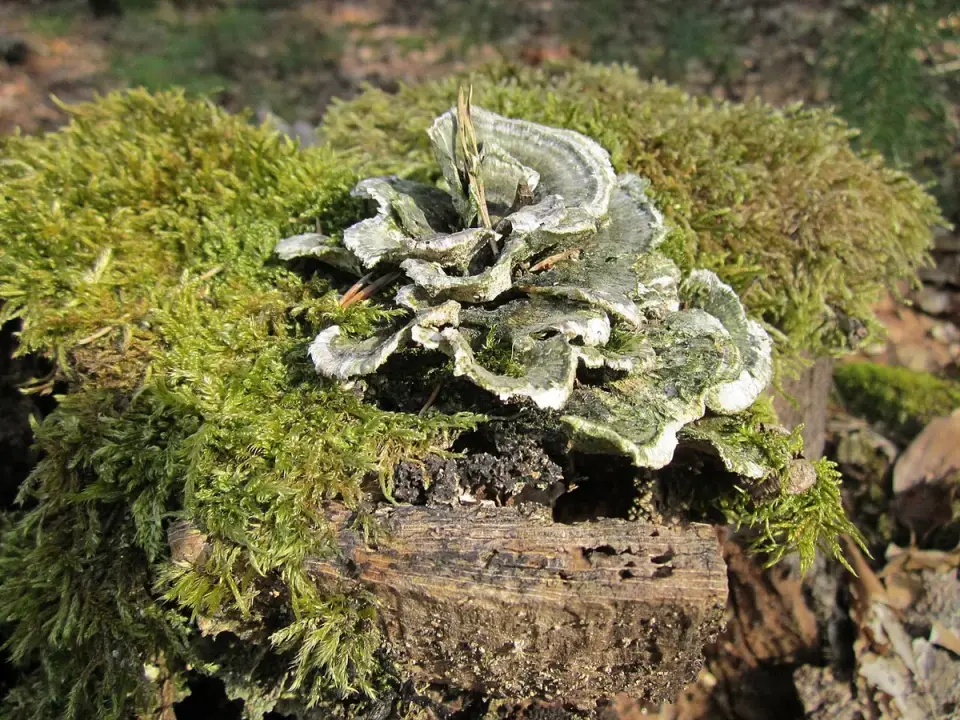

It has no striking smell, and its spore print is white. Its cap is colourfully zoned and silky-glossy, whereas in the hairy bracket the cap is grey and coarsely hairy.
View on the map
No matching species found.
Trametes hirsuta (Wulfen) Lloyd · Polyporaceae
Where is it growing now? Open the map Mushroom alert for this species How the mushroom alert works
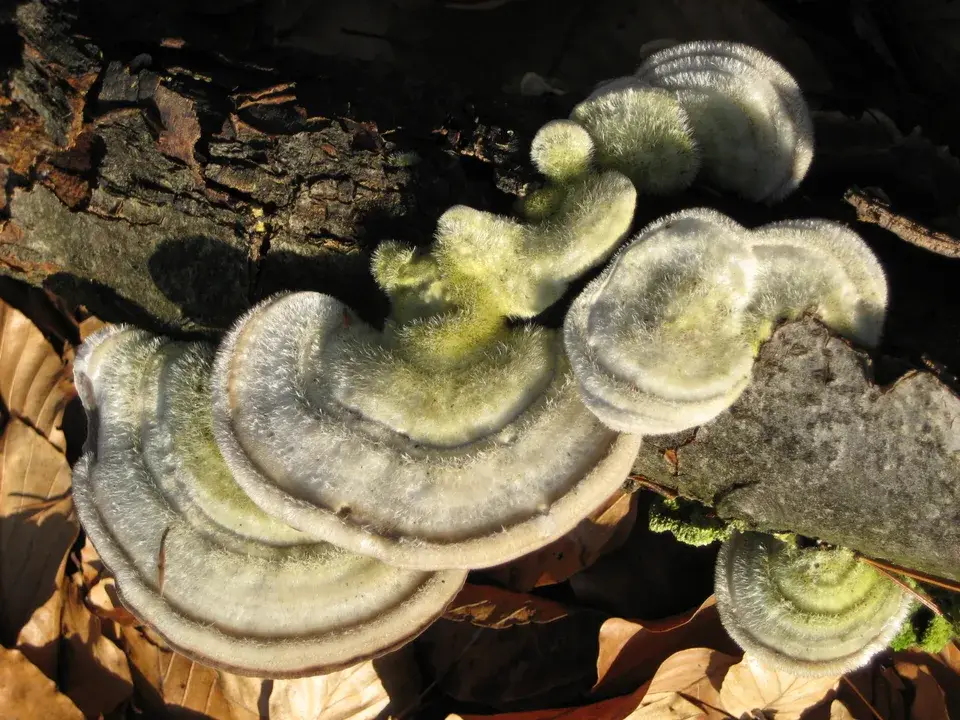
The hairy bracket forms grey, coarsely hairy brackets on dead deciduous wood. It is inedible and resembles the turkey tail.
It is tough and inedible and stands out for its coarsely hairy cap.
It has no striking smell, and its spore print is white. Its cap is colourfully zoned and silky-glossy, whereas in the hairy bracket the cap is grey and coarsely hairy.
View on the map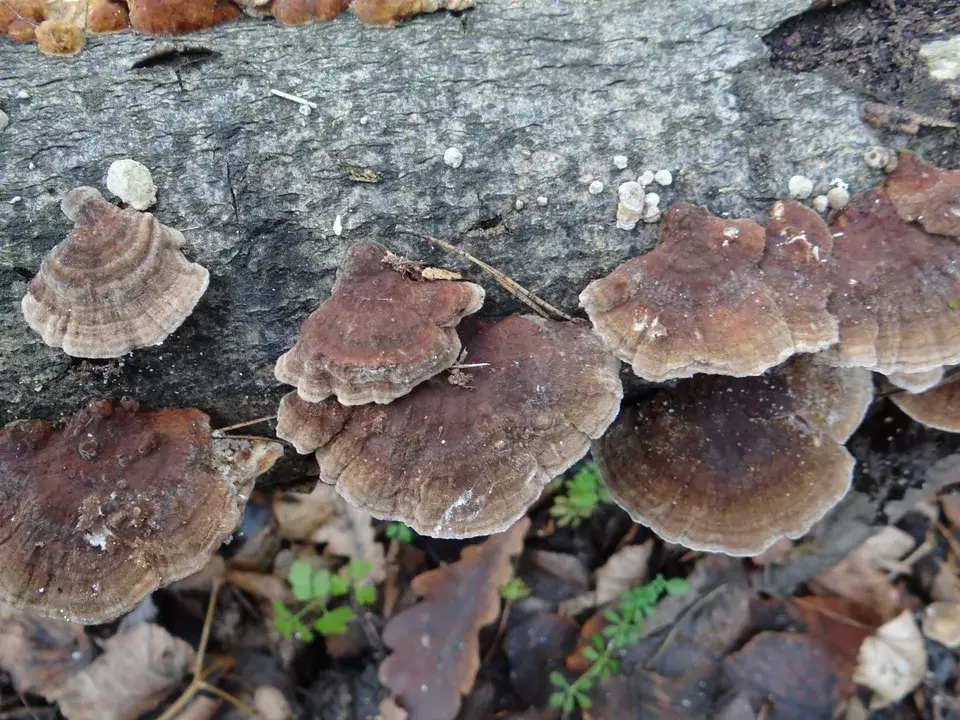
It lacks the silky, glossy zones, and the point of attachment is distinctly thicker.
View on the map| Hairy bracket | Turkey tail | Trametes ochracea | |
|---|---|---|---|
| Cap | caps 3 to 8 cm wide, thin | 3 to 8 cm, thin, colourfully zoned, velvety | 3 to 10 cm, thin, ochre-brown to grey zoned |
| Underside | pores whitish to cream, fine | pores whitish to cream, very fine | pores whitish, fine |
| Stem | no stem, attached at the side to the wood | absent, attached in overlapping tiers to the wood | absent, thick point of attachment to the wood |
| Flesh | white, tough and thin | thin, tough, white | tough, whitish |
| Edibility | Inedible | inedible | inedible |
Stumps and fallen branches. From the lowlands up to the hills and mountains.
Dead deciduous wood, especially beech and birch.
possible good main season
All year round on dead wood.
There are no records per region for this species yet. The country pages lead to all regions with a daily forecast.
Poison centre:
Emergency: 112 · 999
Poison centre:
Emergency: 112
Mushroom advice: DGfM: find a mushroom expert. Certified mushroom experts of the German Mycological Society (DGfM).
Collecting rules: Mushrooms that are not specially protected may be collected in small quantities for personal use unless a protected area or ban applies. Certain specially protected edible species (e.g. cep, chanterelle, birch bolete) may be collected in small quantities for personal use.
Poison centre:
Emergency: 112 · 144
Mushroom advice: Austrian Mycological Society (ÖMG): mushroom advice. Mushroom advice by the Austrian Mycological Society or regional services such as municipal market offices.
Collecting rules: At most 2 kg of mushrooms per person per day unless the forest owner has prohibited collecting; organised collecting events are prohibited. Additional state rules apply (collecting hours, closed seasons), e.g. Carinthia, Tyrol, Vorarlberg, Salzburg.
Tough and leathery.
Do not collect for the kitchen.
No, the hairy bracket is not edible. It is tough and stands out for its coarsely hairy cap.
The hairy bracket can be found all year round on dead deciduous wood, especially on beech and birch, on stumps and fallen branches.
You can confuse it with the turkey tail and Trametes ochracea. The turkey tail has no striking smell and a white spore print, and its cap is colourfully zoned and silky-glossy, whereas in the hairy bracket the cap is grey and coarsely hairy. Trametes ochracea lacks the silky, glossy zones, and its point of attachment is distinctly thicker.
The spore print is white. The caps are 3 to 8 cm wide, thin, grey, with coarse, bristly hair and no colourful, glossy zones.
No substitute for having your finds checked in person. No guarantee of accuracy. Updated: 17.10.2026.
