
FungiFindFungiFind

FungiFind › Mushroom species

European white egg

Amanita ovoidea (Bull.) Link · Amanitaceae

Also: Bearded amanita, European egg amidella

Edible with cautionRisk of confusion: high

Where is it growing now? Open the map Mushroom alert for this species How the mushroom alert works

Identification in 5 steps

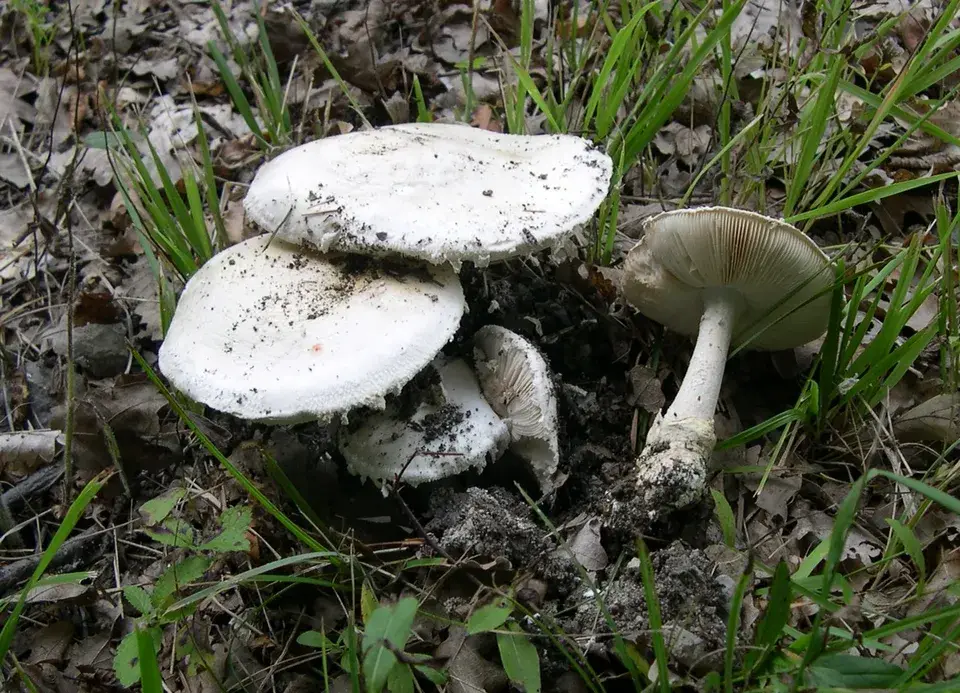
The European white egg is a sturdy, pure white Amanita that looks like an egg when young. It likes warmer regions and is considered edible, but is easily mistaken for deadly poisonous destroying angels and the poisonous Amanita proxima.

SeasonJuly to September
Spore printwhite
FamilyAmanitaceae
  1. Cap. The cap is 10 to 25 cm wide, egg-shaped when young, then cushion-shaped and finally flat. The cap skin is at first mealy and matt, later silky smooth, pure white to light grey and yellowish with age. Young caps bear flaky, short-lived veil remnants on the margin.
  2. Underside. The thin, crowded gills are white and end before the stem.
  3. Stem, ring and volva. The stem is 10 to 15 cm long, 2.5 to 4 cm thick, white and bulbous at the bottom. The stem base sits in a sac-like, yellowish to pale orange volva. The flaky collar on the upper stem soon crumbles away.
  4. Smell and taste. It smells and tastes unremarkable, and of carrion with age.
  5. Flesh and colour change. The flesh is firm, solid and white.

Lookalikes

It is white throughout and sturdy, but has gills, a ring and a volva like the deadly poisonous destroying angels. There is a risk of confusion with them and with the poisonous Amanita proxima. Only for confident experts.

European destroying angel Amanita virosa

deadly poisonous
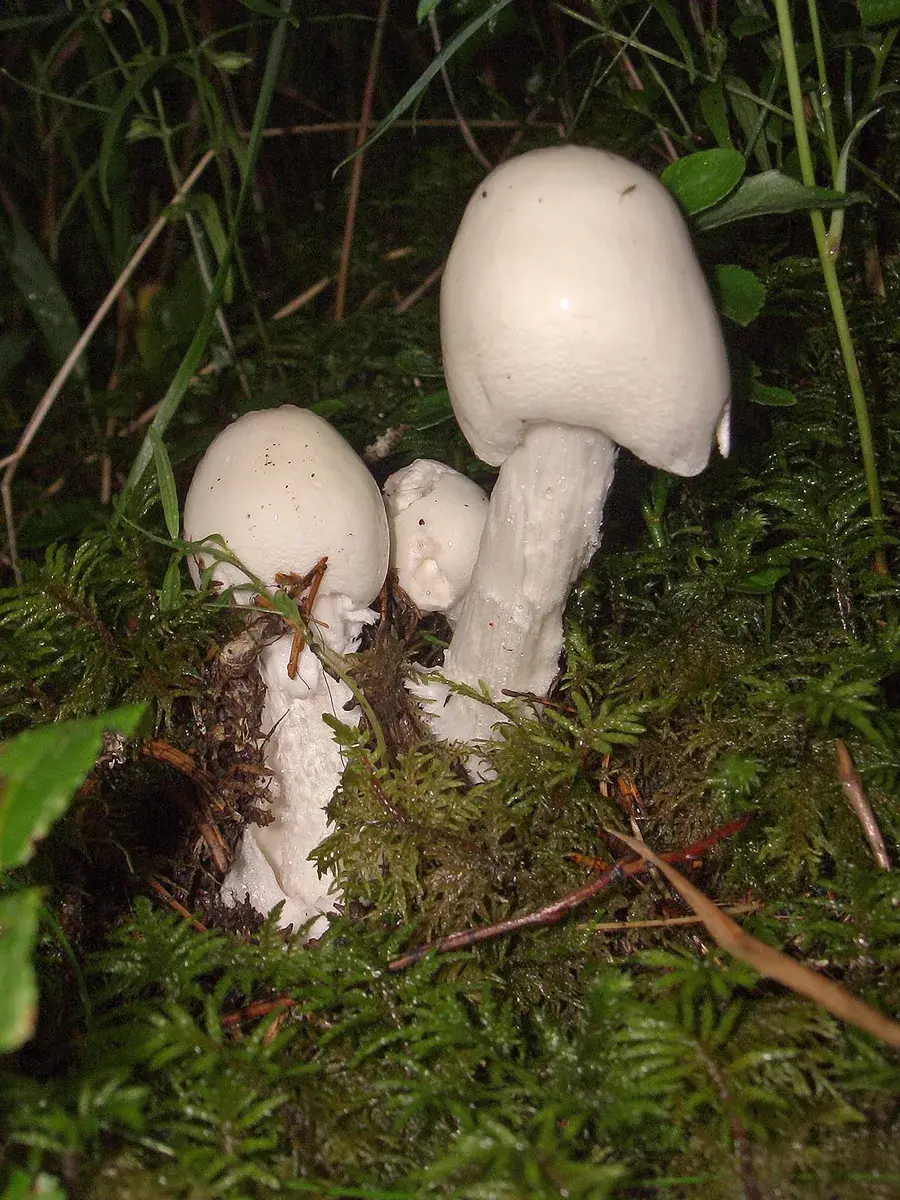
European destroying angel
Photo: No machine-readable author provided. Bernypisa assumed (based on … · CC BY 2.5 · Wikimedia Commons

It is slimmer, has a smaller cap and a white, sac-like volva, but no yellowish volva and no flaky veil remnants on the cap margin. The safest approach is to leave every white Amanita with a ring and a volva standing unless you can identify it with certainty. Deadly poisonous.

View on the map
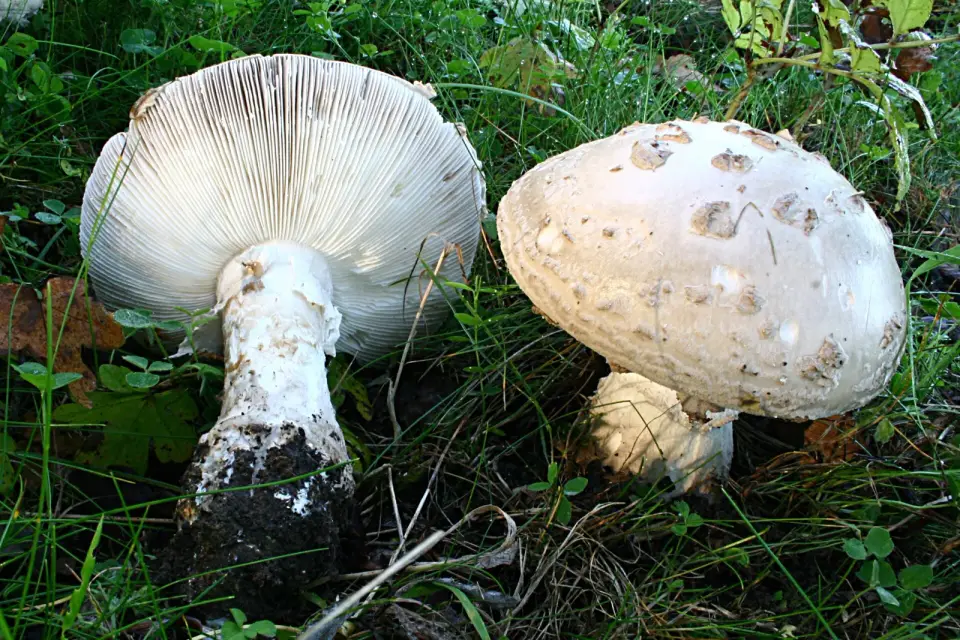
Amanita proxima

poisonous

Its volva is orange to ochre-yellow to ochre-brown and stays recognisable at the stem base even with age, and the veil remnants on the cap margin of young fruiting bodies are missing. It has a lasting collar and is slimmer. The species is rare and causes partly severe poisonings with gastrointestinal upset and kidney failure.

Side by side

European white eggEuropean destroying angelAmanita proximaWarted amanita
Capwhite to light grey, 10 to 25 cm, egg-shaped, flaky remnantswhite, conical to bell-shaped, smooth, 4 to 10 cmwhite to cream white, no veil remnants on marginwhitish to greyish with coarse warts
Undersidewhite, crowded gills, end before the stemwhite, free gillswhite, free gillswhite, free gills
Stemwhite, bulbous, flaky collar, yellowish volvaslender, flaky, hanging ring, bulbous base with volvaslimmer, lasting collar, ochre volvabulbous, with ring and scaly veil remnants at the base
Fleshfirm, solid, tough-fleshedfleshy, thinner than in the European white eggfleshyfleshy
EdibilityEdible with cautiondeadly poisonouspoisonousedible with restrictions

Habitat & Season

Calcareous soils in sheltered, warm locations. No reliable information.

Host trees

Various deciduous and coniferous trees, for example sweet chestnut, oak, silver fir and Aleppo pine.

Season

possible good main season

It prefers warmer, more southern areas with a mild climate.

Mushroom regions with a daily forecast

There are no records per region for this species yet. The country pages lead to all regions with a daily forecast.

All mushroom regions →

Chance near you

How good are the chances of finding this species where you are right now? We calculate it from weather, soil moisture, altitude and forest at your location.

View on the map

Safety

Never eat a mushroom you have not identified with certainty. Only eat mushrooms you have identified beyond doubt, and always cook them thoroughly.

Advice for your country

United Kingdom

Poison centre:

NHS 111 (England)111

Emergency: 999 · 112

Ireland

Poison centre:

National Poisons Information Centre (public line)(01) 809 2166

Emergency: 112 · 999

Germany

Poison centre:

Giftnotruf Berlin030 19240Giftinformationszentrum München089 19240GIZ-Nord Göttingen0551 19240

Emergency: 112

Mushroom advice: DGfM: find a mushroom expert. Certified mushroom experts of the German Mycological Society (DGfM).

Collecting rules: Mushrooms that are not specially protected may be collected in small quantities for personal use unless a protected area or ban applies. Certain specially protected edible species (e.g. cep, chanterelle, birch bolete) may be collected in small quantities for personal use.

Austria

Poison centre:

Vergiftungsinformationszentrale (VIZ)01 406 43 43

Emergency: 112 · 144

Mushroom advice: Austrian Mycological Society (ÖMG): mushroom advice. Mushroom advice by the Austrian Mycological Society or regional services such as municipal market offices.

Collecting rules: At most 2 kg of mushrooms per person per day unless the forest owner has prohibited collecting; organised collecting events are prohibited. Additional state rules apply (collecting hours, closed seasons), e.g. Carinthia, Tyrol, Vorarlberg, Salzburg.

Conservation and collecting rules

Rather rare in Central Europe.

In the kitchen

Use only firm fruiting bodies identified with certainty, and fry or stew them in slices. Cook for at least 15 minutes.

No reliable information on drying. Risk of confusion with deadly poisonous destroying angels. Old fruiting bodies smell of carrion and must no longer be used.

Frequently asked questions

Is the European white egg edible?

It is considered edible. Because it can be mistaken for deadly poisonous destroying angels and the poisonous Amanita proxima, it is only for confident experts.

How do you recognise the European white egg?

By the sturdy, pure white fruiting body with flaky veil remnants on the cap margin of young mushrooms, the white free gills and the yellowish to pale orange volva at the stem base.

What can it be mistaken for?

For the European destroying angel, which is deadly poisonous, for the poisonous Amanita proxima and for the warted amanita. Leave white Amanitas with a ring and a volva standing unless you know them with certainty.

When does the European white egg grow?

From July to September, preferably in warmer areas with a mild climate under deciduous and coniferous trees.

Related species

Mushroom trainer: test yourself

Sources

Photo credits

No substitute for having your finds checked in person. No guarantee of accuracy. Updated: 17.10.2026.

Open the mushroom map