
Bitter tooth Sarcodon scabrosus
inedibleIt is mostly rare, does not reach the size of the shingled hedgehog and tastes strongly bitter. The stem base is blackish to greenish-blackish. Inedible because of the bitterness.
No matching species found.
Sarcodon imbricatus (L.) P.Karst. · Bankeraceae
Also: Scaly hedgehog, Scaly tooth
Where is it growing now? Open the map Mushroom alert for this species How the mushroom alert works
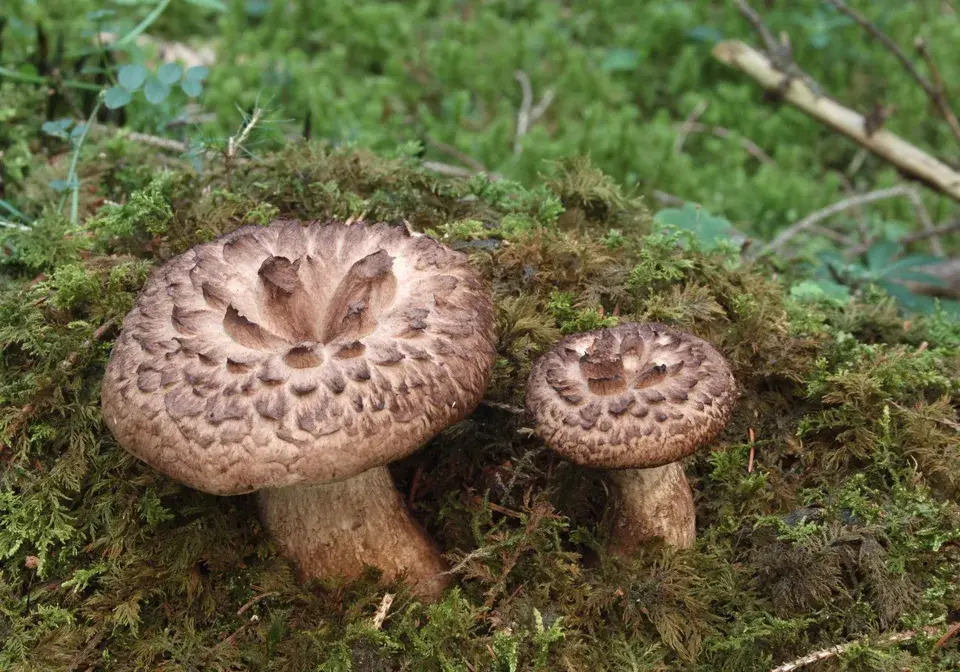
The shingled hedgehog is a sturdy tooth fungus with a light to dark brown cap densely covered in upright scales, like hawk plumage. Underneath it has soft grey spines. Young mushrooms are considered edible; older ones taste bitter. Its population is declining in many regions.
Instead of gills it has soft grey spines and a brown cap with scales standing up and out. Poisonous look-alikes among the tooth fungi are not believed to exist, but older mushrooms taste bitter. Some people may get gastrointestinal upset.
It is mostly rare, does not reach the size of the shingled hedgehog and tastes strongly bitter. The stem base is blackish to greenish-blackish. Inedible because of the bitterness.
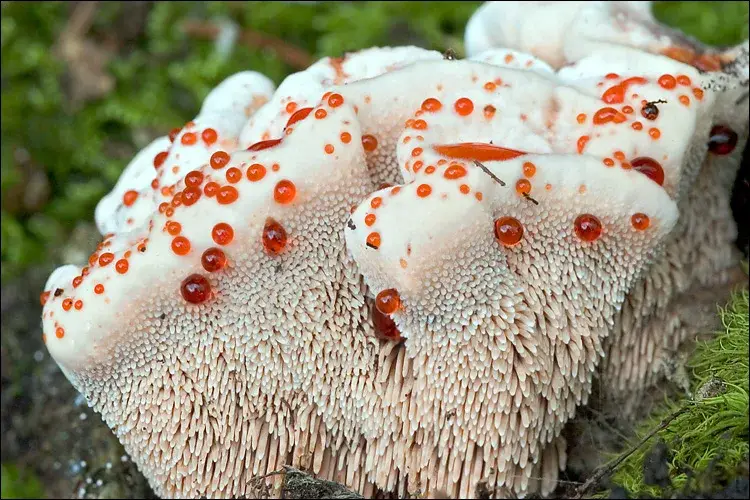
Their flesh shows zoning; it is tough and corky. The most reliable feature: in the shingled hedgehog the flesh is not zoned. Many species are rare and on Red Lists, so leave them standing. Inedible.
It has a buff-yellow cap that is smooth to slightly scaly, and whitish to pale yellow, brittle spines. The most reliable feature: its spore print is white, while that of the shingled hedgehog is brown. Also edible.
View on the map| Shingled hedgehog | Bitter tooth | Hydnellum species | Wood hedgehog | |
|---|---|---|---|---|
| Cap | light to blackish brown, 5 to 15 cm, scales standing up | brown, scaly, mostly smaller | whitish to brown, often fused together | buff-yellow to pale orange-ochre, without coarse scales |
| Underside | pale grey to grey, soft spines, slightly decurrent | grey to brown spines | brown spines | whitish to pale yellow, brittle spines |
| Stem | short, stocky, whitish to brownish | base blackish to greenish-blackish | short, corky | short, thick, whitish |
| Flesh | fleshy, bitter with age | fleshy, strongly bitter | tough, corky, zoned flesh | fleshy, brittle |
| Edibility | Edible with caution | inedible | inedible | edible |
Soils low to moderately rich in bases and poor in nutrients, in beech and spruce-fir woods, also in spruce plantations. The fruiting bodies grow from the soil, not from wood. Prefers higher altitudes, also in the lowlands.
Beech, spruce and fir.
possible good main season
Often grows in fairy rings and prefers higher altitudes, but also occurs in the lowlands.
There are no records per region for this species yet. The country pages lead to all regions with a daily forecast.
How good are the chances of finding this species where you are right now? We calculate it from weather, soil moisture, altitude and forest at your location.
Poison centre:
Emergency: 112 · 999
Poison centre:
Emergency: 112
Mushroom advice: DGfM: find a mushroom expert. Certified mushroom experts of the German Mycological Society (DGfM).
Collecting rules: Mushrooms that are not specially protected may be collected in small quantities for personal use unless a protected area or ban applies. Certain specially protected edible species (e.g. cep, chanterelle, birch bolete) may be collected in small quantities for personal use.
Poison centre:
Emergency: 112 · 144
Mushroom advice: Austrian Mycological Society (ÖMG): mushroom advice. Mushroom advice by the Austrian Mycological Society or regional services such as municipal market offices.
Collecting rules: At most 2 kg of mushrooms per person per day unless the forest owner has prohibited collecting; organised collecting events are prohibited. Additional state rules apply (collecting hours, closed seasons), e.g. Carinthia, Tyrol, Vorarlberg, Salzburg.
The population in Germany has been declining since 1970 and has already disappeared in large parts of individual federal states. It is better to leave rare finds standing.
Fry young mushrooms in slices. Larger specimens can be freed of bitter compounds by blanching them and pouring away the cooking water. Dried and ground, it serves as a spicy mushroom powder for sauces and soups; the dosage takes experience. Cook for at least 15 minutes.
Can be dried and ground into mushroom powder. Indigestible raw or insufficiently heated. Older specimens taste bitter.
Yes, young fruiting bodies in particular are suitable for eating. Older ones taste bitter. It must always be cooked sufficiently; raw or insufficiently heated, it is indigestible.
By the brown cap with scales standing up and out, the soft grey spines on the underside and the brown spore print.
With the wood hedgehog, which is edible and has a white spore print, with the bitter tooth (Sarcodon scabrosus) and with Hydnellum species, whose flesh is zoned and tough. Poisonous look-alikes among the tooth fungi are not believed to exist.
In beech and spruce-fir woods and in spruce plantations on nutrient-poor soils, often in fairy rings.
No substitute for having your finds checked in person. No guarantee of accuracy. Updated: 17.10.2026.

