
Shingled hedgehog Sarcodon imbricatus
edible with restrictions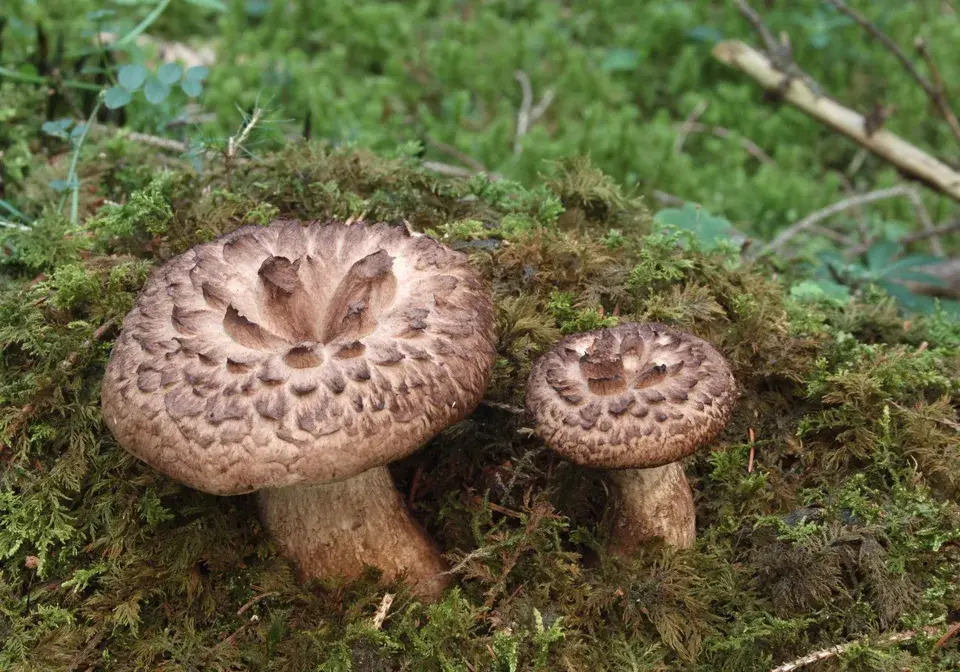

It has a brown cap with coarse, roof-tile-like protruding scales and grey-brown spines. Its culinary value is disputed, and it can cause gastrointestinal upset.
View on the map
No matching species found.
Hydnellum spp. P.Karst. · Bankeraceae
Where is it growing now? Open the map Mushroom alert for this species How the mushroom alert works
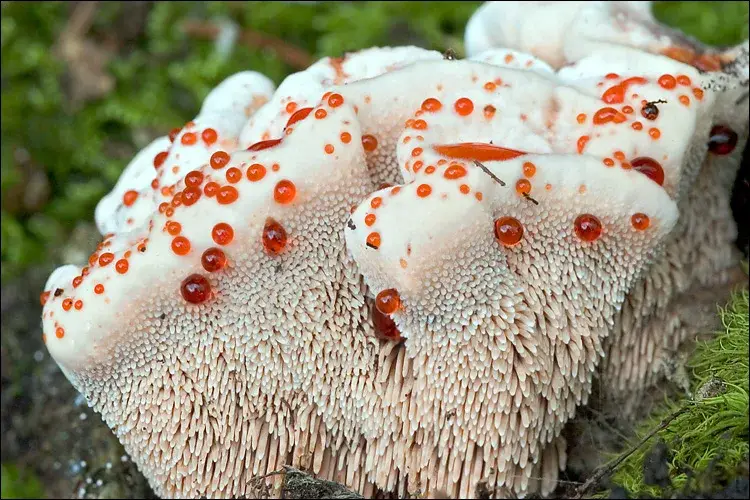
Hydnellum species grow on the ground, have brown spines and corky flesh, and often bear red drops when young. They are inedible and, because of their rarity, often must not be collected.
They are tough, corky and inedible, and some species are rare and protected.
It has a brown cap with coarse, roof-tile-like protruding scales and grey-brown spines. Its culinary value is disputed, and it can cause gastrointestinal upset.
View on the mapIt smells pleasantly mushroomy and tastes mild when young, older fruiting bodies become slightly bitter, and its spore print is white. Hydnellum species, by contrast, are tough and corky, often grow fused together, have brown spines and sometimes bear red drops when young. Many species are rare and on the Red List, so leave them standing.
View on the map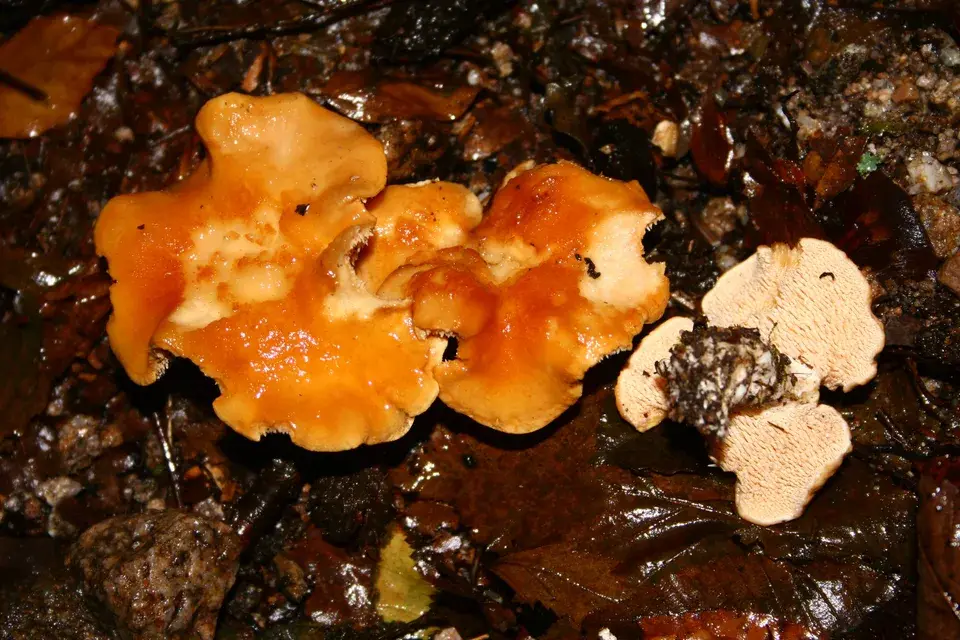
It is smaller and strongly orange-red, and the stem is slimmer and central. The most reliable feature: its spines do not run down the stem. Also edible.
View on the map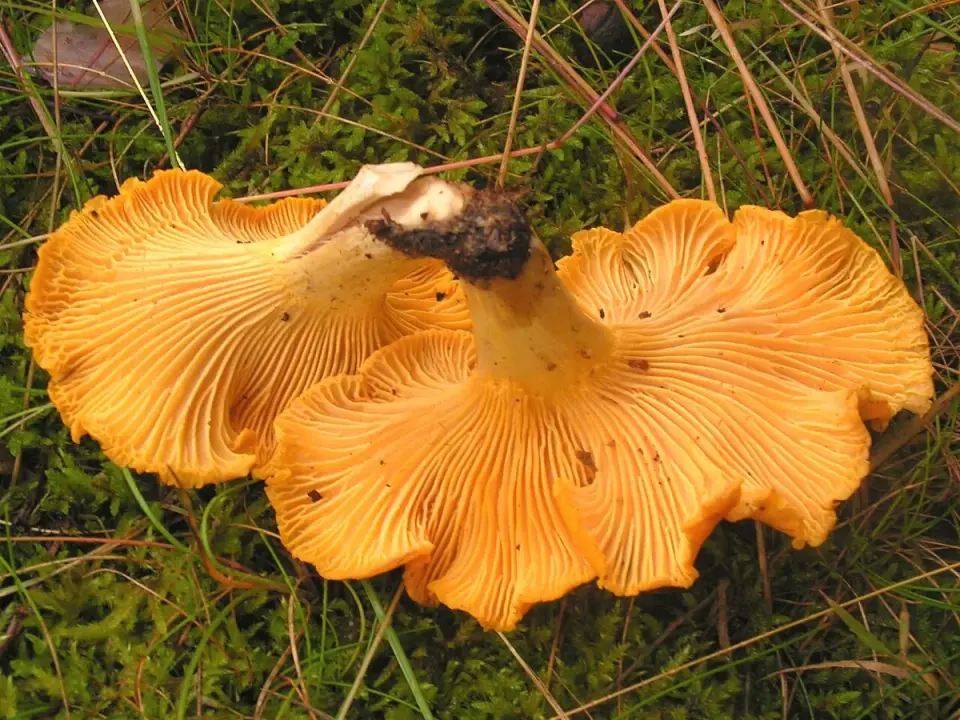
It has forked ridges instead of spines and smells fruity of apricot. Also edible.
View on the map| Hydnellum species | Shingled hedgehog | Wood hedgehog | Terracotta hedgehog | Golden chanterelle | |
|---|---|---|---|---|---|
| Cap | 3 to 12 cm wide, flat to domed | 5 to 20 cm, brown, coarse tile-like scales | bun yellow to pale ochre, 3 to 15 cm, irregular | orange-red to reddish orange, 2 to 6 cm, often wavy | 2 to 10 cm, egg-yolk to yolk yellow |
| Underside | spines: dense, brown spines | spines grey to grey-brown, decurrent | spines whitish to pale yellow, run down the stem slightly | spines pale orange, do not run down the stem | ridges forked, blunt, decurrent, yellow |
| Stem | short, central | short, thick, light to grey-brown | short, thick, whitish, often lateral | slender, central, whitish to pale orange | solid, yellow |
| Flesh | tough, corky, slowly turns brown | whitish to pale brown, brittle | fleshy, brittle | pale, brittle | whitish to pale yellow, firm, fibrous |
| Edibility | Inedible | edible with restrictions | edible | edible | edible |
Acidic, mossy soils in coniferous woods. From the hills to the mountains.
Conifers, mainly spruce and pine.
possible good main season
In coniferous woods, often in moss.
There are no records per region for this species yet. The country pages lead to all regions with a daily forecast.
Poison centre:
Emergency: 112 · 999
Poison centre:
Emergency: 112
Mushroom advice: DGfM: find a mushroom expert. Certified mushroom experts of the German Mycological Society (DGfM).
Collecting rules: Mushrooms that are not specially protected may be collected in small quantities for personal use unless a protected area or ban applies. Certain specially protected edible species (e.g. cep, chanterelle, birch bolete) may be collected in small quantities for personal use.
Poison centre:
Emergency: 112 · 144
Mushroom advice: Austrian Mycological Society (ÖMG): mushroom advice. Mushroom advice by the Austrian Mycological Society or regional services such as municipal market offices.
Collecting rules: At most 2 kg of mushrooms per person per day unless the forest owner has prohibited collecting; organised collecting events are prohibited. Additional state rules apply (collecting hours, closed seasons), e.g. Carinthia, Tyrol, Vorarlberg, Salzburg.
Tough, corky, no culinary value.
Leave standing because of their rarity and nature conservation.
No, Hydnellum species are not edible. They are tough and corky, and some species are rare and protected.
Hydnellum species grow from July to November in coniferous woods, often in moss, on acidic soils near spruce and pine, from the hills to the mountains.
They can be mistaken for the wood hedgehog, the terracotta hedgehog, the golden chanterelle and the shingled hedgehog. The wood hedgehog smells pleasantly mushroomy and tastes mild when young, whereas Hydnellum species are tough and corky and have brown spines. The terracotta hedgehog is smaller and strongly orange-red, and its spines do not run down the stem. The golden chanterelle has forked ridges instead of spines and smells fruity of apricot. The shingled hedgehog has a brown cap with coarse, roof-tile-like protruding scales and grey-brown spines.
The spore print is brown. The cap is 3 to 12 cm wide, flat to domed, whitish to brown, often with red drops when young.
No substitute for having your finds checked in person. No guarantee of accuracy. Updated: 17.10.2026.


