
False morel Gyromitra esculenta
deadly poisonous
Its cap is convoluted like a brain and red-brown, chambered inside and not hollow all the way through.
View on the map
No matching species found.
Verpa conica (O.F.Müll.) Sw. · Morchellaceae
Where is it growing now? Open the map Mushroom alert for this species How the mushroom alert works
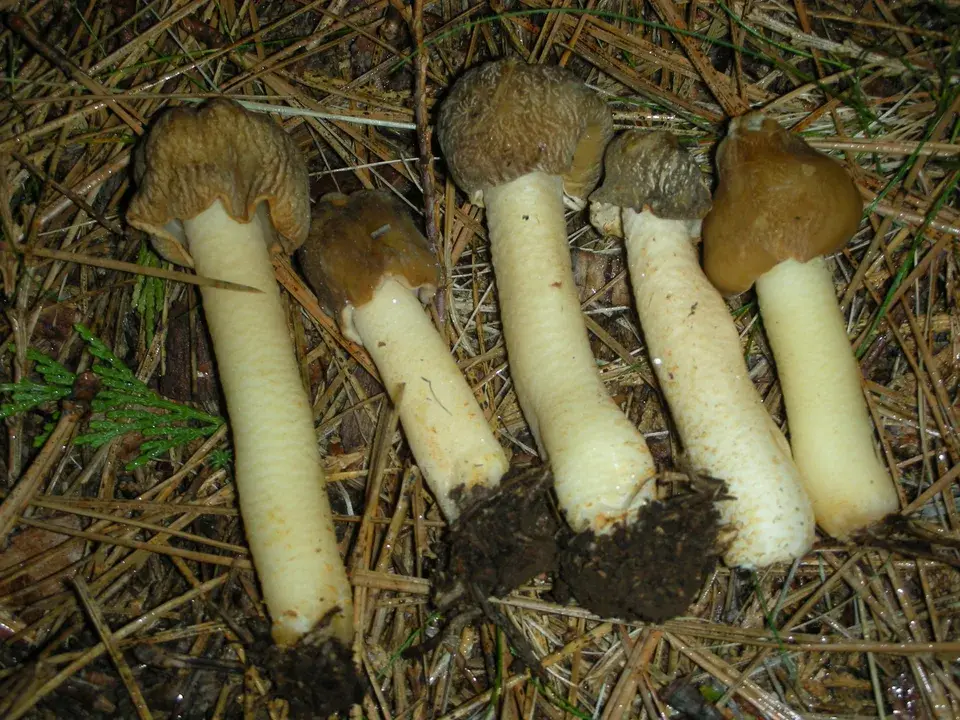
The thimble morel has a smooth, thimble-like cap that is attached to the stem only at the tip. It is not an edible mushroom (raw it causes gastrointestinal upset) and is easily confused with morels.
Eaten raw it can cause gastrointestinal upset, so do not confuse it with morels.
Its cap is convoluted like a brain and red-brown, chambered inside and not hollow all the way through.
View on the map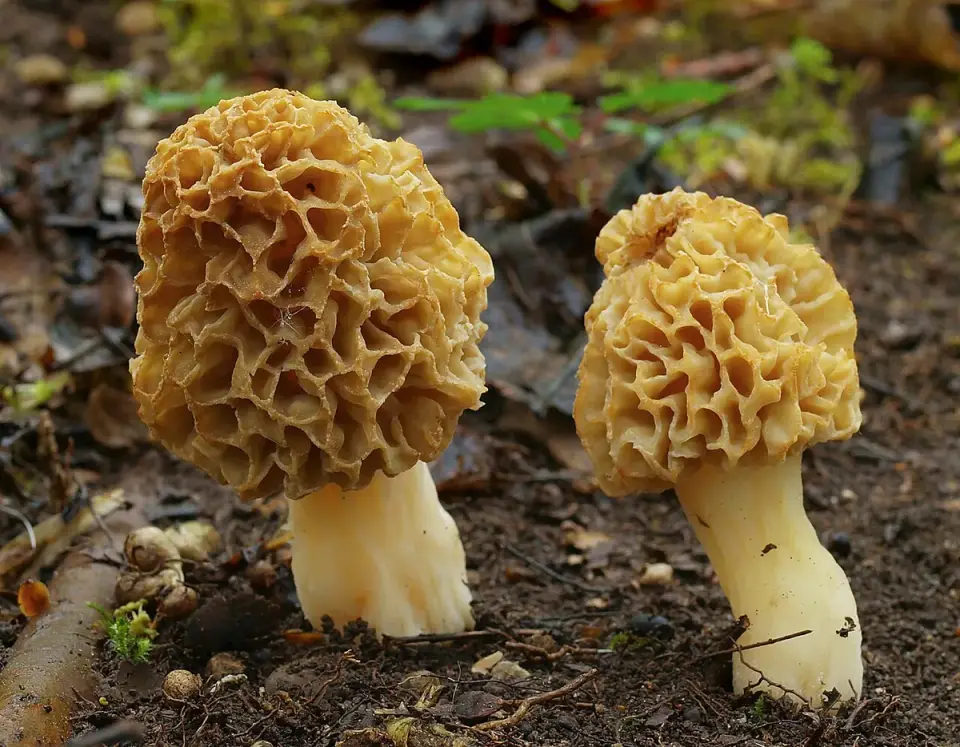
It smells pleasantly spicy, and its spore print is cream to ochre-yellow. Its cap is honeycomb-chambered and fused with the stem, whereas the cap of the thimble morel sits on the stem only at the top, like a thimble.
View on the map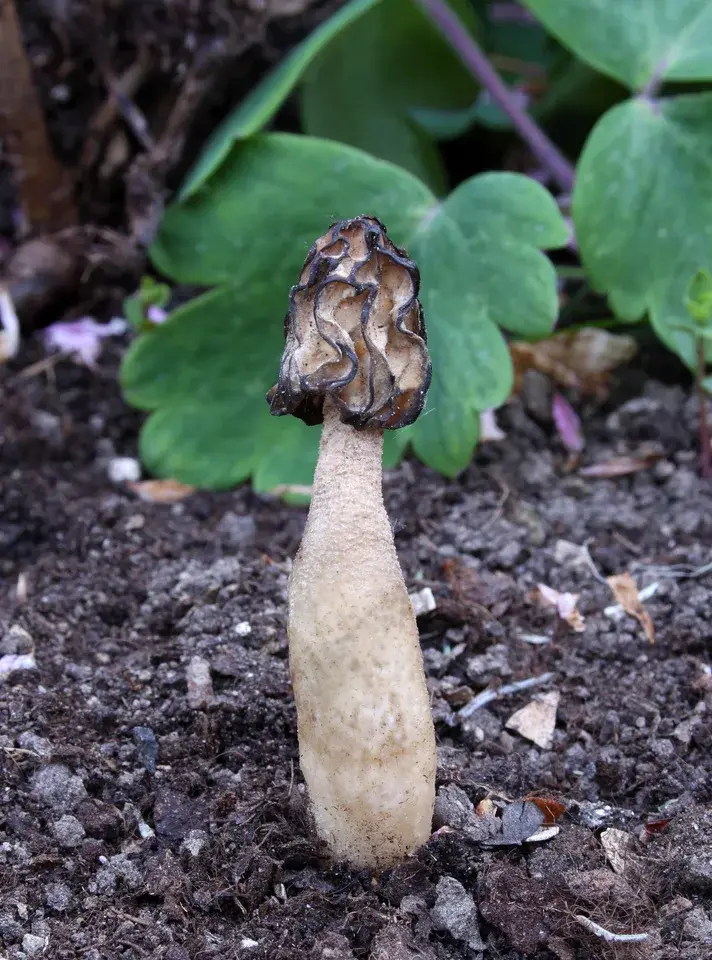
Its cap is small and sits on the long stem only halfway; the lower edge of the cap stands free.
View on the map| Thimble morel | False morel | Common morel | Half-free morel | |
|---|---|---|---|---|
| Cap | 2 to 4 cm tall, thimble- to bell-shaped | 3 to 10 cm, red-brown to dark brown, convoluted like a brain | 3 to 10 cm tall, roundish to egg-shaped, honeycombed | 2 to 5 cm tall, conical, honeycombed |
| Underside | no gills, cap hangs free on the stem | no gills, cap chambered inside | no gills, cap fully fused with the stem | no gills, lower half of the cap free from the stem |
| Stem | 3 to 12 cm long, whitish | short, whitish, furrowed | whitish, finely mealy, hollow | long, whitish, finely mealy, hollow |
| Flesh | pale and brittle | waxy brittle, chambered inside | waxy brittle, hollow | waxy brittle, hollow |
| Edibility | Inedible | deadly poisonous | edible | edible |
Damp banks, floodplain woods, humus-rich soils. From the lowlands up to the hills.
Deciduous trees in floodplains, poplars, willows.
possible good main season
Spring in floodplains and deciduous woods.
There are no records per region for this species yet. The country pages lead to all regions with a daily forecast.
Poison centre:
Emergency: 112 · 999
Poison centre:
Emergency: 112
Mushroom advice: DGfM: find a mushroom expert. Certified mushroom experts of the German Mycological Society (DGfM).
Collecting rules: Mushrooms that are not specially protected may be collected in small quantities for personal use unless a protected area or ban applies. Certain specially protected edible species (e.g. cep, chanterelle, birch bolete) may be collected in small quantities for personal use.
Poison centre:
Emergency: 112 · 144
Mushroom advice: Austrian Mycological Society (ÖMG): mushroom advice. Mushroom advice by the Austrian Mycological Society or regional services such as municipal market offices.
Collecting rules: At most 2 kg of mushrooms per person per day unless the forest owner has prohibited collecting; organised collecting events are prohibited. Additional state rules apply (collecting hours, closed seasons), e.g. Carinthia, Tyrol, Vorarlberg, Salzburg.
Eating it raw is often not tolerated; no substitute for morels.
The cap sits on the stem only at the tip; in morels the cap is joined all the way.
No, the thimble morel is not edible. Eaten raw it can cause gastrointestinal upset, so do not confuse it with morels.
The thimble morel grows from April to May in spring in floodplains and deciduous woods, on damp, humus-rich soils, mostly under poplars and willows.
You can confuse it with the common morel, the false morel and the half-free morel. The common morel smells pleasantly spicy and has a cream to ochre-yellow spore print, and its cap is honeycomb-chambered and fused with the stem, whereas the cap of the thimble morel sits on the stem only at the top, like a thimble. The cap of the false morel is convoluted like a brain and red-brown, chambered inside and not hollow all the way through. In the half-free morel the cap is small and sits on the long stem only halfway; the lower edge of the cap stands free.
The spore print is yellowish. The cap is 2 to 4 cm tall, thimble-shaped to bell-shaped, brown, smooth to slightly wrinkled.
No substitute for having your finds checked in person. No guarantee of accuracy. Updated: 17.10.2026.

