FungiFindFungiFind

FungiFind › Mushroom species

Half-free morel

Morchella semilibera DC. · Morchellaceae

Also: Semi-free morel

Where is it growing now? Open the map Mushroom alert for this species How the mushroom alert works

Identification in 5 steps

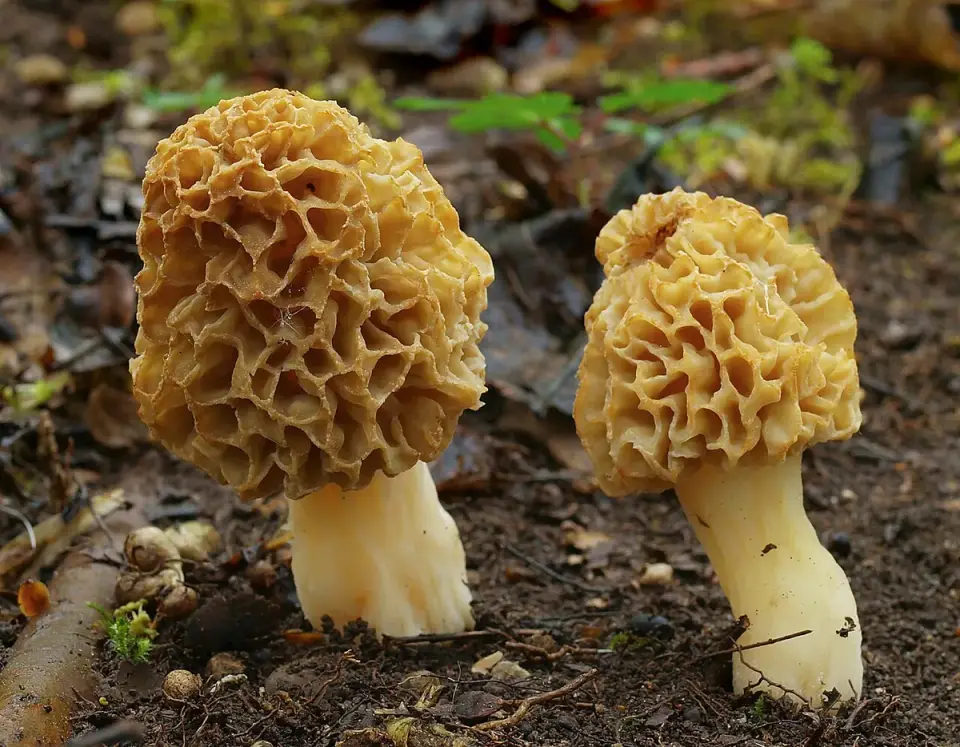
The half-free morel is a spring morel with a small, cap-like head that is joined to the stem only about halfway, and a hollow, granular stem. Overall it grows about 10 to 20 cm tall. Like all morels, it is poisonous raw and must be cooked thoroughly.

SeasonApril to May
Spore printpale yellowish to cream
FamilyMorchellaceae
  1. Cap. The cap is small, cap-shaped to conical and joined to the stem only about halfway; the lower edge hangs free like a little skirt. It has honeycomb-like ridges and is brown.
  2. Underside. The underside of the cap is free from the stem. There are neither gills nor tubes; the spore-bearing layer lies in the pits on the outside.
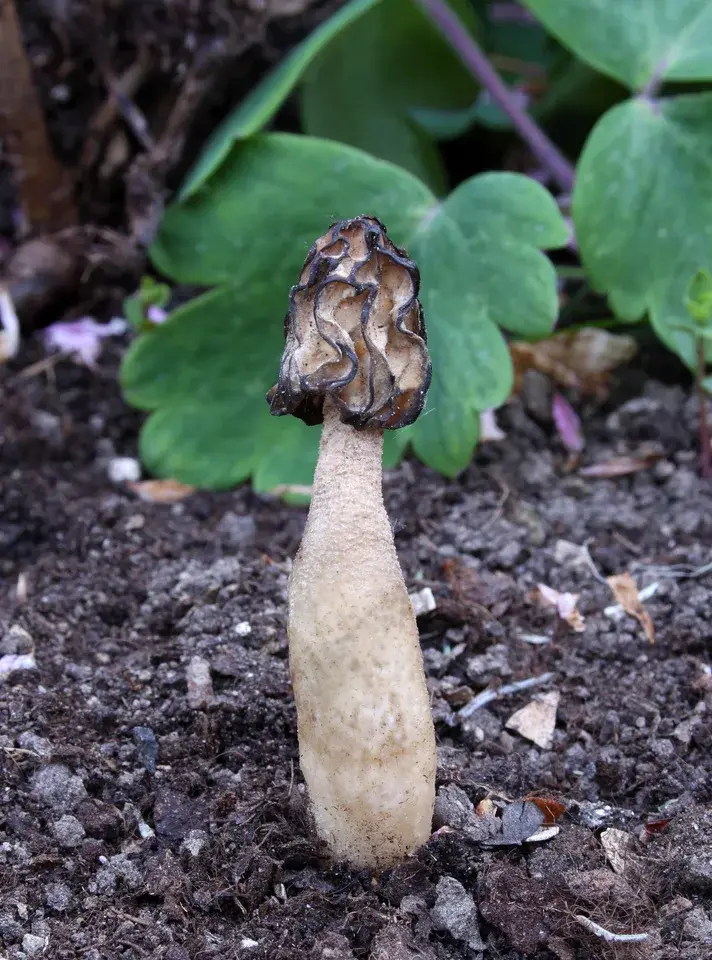
  3. Stem, ring and volva. The stem measures about 4 to 8 cm, is pale, granular to finely scaly and hollow inside. There is no ring and no volva.
  4. Smell and taste. The smell is mild and mushroomy, and the taste is mild.
  5. Flesh and colour change. The flesh is brittle and thin. A striking colour change is not one of its features.

Lookalikes

The half-free morel is an edible mushroom, but it is poisonous raw and must be cooked thoroughly. Dangerous look-alikes are the false morel (deadly poisonous) and the wrinkled thimble-cap (poisonous). The cap is joined to the stem only at about the halfway point.

Wrinkled thimble-cap Verpa bohemica

poisonous

The cap is wrinkled instead of honeycomb-ridged and is attached to the stem only at the tip. The half-free morel is joined to the stem about halfway. Poisonous, not recommended as an edible mushroom.

Side by side

Half-free morelFalse morelWrinkled thimble-capCommon morel
Capcap-shaped, honeycomb-ridged, joined only halfwayfolded like a brain, red-brownwrinkled, bell-shaped, attached only at the tiproundish to egg-shaped, fully joined to the stem
Undersidecap edge free, no gills, hollowchambered inside, not uniformly hollowfree, no pitshollow, cap and stem share one cavity
Stem4 to 8 cm, pale, granular, hollowshort, whitish, chamberedslender, hollow, palewhitish to cream, hollow
Fleshbrittle, waxybrittle, waxybrittlebrittle, waxy
EdibilityEdibledeadly poisonouspoisonousedible

Habitat & Season

Deciduous and floodplain woods, on nutrient-rich soils. No reliable information.

Host trees

No reliable information.

Season

possible good main season

Rough estimate; the fruiting period depends on the weather.

Mushroom regions with a daily forecast

There are no records per region for this species yet. The country pages lead to all regions with a daily forecast.

All mushroom regions →

Chance near you

How good are the chances of finding this species where you are right now? We calculate it from weather, soil moisture, altitude and forest at your location.

View on the map

Safety

Never eat a mushroom you have not identified with certainty. Only eat mushrooms you have identified beyond doubt, and always cook them thoroughly.

Advice for your country

United Kingdom

Poison centre:

NHS 111 (England)111

Emergency: 999 · 112

Ireland

Poison centre:

National Poisons Information Centre (public line)(01) 809 2166

Emergency: 112 · 999

Germany

Poison centre:

Giftnotruf Berlin030 19240Giftinformationszentrum München089 19240GIZ-Nord Göttingen0551 19240

Emergency: 112

Mushroom advice: DGfM: find a mushroom expert. Certified mushroom experts of the German Mycological Society (DGfM).

Collecting rules: Mushrooms that are not specially protected may be collected in small quantities for personal use unless a protected area or ban applies. Certain specially protected edible species (e.g. cep, chanterelle, birch bolete) may be collected in small quantities for personal use.

Austria

Poison centre:

Vergiftungsinformationszentrale (VIZ)01 406 43 43

Emergency: 112 · 144

Mushroom advice: Austrian Mycological Society (ÖMG): mushroom advice. Mushroom advice by the Austrian Mycological Society or regional services such as municipal market offices.

Collecting rules: At most 2 kg of mushrooms per person per day unless the forest owner has prohibited collecting; organised collecting events are prohibited. Additional state rules apply (collecting hours, closed seasons), e.g. Carinthia, Tyrol, Vorarlberg, Salzburg.

Conservation and collecting rules

Morels are protected under nature conservation law in Germany. Collecting is allowed only in small quantities for personal use; observe the rules of the federal states.
In the kitchen

Cut in half lengthways, check thoroughly for dirt and cook well, for example in butter, cream or sauces. Cook for at least 15 minutes.

No reliable information on drying. The half-free morel is poisonous raw, so always cook it thoroughly. Confusion with the false morel can be fatal. Cut open and check every find.

Frequently asked questions

Is the half-free morel edible?

Yes, after thorough cooking. It is poisonous raw. Secure identification is important because of the poisonous look-alikes.

How do I recognise the half-free morel?

By the small, cap-shaped head that is joined to the stem only about halfway, and by the hollow, granular stem.

How do I tell it from the false morel?

The false morel has a cap folded like a brain and a chambered stem. The half-free morel has honeycomb ridges and is hollow inside.

Am I allowed to collect morels?

Morels are protected under nature conservation law in Germany. Collecting a small quantity for personal use is allowed; observe regional rules.

Related species

Mushroom trainer: test yourself

Sources

Photo credits

No substitute for having your finds checked in person. No guarantee of accuracy. Updated: 17.10.2026.

Open the mushroom map