
Suede bolete Xerocomus subtomentosus
edible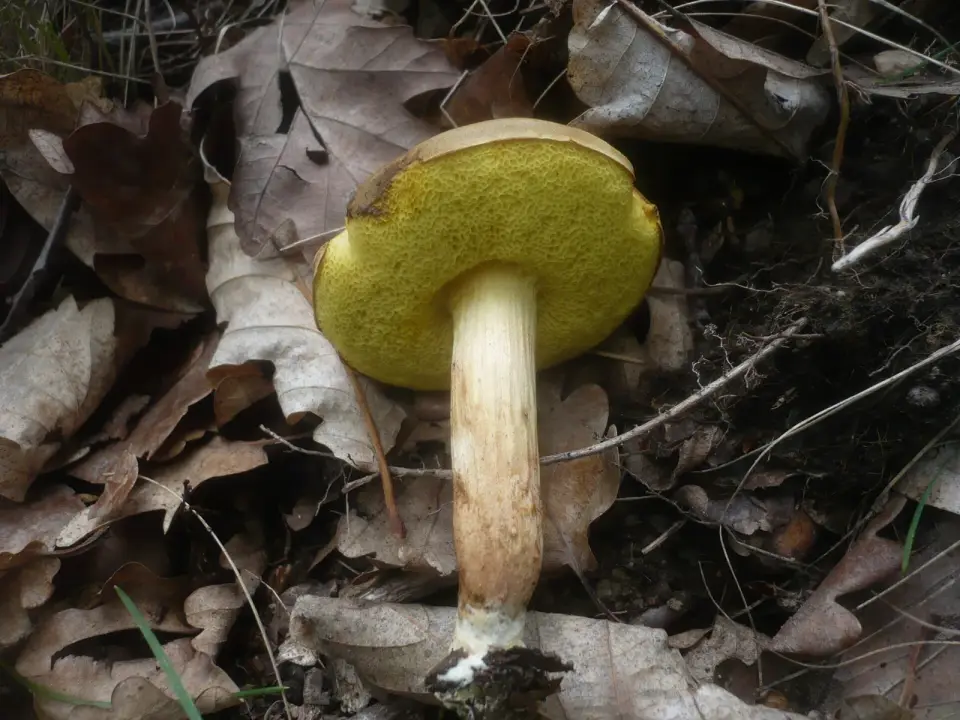

Its cap is grey-brown to olive-brown and stays felty for longer, and the flesh is darker in colour. It can be told apart from Xerocomus ferrugineus only with experience. Both are edible.
View on the map
No matching species found.
Xerocomus ferrugineus (Schaeff.) Bon · Boletaceae
Where is it growing now? Open the map Mushroom alert for this species How the mushroom alert works
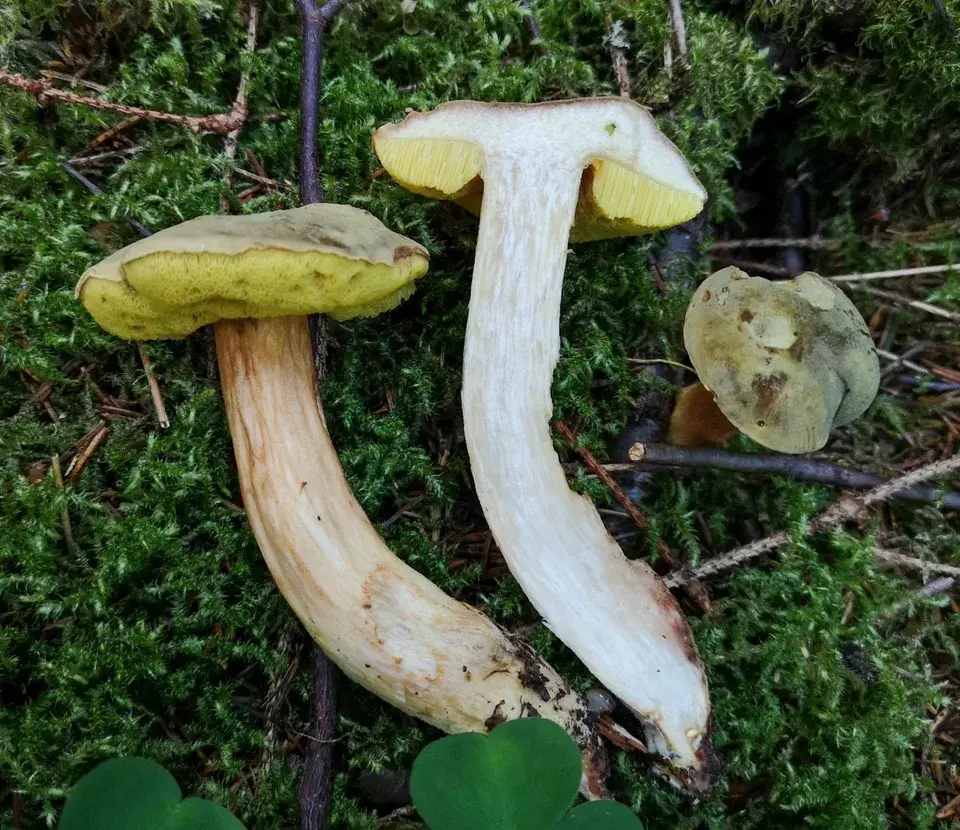
Xerocomus ferrugineus resembles the suede bolete, but has a brown cap that becomes bald more quickly, paler flesh and a more variable stem surface. At the stem base a more strongly yellow mycelium shows. Molecularly it counts as a species in its own right, and it is edible.
Xerocomus ferrugineus is an edible bolete of the genus Xerocomus and very similar to the suede bolete. It is regarded as a species in its own right and can be separated safely only with experience. Both are edible. Identify every bolete carefully before eating it.
Its cap is grey-brown to olive-brown and stays felty for longer, and the flesh is darker in colour. It can be told apart from Xerocomus ferrugineus only with experience. Both are edible.
View on the map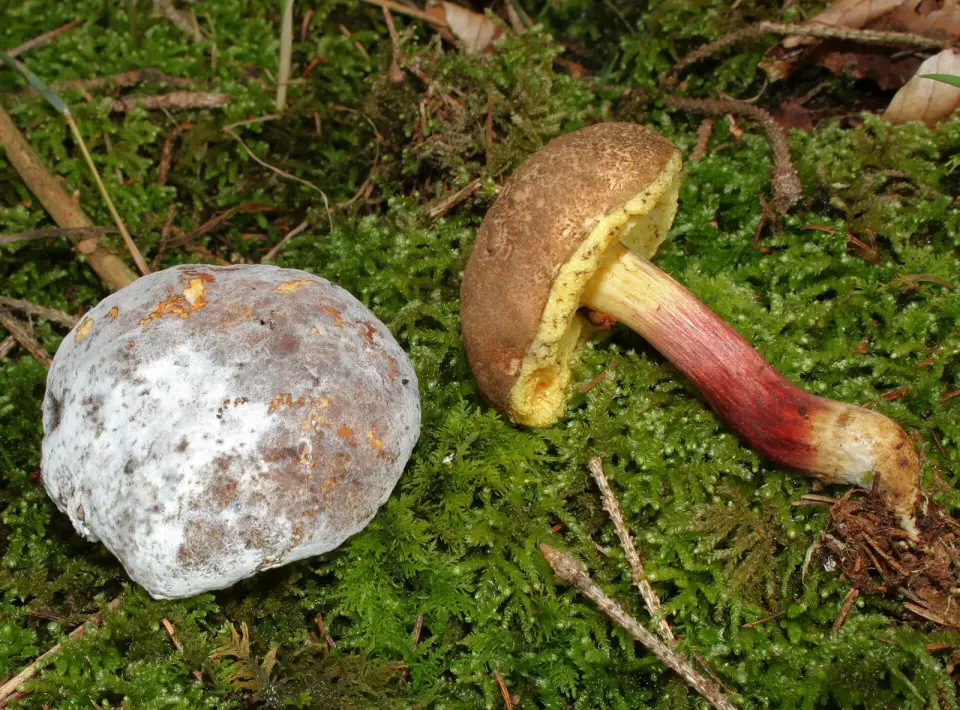
It has a grey-brown, cracked cap and strongly red flesh in the stem, with a sour taste. The red stem flesh is absent in Xerocomus ferrugineus. Also edible.
View on the map| Xerocomus ferrugineus | Suede bolete | Red cracking bolete | |
|---|---|---|---|
| Cap | brown, becomes bald faster than in the suede bolete | grey-brown to olive-brown, felty for a long time | grey-brown, cracked, with red flesh in the cracks |
| Underside | yellowish tubes with wide, angular pores | yellow tubes, wide pores | yellow tubes, wide pores |
| Stem | variably patterned, base with strongly yellow mycelium | yellowish to brownish, lengthwise-fibrous | with red colouring, especially below |
| Flesh | soft, spongy with age | soft, spongy with age | soft, sour |
| Edibility | Edible | edible | edible |
Woods and woodland edges. No reliable information.
No reliable information.
possible good main season
Rough estimate; the fruiting period depends on the weather.
There are no records per region for this species yet. The country pages lead to all regions with a daily forecast.
How good are the chances of finding this species where you are right now? We calculate it from weather, soil moisture, altitude and forest at your location.
Poison centre:
Emergency: 112 · 999
Poison centre:
Emergency: 112
Mushroom advice: DGfM: find a mushroom expert. Certified mushroom experts of the German Mycological Society (DGfM).
Collecting rules: Mushrooms that are not specially protected may be collected in small quantities for personal use unless a protected area or ban applies. Certain specially protected edible species (e.g. cep, chanterelle, birch bolete) may be collected in small quantities for personal use.
Poison centre:
Emergency: 112 · 144
Mushroom advice: Austrian Mycological Society (ÖMG): mushroom advice. Mushroom advice by the Austrian Mycological Society or regional services such as municipal market offices.
Collecting rules: At most 2 kg of mushrooms per person per day unless the forest owner has prohibited collecting; organised collecting events are prohibited. Additional state rules apply (collecting hours, closed seasons), e.g. Carinthia, Tyrol, Vorarlberg, Salzburg.
Not specially protected.
Fried, braised or in sauces. Use only young, firm mushrooms; older ones turn spongy. Cook for at least 15 minutes.
No reliable information on drying. Do not use older, spongy mushrooms or those infested with mould. Indigestible raw, always cook it well.
Yes, like the suede bolete, it is considered edible. It must be cooked thoroughly.
Xerocomus ferrugineus has a brown cap that becomes bald more quickly, paler flesh and a more strongly yellow mycelium at the stem base. A safe separation is possible only with experience.
No reliable information on poisonous look-alikes. Every bolete should be identified with certainty before eating.
No substitute for having your finds checked in person. No guarantee of accuracy. Updated: 17.10.2026.
