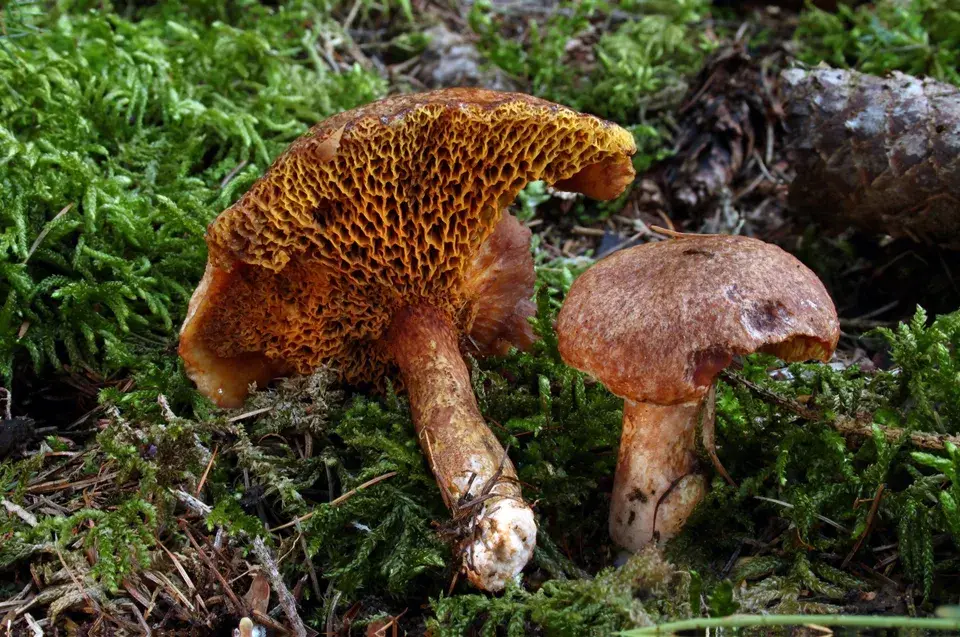
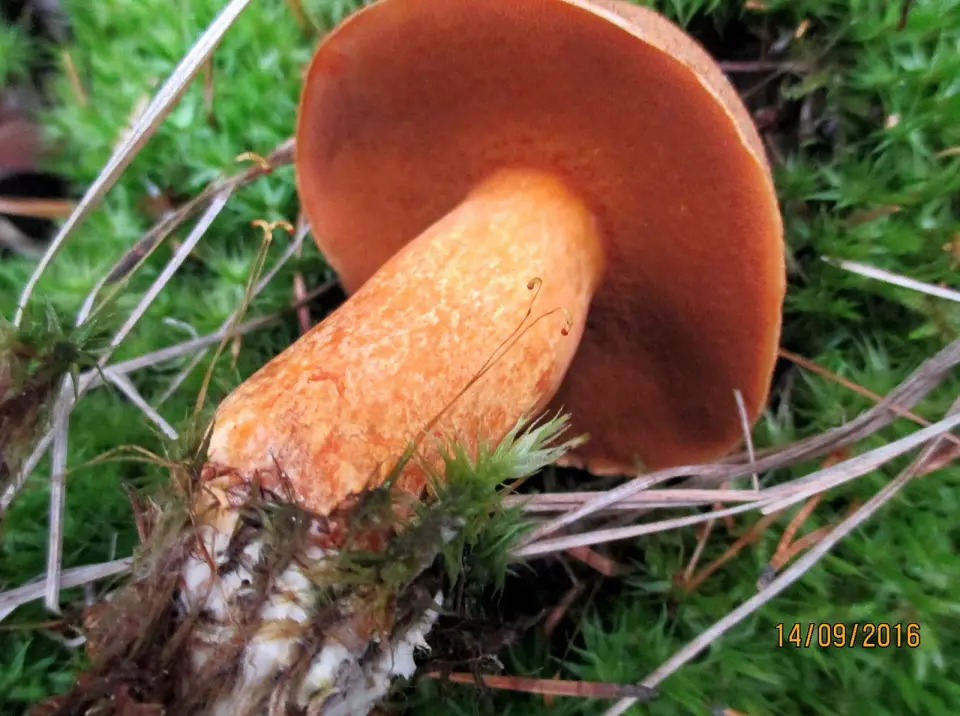
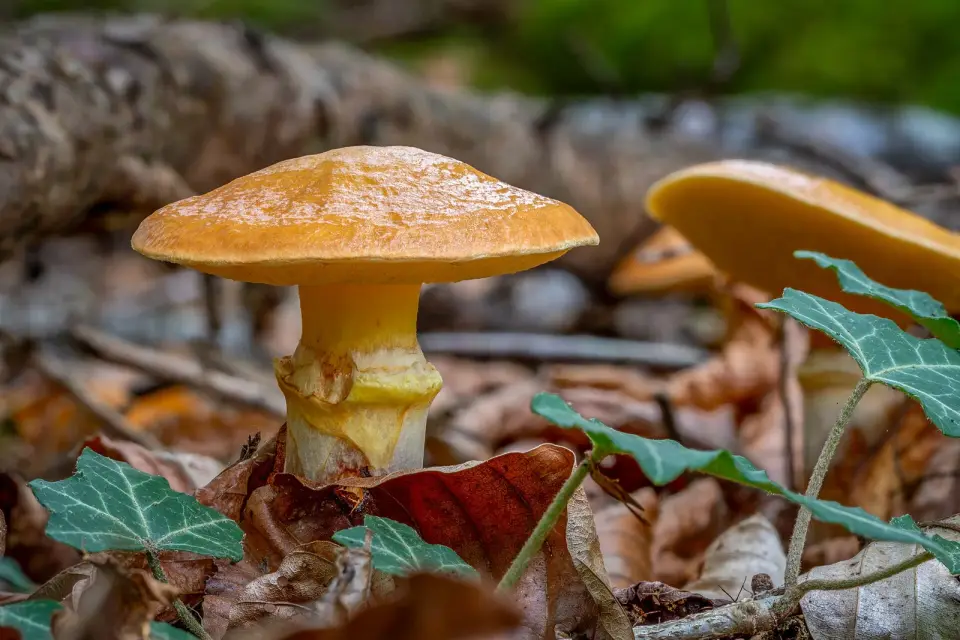
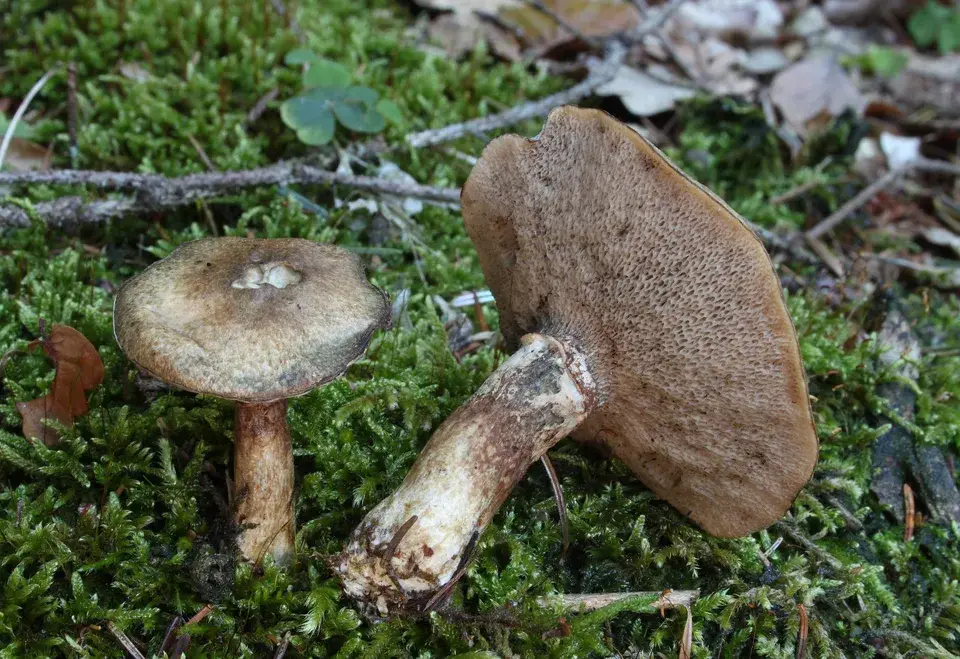
The orange larch bolete has a cinnamon-brown to orange-red cap of about 5 to 15 cm with embedded fibres, yellowish tubes that later turn orange-red with angular pores, and a yellow to orange-red stem. It grows exclusively with larches, preferring chalk-rich soils, from July to October.
SeasonJuly to October
Spore printbrown to olive-brown
FamilySuillaceae
Cap. The cap measures about 5 to 15 cm, is cinnamon-brown to orange-red and has embedded fibres.
Underside. The tubes are yellowish and later turn orange-red; the pores are angular.
Stem, ring and volva. The stem measures about 4 to 11 cm, is yellow to orange-red and has a fine net pattern at the top. When young there is a white veil.
Smell and taste. The smell is inconspicuous, and the taste is not very pronounced and mild.
Flesh and colour change. The flesh is yellowish.
Lookalikes
The orange larch bolete is an edible slippery bolete that grows only with larches. The flavour is not very pronounced. The peppery bolete has similar colours, but tastes hot and does not grow only with larches.
It tastes hot and has a small, red-brown cap with yellow tubes, with no tie to larches. The orange larch bolete grows only with larches. Edible with restrictions, only as a spice.
How good are the chances of finding this species where you are right now? We calculate it from weather, soil moisture, altitude and forest at your location.
Mushroom advice:DGfM: find a mushroom expert. Certified mushroom experts of the German Mycological Society (DGfM).
Collecting rules: Mushrooms that are not specially protected may be collected in small quantities for personal use unless a protected area or ban applies. Certain specially protected edible species (e.g. cep, chanterelle, birch bolete) may be collected in small quantities for personal use.
Collecting rules: At most 2 kg of mushrooms per person per day unless the forest owner has prohibited collecting; organised collecting events are prohibited. Additional state rules apply (collecting hours, closed seasons), e.g. Carinthia, Tyrol, Vorarlberg, Salzburg.
Conservation and collecting rules
Not specially protected.
In the kitchen
Peel off the cap skin, cut into slices and fry or braise. The flavour is not very pronounced, so use it as a mixed mushroom. Cook for at least 15 minutes.
No reliable information on drying. Peel off the slimy cap skin, as it can cause stomach upset. Indigestible raw, always cook it well.
Never eat wild mushrooms raw, and always cook them for at least 15 minutes.
Use only young, fresh, maggot-free mushrooms that you have identified with certainty.
Carry mushrooms in an airy basket, not in plastic bags, and process them on the same day.
Frequently asked questions
Is the orange larch bolete edible?
Yes, it is considered edible, but the flavour is not very pronounced. Peel off the cap skin and cook thoroughly.
Where does it grow?
Only with larches, preferring chalk-rich soils, from July to October.
How do I tell it from the peppery bolete?
The peppery bolete tastes hot and is small; the orange larch bolete is larger, slimy and found only with larches.