
Slippery Jack Suillus luteus
edible with restrictions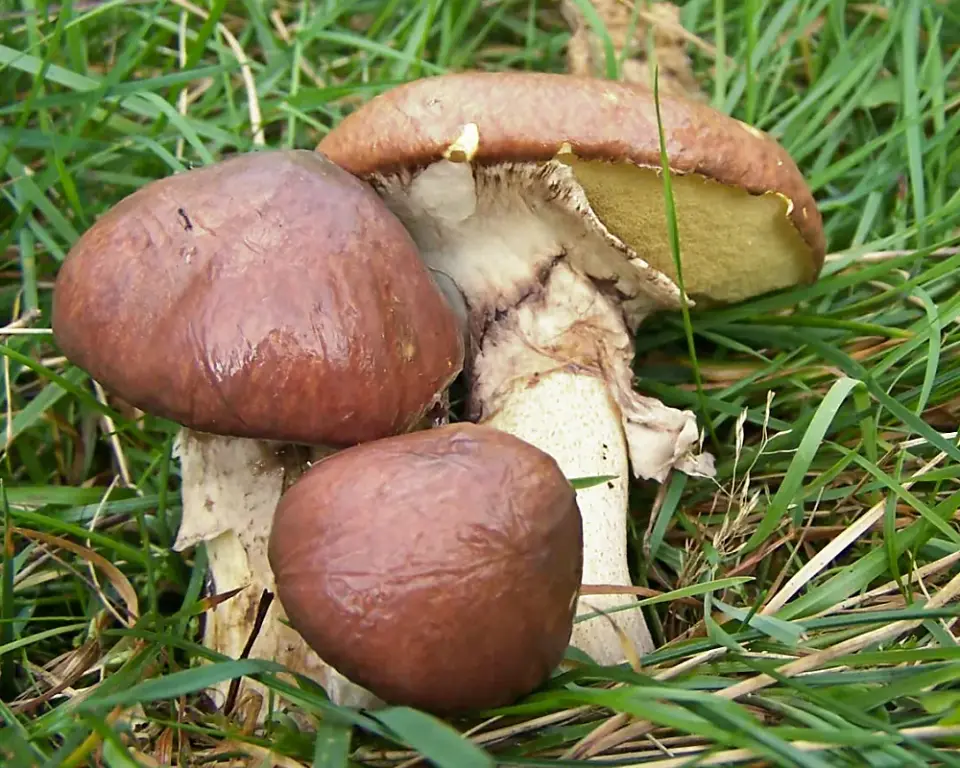

It has a membranous ring on the stem, which Suillus collinitus does not. This is the most important feature. Edible with restrictions; peel off the cap skin.
View on the map
No matching species found.
Suillus collinitus (Fr.) Kuntze · Suillaceae
Where is it growing now? Open the map Mushroom alert for this species How the mushroom alert works
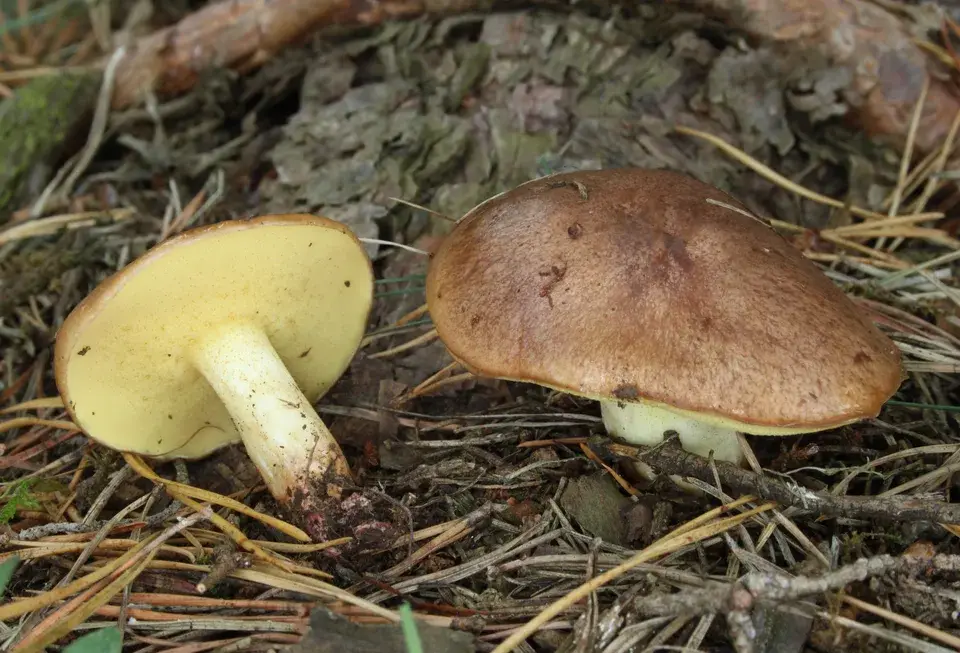
Suillus collinitus is a slippery jack with a light to dark brown, slimy cap with radial fibres embedded in the skin, and yellow tubes. The stem has no ring, but it does have droplets, and its base is coloured pink. It grows with pines, preferring chalk, until the first frosts.
Suillus collinitus is an edible slippery jack that grows with pines and is only moderate in flavour. It is similar to the slippery Jack, but has no ring. The cap skin should be peeled off before eating.
It has a membranous ring on the stem, which Suillus collinitus does not. This is the most important feature. Edible with restrictions; peel off the cap skin.
View on the map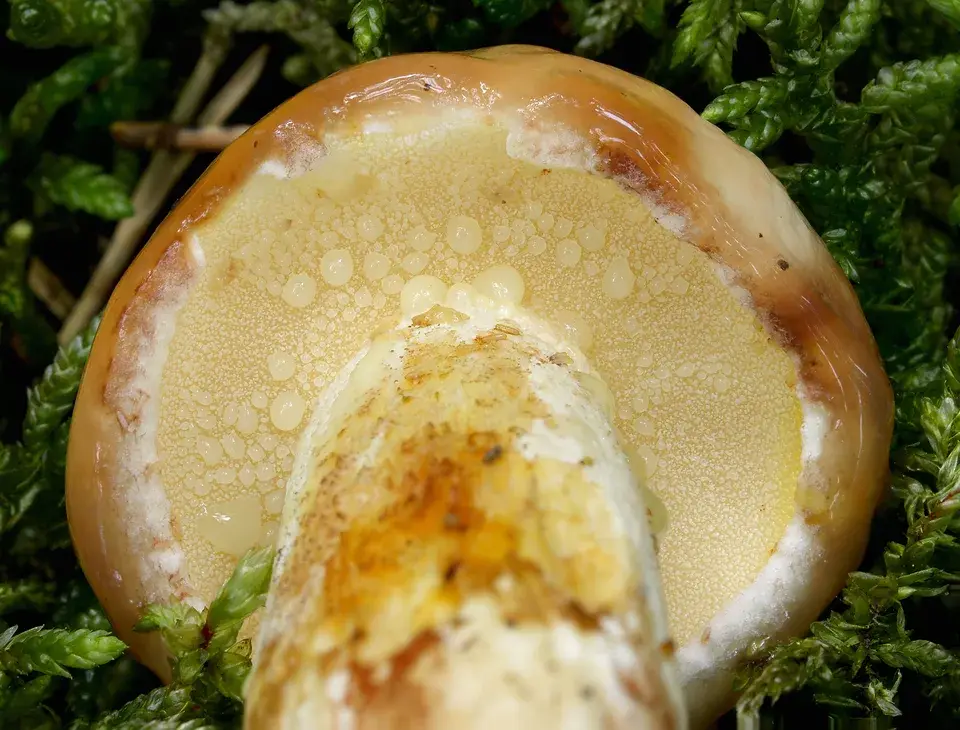
The stem is covered in granules and has milky droplets, and the stem base is not pink. The cap is paler and slimy. Also edible.
View on the map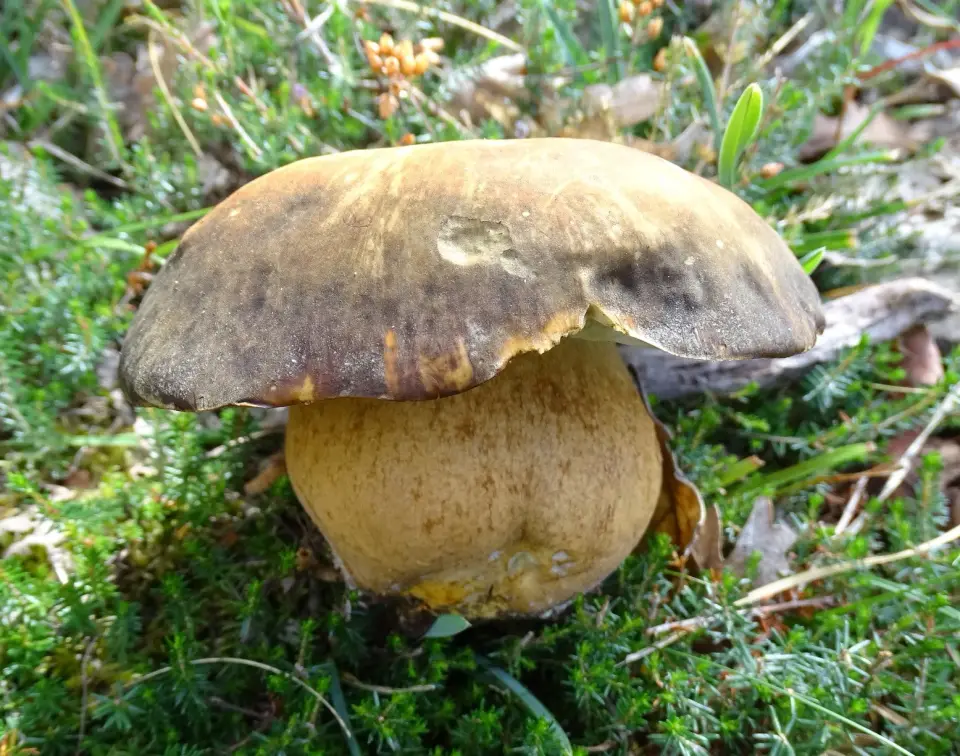
It has a dry, felty cap and a stem without a ring. The cap is not slimy as in Suillus collinitus. Also edible.
View on the map| Suillus collinitus | Slippery Jack | Weeping bolete | Velvet bolete | |
|---|---|---|---|---|
| Cap | 3 to 10 cm, light to dark brown, slimy | yellow- to chocolate-brown, slimy | yellow-brown, slimy, fading | yellow-brown, dry, felty |
| Underside | pale yellow, later olive-yellow tubes | yellow tubes, with shreds of skin when young | pale yellow tubes, milky drops | yellowish to olive-yellow tubes |
| Stem | 4 to 7 cm, no ring, pink base | with a membranous ring | with granules, no ring | no ring, not slimy |
| Flesh | soft, slimy | soft, slimy | soft, slimy | firm, not slimy |
| Edibility | Edible | edible with restrictions | edible | edible |
Pine woods, preferring chalk. No reliable information.
Pine, mycorrhizal fungus.
possible good main season
Rough estimate; the mushroom grows until the first frosts and depends on the weather.
There are no records per region for this species yet. The country pages lead to all regions with a daily forecast.
How good are the chances of finding this species where you are right now? We calculate it from weather, soil moisture, altitude and forest at your location.
Poison centre:
Emergency: 112 · 999
Poison centre:
Emergency: 112
Mushroom advice: DGfM: find a mushroom expert. Certified mushroom experts of the German Mycological Society (DGfM).
Collecting rules: Mushrooms that are not specially protected may be collected in small quantities for personal use unless a protected area or ban applies. Certain specially protected edible species (e.g. cep, chanterelle, birch bolete) may be collected in small quantities for personal use.
Poison centre:
Emergency: 112 · 144
Mushroom advice: Austrian Mycological Society (ÖMG): mushroom advice. Mushroom advice by the Austrian Mycological Society or regional services such as municipal market offices.
Collecting rules: At most 2 kg of mushrooms per person per day unless the forest owner has prohibited collecting; organised collecting events are prohibited. Additional state rules apply (collecting hours, closed seasons), e.g. Carinthia, Tyrol, Vorarlberg, Salzburg.
Not specially protected.
Peel off the cap skin, cut the mushroom into slices and fry or braise. The flavour is only moderate, so it is good as a mixed mushroom. Cook for at least 15 minutes.
No reliable information on drying. The slimy cap skin can cause stomach upset, so peel it off. Indigestible raw, always cook it well.
Yes, it is considered edible, but the flavour is only moderate. The cap skin should be peeled off.
The slippery Jack has a membranous ring on the stem; Suillus collinitus does not. In addition, the stem base of Suillus collinitus is coloured pink.
With pines, preferring chalky soil, from September until the first frosts.
No substitute for having your finds checked in person. No guarantee of accuracy. Updated: 17.10.2026.

