
Crowded russula Russula densifolia
inedible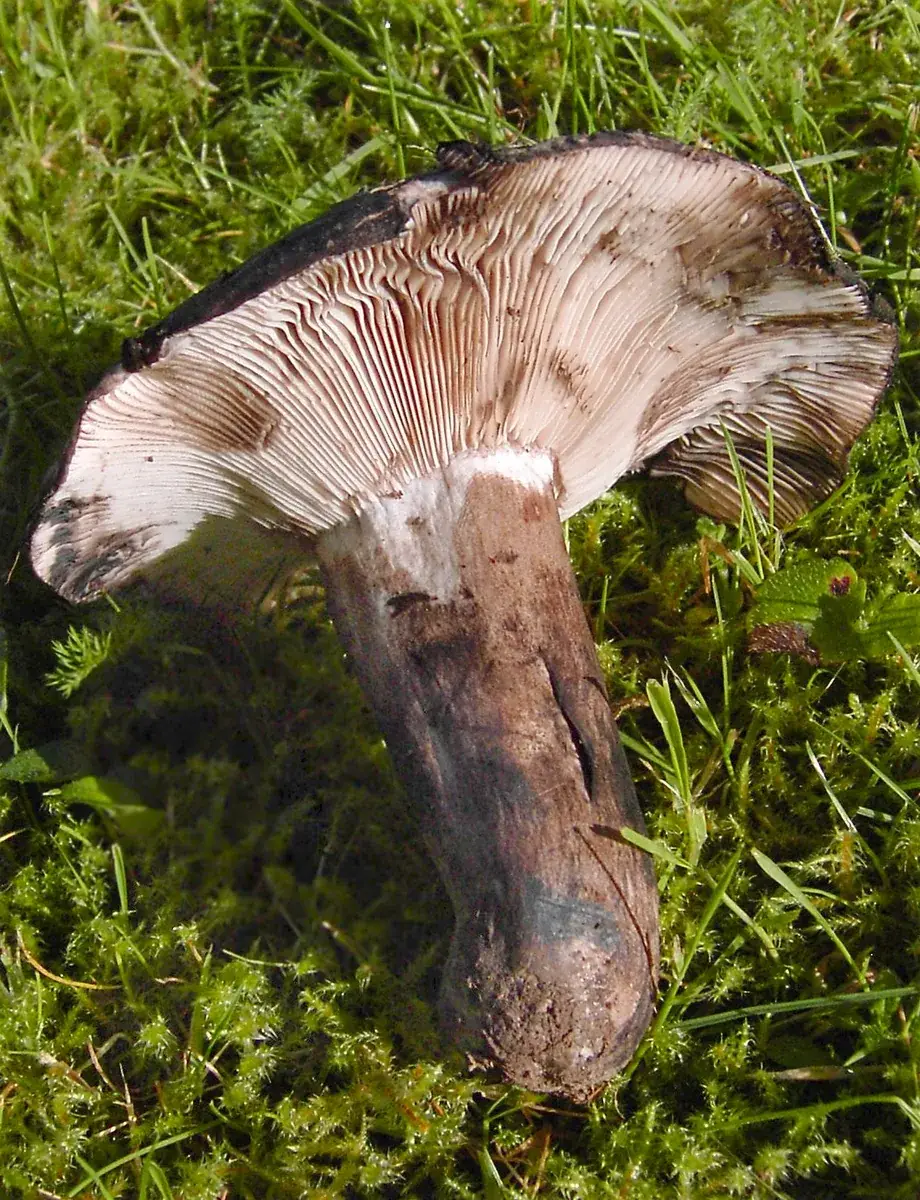

It has closely spaced gills.
View on the map
No matching species found.
Russula nigricans Fr. · Russulaceae
Also: Blackening russula
Where is it growing now? Open the map Mushroom alert for this species How the mushroom alert works
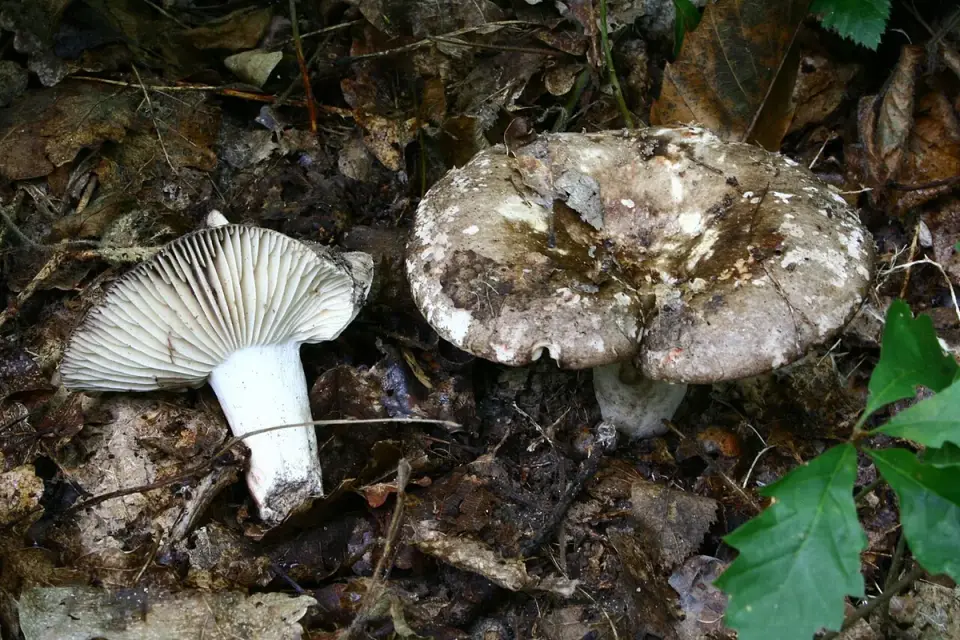
The blackening brittlegill is a large, hard brittlegill with very widely spaced, thick gills. Its flesh turns red when cut and then black.
Poor quality, edible only when very young. In Japan there is the very similar, deadly poisonous Russula subnigricans.
It has closely spaced gills.
View on the map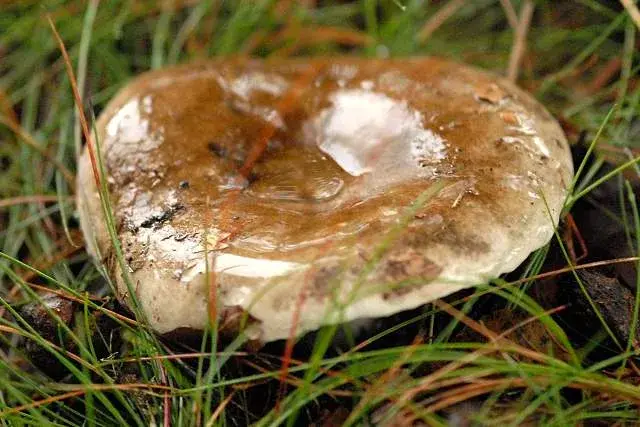
It has crowded gills and hardly turns red.
View on the mapAlmost all soils. From lowland to mountain regions.
Beech, spruce, also other broadleaved and coniferous trees.
possible good main season
There are no records per region for this species yet. The country pages lead to all regions with a daily forecast.
How good are the chances of finding this species where you are right now? We calculate it from weather, soil moisture, altitude and forest at your location.
Poison centre:
Emergency: 112 · 999
Poison centre:
Emergency: 112
Mushroom advice: DGfM: find a mushroom expert. Certified mushroom experts of the German Mycological Society (DGfM).
Collecting rules: Mushrooms that are not specially protected may be collected in small quantities for personal use unless a protected area or ban applies. Certain specially protected edible species (e.g. cep, chanterelle, birch bolete) may be collected in small quantities for personal use.
Poison centre:
Emergency: 112 · 144
Mushroom advice: Austrian Mycological Society (ÖMG): mushroom advice. Mushroom advice by the Austrian Mycological Society or regional services such as municipal market offices.
Collecting rules: At most 2 kg of mushrooms per person per day unless the forest owner has prohibited collecting; organised collecting events are prohibited. Additional state rules apply (collecting hours, closed seasons), e.g. Carinthia, Tyrol, Vorarlberg, Salzburg.
Not specially protected.
No species-specific rule known.
Red List Germany: Least concern
Only very young specimens, in mixed dishes. Cook thoroughly.
Not recommended. Hard flesh with little flavour.
Only with restrictions. Poor quality, edible only when very young. In Japan there is the very similar, deadly poisonous Russula subnigricans. Cook thoroughly.
The season in central Europe runs from June to October. Tree partner and habitat: Beech, spruce, also other broadleaved and coniferous trees. Soil: Almost all soils. Altitude: From lowland to mountain regions.
The most important distinction is from Crowded russula (Russula densifolia, inedible): It has closely spaced gills. Other lookalikes: winecork brittlegill.
No substitute for having your finds checked in person. No guarantee of accuracy. Updated: 17.10.2026.
