
The sickener Russula emetica
poisonous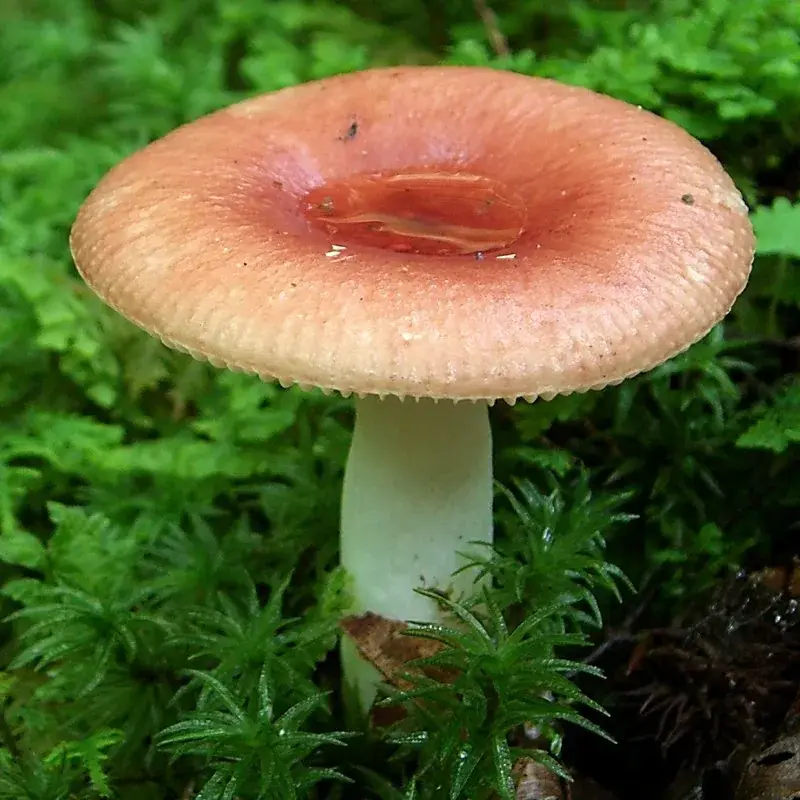

It has a red cap and white gills and tastes burning hot. It mostly grows with conifers or in damp woods. Poisonous, causes gastrointestinal upset.
View on the map
No matching species found.
Russula spec. Pers. · Russulaceae
Also: Mild brittlegills
Where is it growing now? Open the map Mushroom alert for this species How the mushroom alert works
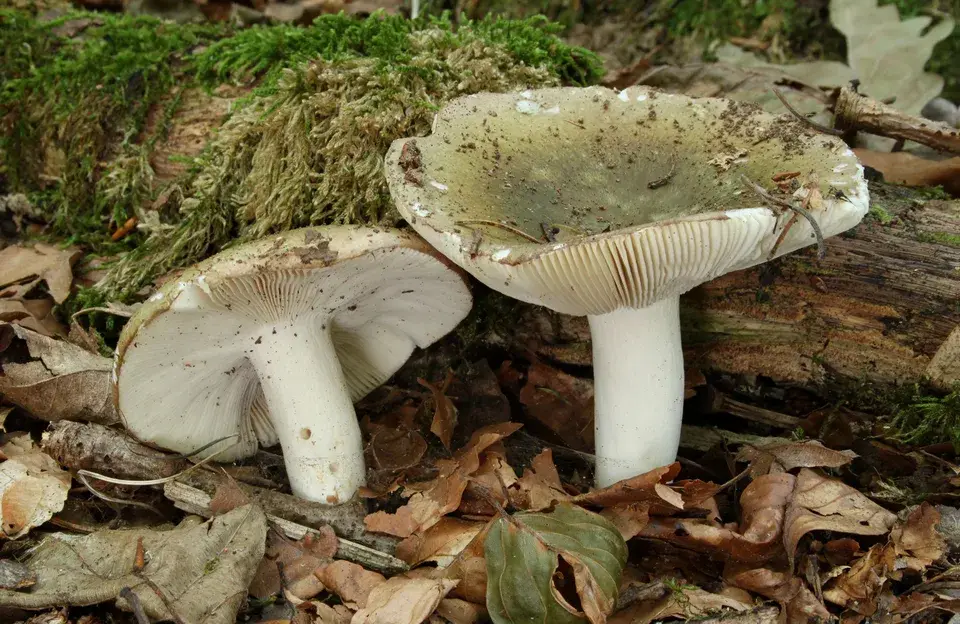
Brittlegills have a flat to domed cap, brittle gills and a brittle stem without a ring. Under birches, mild edible species grow alongside hot-tasting, poisonous or inedible ones. This profile describes the group of mild birch brittlegills and applies only after secure identification to species.
Group profile: brittlegills are a large genus with many good edible mushrooms, but also species that taste hot, are poisonous or are inedible. Under birches, mild edible species grow alongside hot-tasting look-alikes such as Russula betularum. A taste test is a must, but the mushroom should still be identified to species.
It has a red cap and white gills and tastes burning hot. It mostly grows with conifers or in damp woods. Poisonous, causes gastrointestinal upset.
View on the mapIt grows with birches, is pink to reddish and tastes hot. The taste test separates it from mild species. Poisonous.
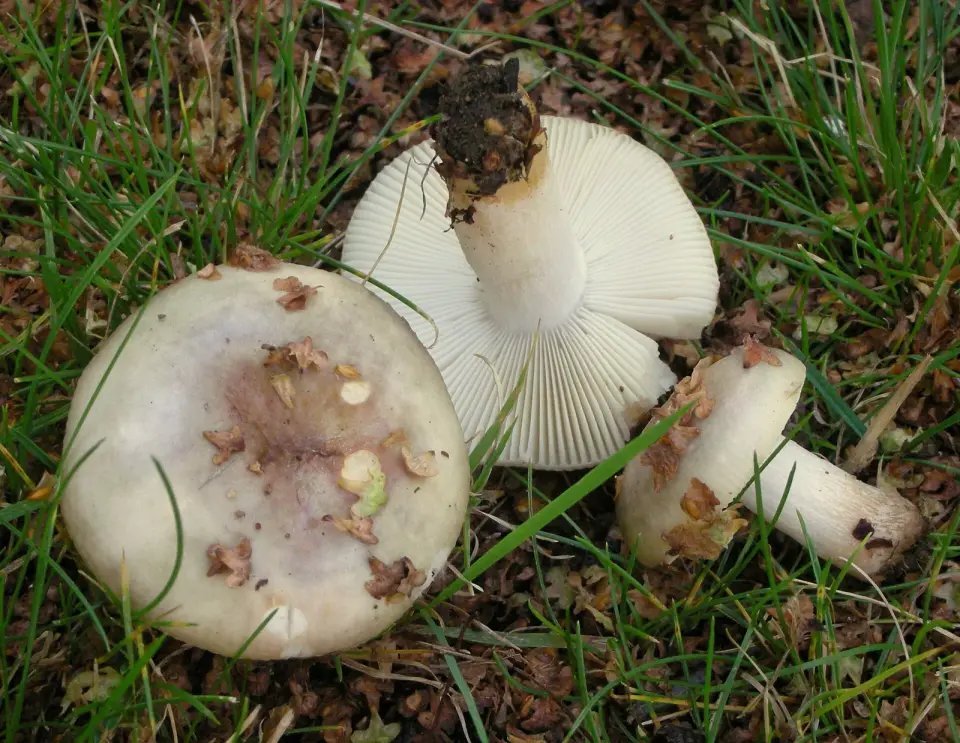
It grows with birches, has a cap mixed with red, violet, green or yellow and tastes slightly hot. Inedible.
View on the map| Mild birch brittlegills | The sickener | Russula betularum | Variable brittlegill | |
|---|---|---|---|---|
| Cap | green, violet, red or yellow by species, domed to flat | cherry- to blood-red, glossy | pale pink to reddish | mixed red, violet, greenish and yellowish |
| Underside | brittle, white to cream gills | pure white gills | white to cream gills | cream to yellowish gills |
| Stem | firm, brittle, no ring or volva | white, brittle | white, brittle | white, brittle |
| Flesh | brittle | brittle, hot-tasting | brittle, hot-tasting | brittle, slightly hot |
| Edibility | Edible | poisonous | poisonous | inedible |
Birch woods, bogs, heaths, woodland edges. No reliable information.
Birch, mycorrhizal fungi; depending on the species, other trees too.
possible good main season
Rough estimate; the fruiting period varies with the species and the weather.
There are no records per region for this species yet. The country pages lead to all regions with a daily forecast.
How good are the chances of finding this species where you are right now? We calculate it from weather, soil moisture, altitude and forest at your location.
Poison centre:
Emergency: 112 · 999
Poison centre:
Emergency: 112
Mushroom advice: DGfM: find a mushroom expert. Certified mushroom experts of the German Mycological Society (DGfM).
Collecting rules: Mushrooms that are not specially protected may be collected in small quantities for personal use unless a protected area or ban applies. Certain specially protected edible species (e.g. cep, chanterelle, birch bolete) may be collected in small quantities for personal use.
Poison centre:
Emergency: 112 · 144
Mushroom advice: Austrian Mycological Society (ÖMG): mushroom advice. Mushroom advice by the Austrian Mycological Society or regional services such as municipal market offices.
Collecting rules: At most 2 kg of mushrooms per person per day unless the forest owner has prohibited collecting; organised collecting events are prohibited. Additional state rules apply (collecting hours, closed seasons), e.g. Carinthia, Tyrol, Vorarlberg, Salzburg.
Not specially protected; individual species are on Red Lists.
Use only mild brittlegills identified with certainty to species, as a mixed mushroom in pan dishes or sauces. Cook for at least 15 minutes.
No reliable information on drying. The brittlegill rule applies only to brittlegills and milk caps: do not eat hot-tasting species. The rule does not apply to other groups of mushrooms. The taste test does not replace identification to species. Indigestible raw, always cook it well.
Many are, but not all. Mild to slightly hot brittlegills are considered edible; hot ones are inedible or poisonous. Identify them with certainty before eating.
Chew a small piece raw and spit it out. If it tastes mild, the species is edible; if it tastes hot, do not use it. The rule applies only to brittlegills and milk caps.
Yes, if you do not check for a ring and volva. Brittlegills never have either, and their flesh is brittle.
No substitute for having your finds checked in person. No guarantee of accuracy. Updated: 17.10.2026.
