FungiFindFungiFind

FungiFind › Mushroom species

Agaricus

Agaricus spec. L. · Agaricaceae

Where is it growing now? Open the map Mushroom alert for this species How the mushroom alert works

Identification in 5 steps

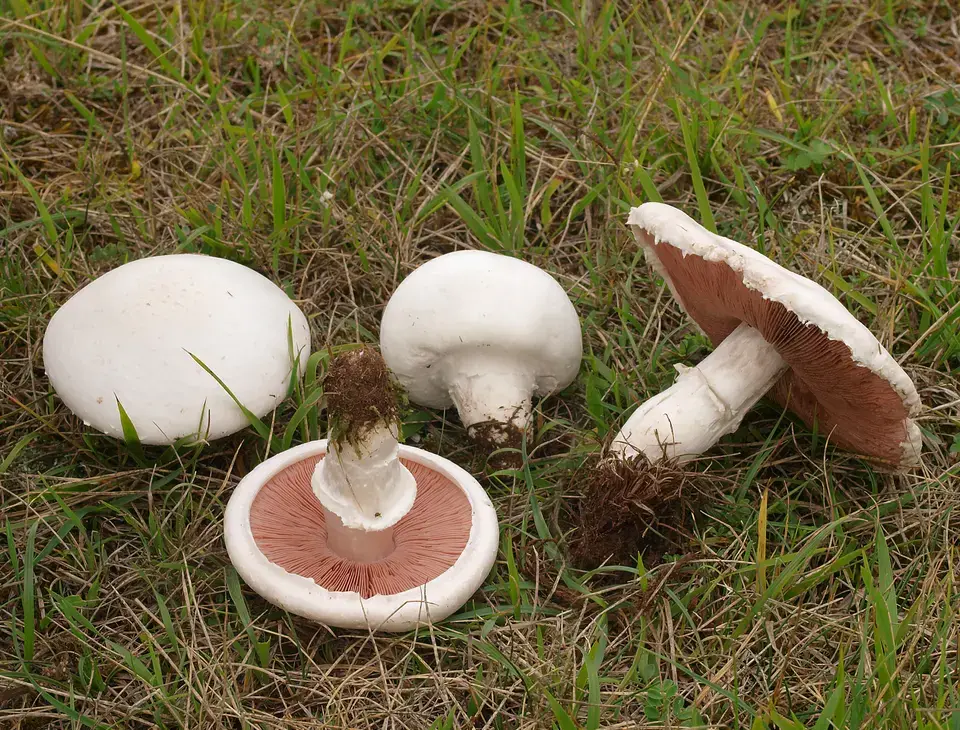
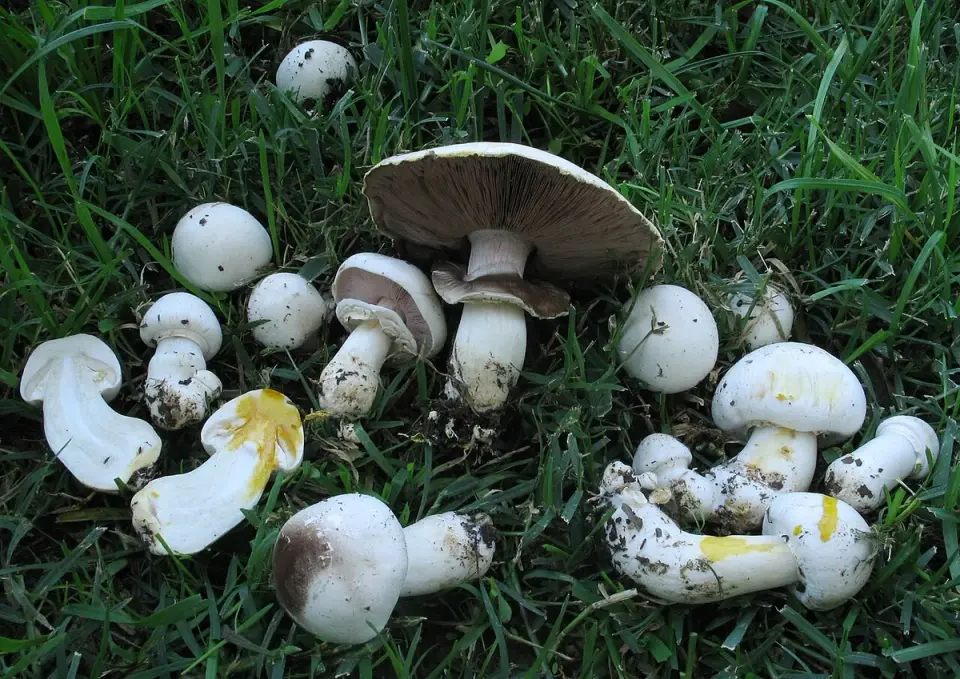
Agaricus mushrooms are gilled mushrooms with a white to brownish, dry cap, a ring on the stem and gills that are pink when young and chocolate brown later. The white species, such as the field mushroom, are popular edible mushrooms. Because they can be mistaken for deadly poisonous destroying angels and the poisonous yellow-stainer, safe identification is essential.

SeasonJune to November
Spore printdark brown to purple brown
FamilyAgaricaceae
  1. Cap. The cap skin is white, yellowish or brown, smooth, fibrous or scaly, but always dry and never slimy. The cap margin is not grooved. In some species the cap skin turns yellow under pressure.
  2. Underside. The gills are free from the stem and mostly crowded. When young they are pale grey to pink; as the spores ripen they turn chocolate brown to purplish black. They are never white.
  3. Stem, ring and volva. The stem is central, separates easily from the cap and bears a ring or at least veil remnants. It can be bulbous at the base, but has no volva.
  4. Smell and taste. Some species smell of aniseed, almonds or phenol. A smell of phenol or ink points to poisonous species.
  5. Flesh and colour change. The flesh can stay white or turn yellow or red when damaged.

Lookalikes

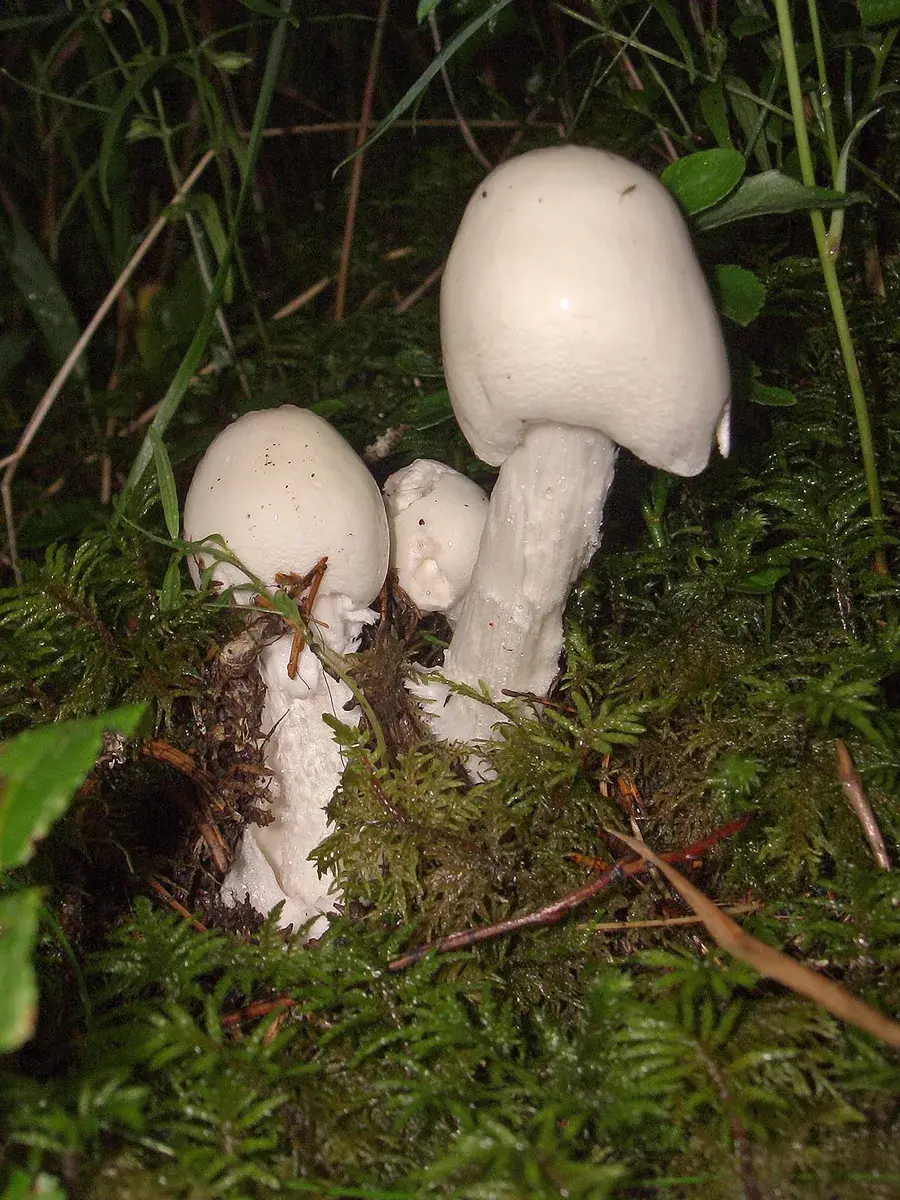
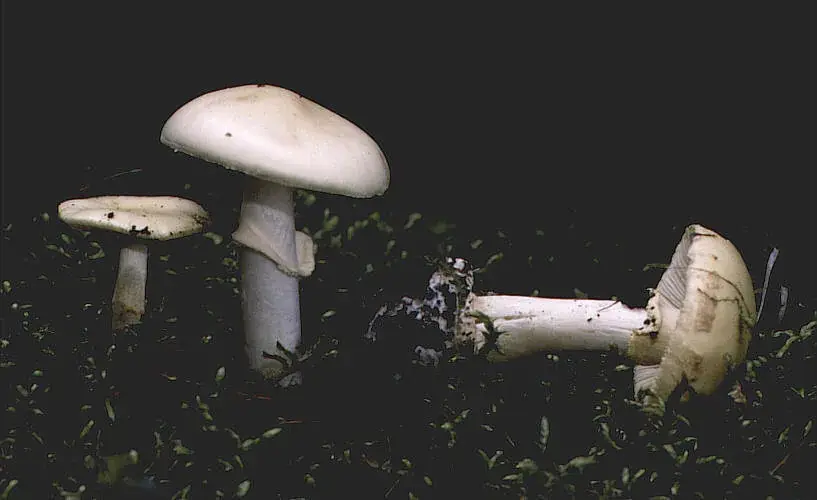
Group profile: the genus includes popular edible mushrooms, but also poisonous species. White Agaricus mushrooms are easily mistaken for the deadly poisonous white destroying angels. Remember: Agaricus mushrooms never have white gills and no volva at the stem base.

Side by side

AgaricusEuropean destroying angelFool's mushroomYellow-stainer
Capwhite to brownish, dry, never slimy, margin not groovedwhite, conical to bell-shaped, smoothwhite, smooth, hemispherical to flatwhitish to greyish brown, smooth to slightly scaly
Undersidefree gills, pink when young, later chocolate brownwhite, free gills, stay whitewhite, free gillsfree gills, pink to dark brown
Stemcentral, ring, no volvaring and sac-like volva at the basering and sac-like volva at the basewith ring, base chrome yellow when cut
Fleshfleshy, stem partly tough and fibrousfleshyfleshyfleshy
EdibilityEdibledeadly poisonousdeadly poisonouspoisonous

Habitat & Season

Meadows, pastures, gardens, parks, woods, also fertilised soil or compost. No reliable information.

Host trees

No tree partner; Agaricus mushrooms are litter and soil decomposers.

Season

possible good main season

Varies by species. The field mushroom starts from July after heavy rain.

Mushroom regions with a daily forecast

There are no records per region for this species yet. The country pages lead to all regions with a daily forecast.

All mushroom regions →

Chance near you

How good are the chances of finding this species where you are right now? We calculate it from weather, soil moisture, altitude and forest at your location.

View on the map

Safety

Never eat a mushroom you have not identified with certainty. Only eat mushrooms you have identified beyond doubt, and always cook them thoroughly.

Advice for your country

United Kingdom

Poison centre:

NHS 111 (England)111

Emergency: 999 · 112

Ireland

Poison centre:

National Poisons Information Centre (public line)(01) 809 2166

Emergency: 112 · 999

Germany

Poison centre:

Giftnotruf Berlin030 19240Giftinformationszentrum München089 19240GIZ-Nord Göttingen0551 19240

Emergency: 112

Mushroom advice: DGfM: find a mushroom expert. Certified mushroom experts of the German Mycological Society (DGfM).

Collecting rules: Mushrooms that are not specially protected may be collected in small quantities for personal use unless a protected area or ban applies. Certain specially protected edible species (e.g. cep, chanterelle, birch bolete) may be collected in small quantities for personal use.

Austria

Poison centre:

Vergiftungsinformationszentrale (VIZ)01 406 43 43

Emergency: 112 · 144

Mushroom advice: Austrian Mycological Society (ÖMG): mushroom advice. Mushroom advice by the Austrian Mycological Society or regional services such as municipal market offices.

Collecting rules: At most 2 kg of mushrooms per person per day unless the forest owner has prohibited collecting; organised collecting events are prohibited. Additional state rules apply (collecting hours, closed seasons), e.g. Carinthia, Tyrol, Vorarlberg, Salzburg.

Conservation and collecting rules

Not specially protected.

In the kitchen

Fried, steamed or in sauces. Use only young, firm mushrooms with pale pink to brown gills, and cut every mushroom open lengthways before cooking. Cook for at least 15 minutes.

No reliable information on drying. Risk of confusion with deadly poisonous white destroying angels. Species that turn yellow in particular accumulate heavy metals in high amounts. Mushrooms that smell of phenol or turn chrome yellow at the stem base are poisonous.

Frequently asked questions

Are white Agaricus mushrooms from the woods or meadows edible?

Many species of the genus are edible, others are poisonous. White Agaricus mushrooms may only be eaten if they are identified with certainty and cooked thoroughly.

How do you recognise an Agaricus?

By the free gills that are pink when young and chocolate brown later, the ring on the stem and the lack of a volva at the stem base.

How do you recognise the poisonous yellow-stainer?

It smells of carbolic acid, that is, of phenol, and the flesh in the stem base is bright chrome yellow.

What can white Agaricus mushrooms be mistaken for?

For the deadly poisonous white destroying angels, which always have white gills and a volva at the stem base, and for the poisonous yellow-stainer.

Related species

Mushroom trainer: test yourself

Sources

Photo credits

No substitute for having your finds checked in person. No guarantee of accuracy. Updated: 17.10.2026.

Open the mushroom map