
Red-capped scaber stalk Leccinum aurantiacum
edible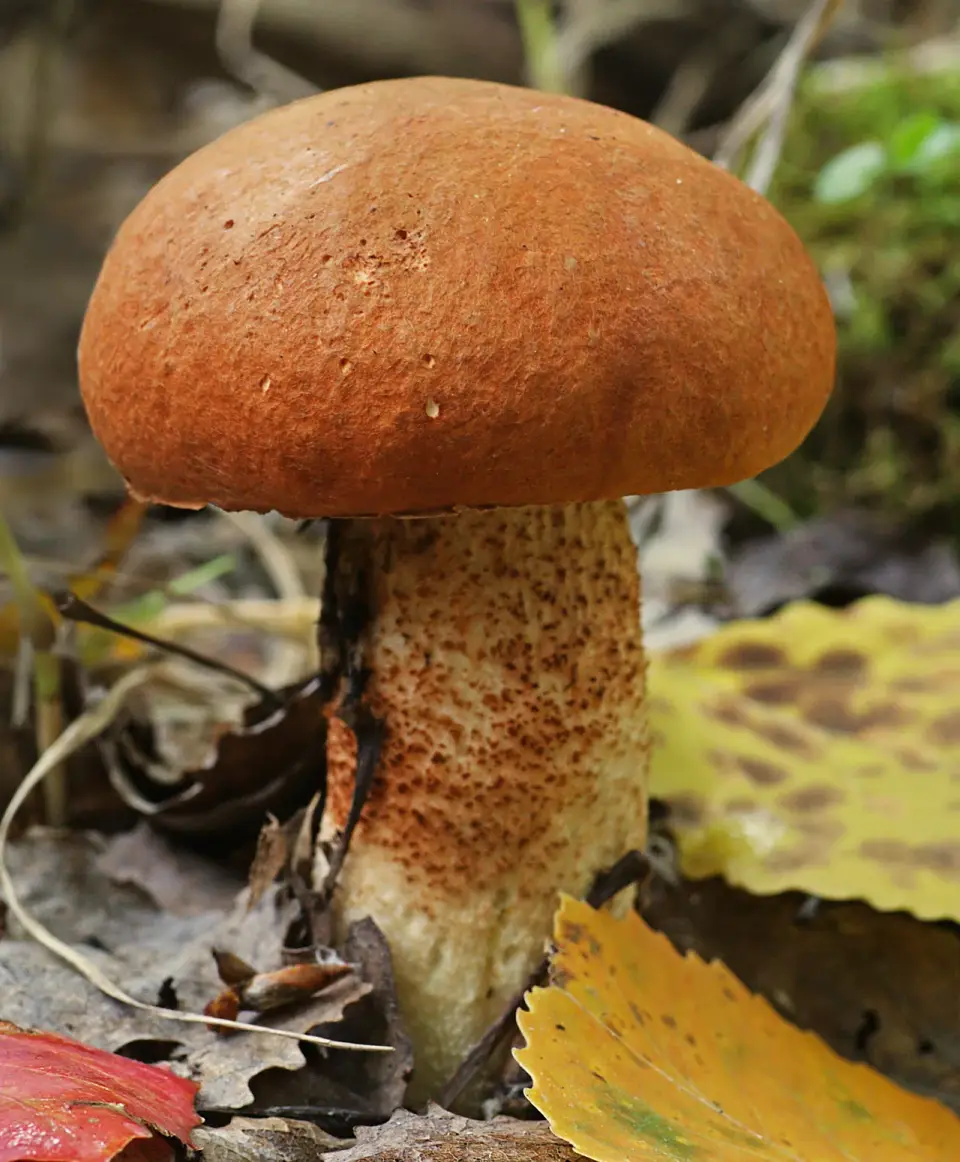

It lives with oaks, whereas Leccinum albostipitatum is strictly tied to aspen. The strongest distinguishing feature is the tree partner. Also edible.
View on the map
No matching species found.
Leccinum albostipitatum den Bakker & Noordel. · Boletaceae
Where is it growing now? Open the map Mushroom alert for this species How the mushroom alert works
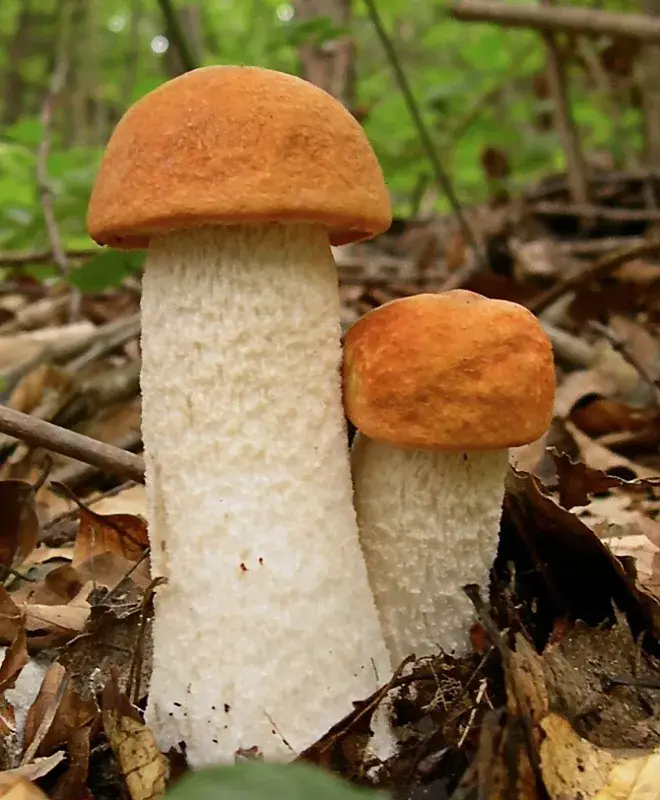
Leccinum albostipitatum is a stately scaber stalk with an orange to orange-brown, finely felty cap and a white, scaly stem. It is strictly tied to aspen and is considered edible.
Leccinum albostipitatum is a bolete with an orange to reddish-brown cap and a scaly stem, strictly tied to aspen. All scaber stalks are edible, and the similar red-capped scaber stalks are edible mushrooms too. Raw, they are not tolerated.
It lives with oaks, whereas Leccinum albostipitatum is strictly tied to aspen. The strongest distinguishing feature is the tree partner. Also edible.
View on the mapIt grows near birches, has a distinctly black-scaled stem and turns blackish directly at pressure marks, without reddening first. Also edible.
| Leccinum albostipitatum | Red-capped scaber stalk | Orange birch bolete | |
|---|---|---|---|
| Cap | yellow-orange to orange-brown, 5 to 20 cm, finely felty | orange-red to reddish brown, finely felty | orange to reddish brown |
| Underside | narrow, whitish to cream-grey tubes | narrow, whitish to cream-grey tubes | whitish to grey tubes |
| Stem | white with scales, later brick-orange | white with darker scales | white, with black scales |
| Flesh | firm, flesh turns violet | firm, spongy with age | firm, softer with age |
| Edibility | Edible | edible | edible |
Near aspens, in and beside woods, on soils that carry aspens. No reliable information.
Aspen (European aspen), strictly tied.
possible good main season
Rough estimate; it follows the stands of aspen.
There are no records per region for this species yet. The country pages lead to all regions with a daily forecast.
How good are the chances of finding this species where you are right now? We calculate it from weather, soil moisture, altitude and forest at your location.
Poison centre:
Emergency: 112 · 999
Poison centre:
Emergency: 112
Mushroom advice: DGfM: find a mushroom expert. Certified mushroom experts of the German Mycological Society (DGfM).
Collecting rules: Mushrooms that are not specially protected may be collected in small quantities for personal use unless a protected area or ban applies. Certain specially protected edible species (e.g. cep, chanterelle, birch bolete) may be collected in small quantities for personal use.
Poison centre:
Emergency: 112 · 144
Mushroom advice: Austrian Mycological Society (ÖMG): mushroom advice. Mushroom advice by the Austrian Mycological Society or regional services such as municipal market offices.
Collecting rules: At most 2 kg of mushrooms per person per day unless the forest owner has prohibited collecting; organised collecting events are prohibited. Additional state rules apply (collecting hours, closed seasons), e.g. Carinthia, Tyrol, Vorarlberg, Salzburg.
Not specially protected.
Fried, stewed or in sauces. The flesh can turn dark when cooked. Cook for at least 15 minutes.
No reliable information on drying. Not tolerated raw.
Yes, it is edible. All scaber stalks are considered edible. Like all wild mushrooms, eat it only when cooked thoroughly.
By the orange to orange-brown, finely felty cap, the white stem with scales, the flesh turning violet and its growth near aspens.
Mainly by the tree partner: the red-capped scaber stalk near oak, the orange birch bolete near birch, Leccinum albostipitatum only near aspen. The orange birch bolete also has a distinctly black-scaled stem.
No substitute for having your finds checked in person. No guarantee of accuracy. Updated: 17.10.2026.