FungiFindFungiFind

FungiFind › Mushroom species

Scaly wood mushroom

Agaricus langei (F.H.Møller) F.H.Møller · Agaricaceae

Where is it growing now? Open the map Mushroom alert for this species How the mushroom alert works

Identification in 5 steps

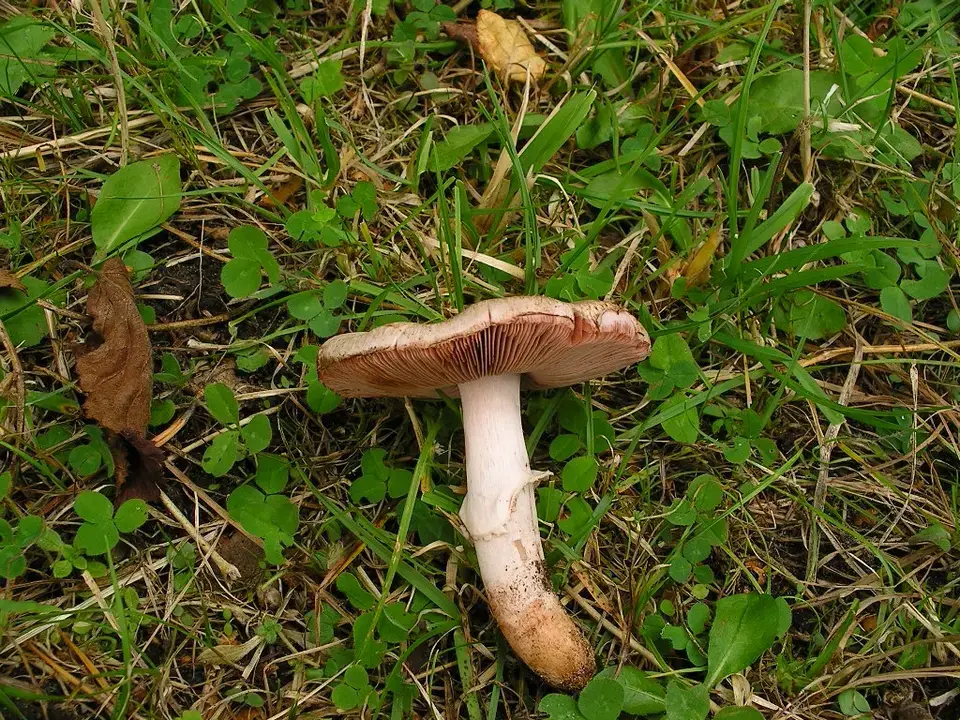
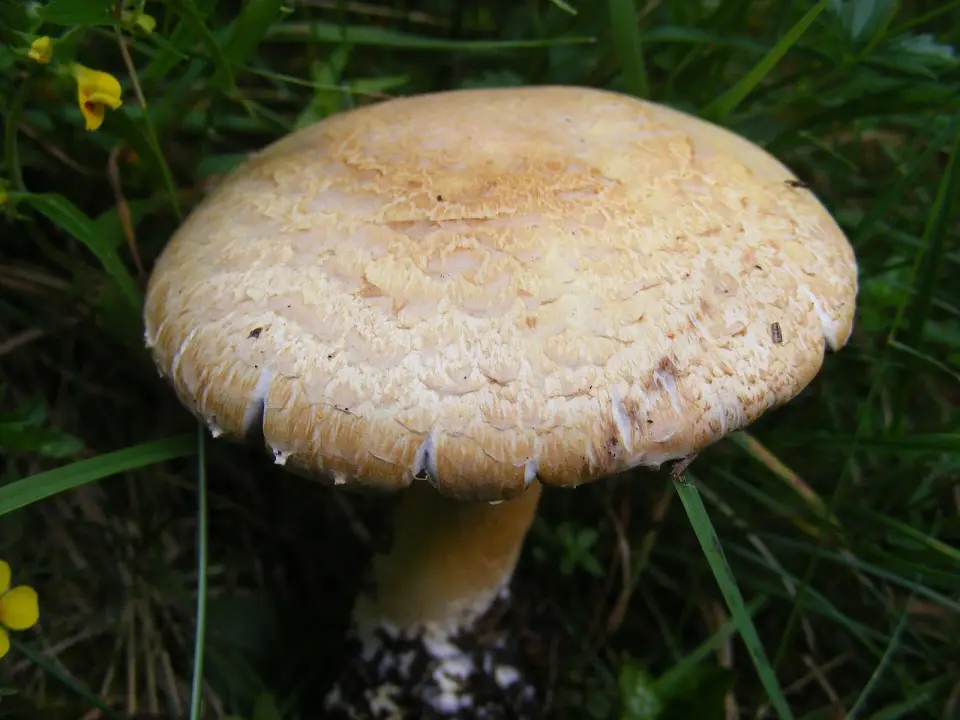
The scaly wood mushroom is a sturdy, brown-scaled Agaricus of the blushing Agaricus group. It is larger than the blushing wood mushroom, does not grow only under spruce, and like it is considered a good edible mushroom.

SeasonJune to November
Spore printdark brown
FamilyAgaricaceae
  1. Cap. The cap is brown to reddish brown with close-fitting, fibrous scales, spherical to bell-shaped when young, later spread out.
  2. Underside. The gills are free, pale pink when young and later chocolate brown, never white.
  3. Stem, ring and volva. The stem is sturdy and bears a thin, membranous, hanging ring. There is no volva.
  4. Smell and taste. It smells pleasantly mushroomy and tastes mild.
  5. Flesh and colour change. The flesh is white and turns only slightly red when damaged.

Lookalikes

Agaricus mushrooms never have white gills. Their gills are pink to chocolate brown, and there is no volva at the stem base. White gills and a volva point to the deadly poisonous destroying angels. Mushrooms that turn yellow and smell of phenol are poisonous.

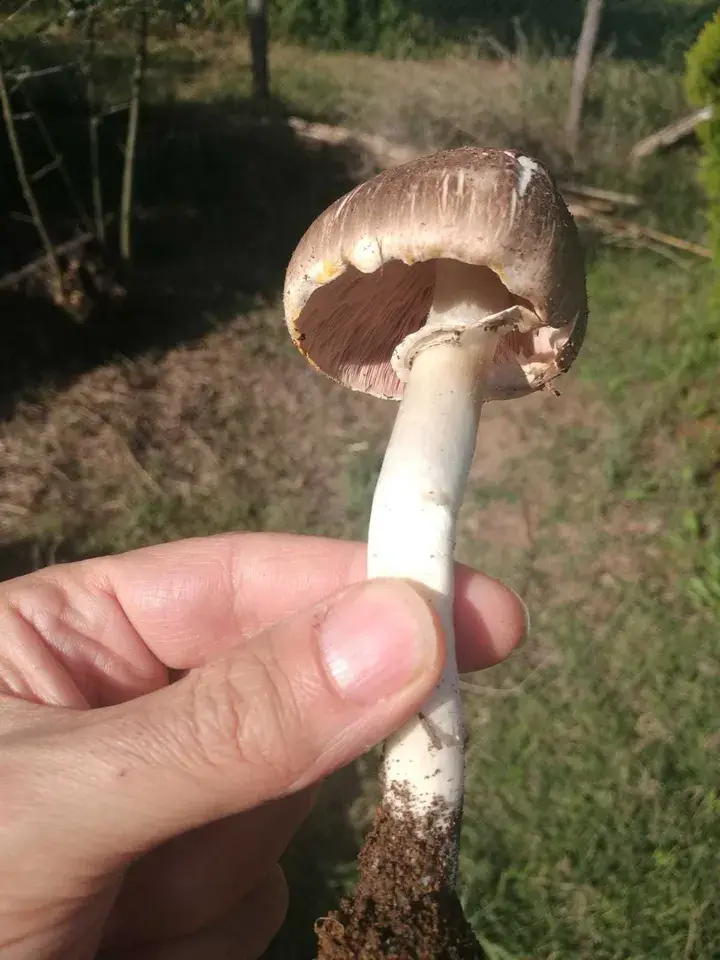
Inky mushroom Agaricus moelleri

poisonous
Inky mushroom
Photo: Danny Cicchetti · CC0 · Wikimedia Commons

It has a cap with grey to blackish-brown scales, turns yellow at the stem base and smells of phenol. The most reliable feature is the smell of phenol or ink, especially at the stem base. Poisonous, causes gastrointestinal upset.

View on the map
Side by side

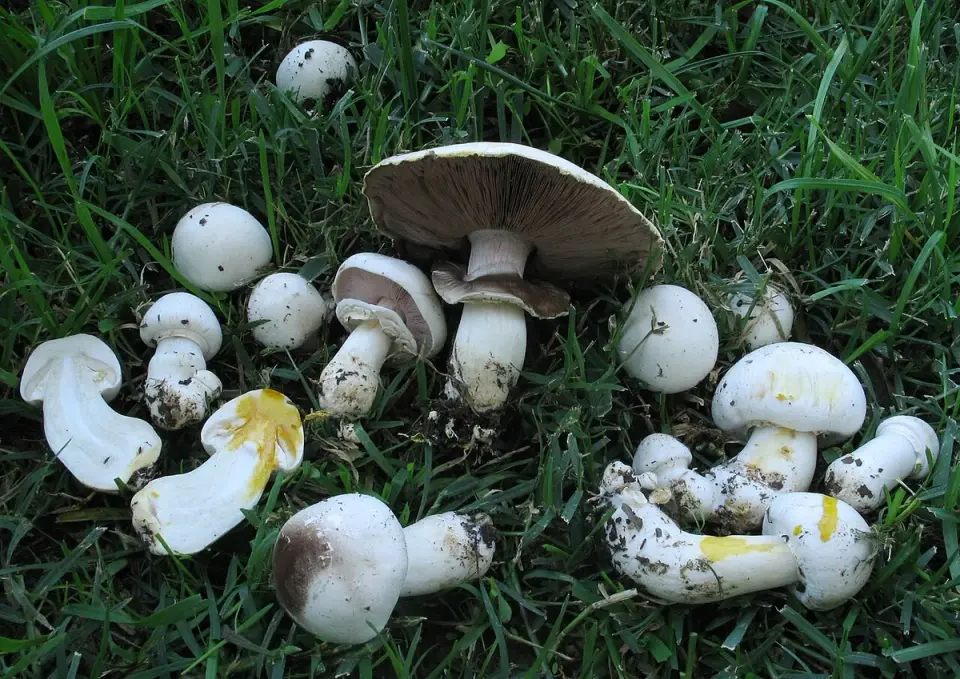
Scaly wood mushroomInky mushroomYellow-stainerBlushing Wood Mushroom
Capbrown to reddish brown, fibrous scalesgrey to blackish brown, finely scalywhitish to greyish brown, smooth to slightly scalypale ochre with brownish scales, up to 10 cm
Undersidefree gills, pink when young, later chocolate brownfree gills, pink to dark brownfree gills, pink to dark brownfree gills, pink to chocolate brown
Stemsturdy, with thin hanging ringwith ring, base turns yellowwith ring, base chrome yellow when cutup to 8 cm, thin hanging ring, reddens when damaged
Fleshfleshy, flesh reddens slightlyfleshyfleshyfleshy
EdibilityEdiblepoisonouspoisonousedible

Habitat & Season

Humus-rich forest soils. No reliable information.

Host trees

No fixed tree partner; it grows as a litter decomposer in deciduous and coniferous forests, not only under spruce.

Season

possible good main season

Based on the closely related blushing wood mushroom, which fruits mainly in September and October.

Mushroom regions with a daily forecast

There are no records per region for this species yet. The country pages lead to all regions with a daily forecast.

All mushroom regions →

Chance near you

How good are the chances of finding this species where you are right now? We calculate it from weather, soil moisture, altitude and forest at your location.

View on the map

Safety

Never eat a mushroom you have not identified with certainty. Only eat mushrooms you have identified beyond doubt, and always cook them thoroughly.

Advice for your country

United Kingdom

Poison centre:

NHS 111 (England)111

Emergency: 999 · 112

Ireland

Poison centre:

National Poisons Information Centre (public line)(01) 809 2166

Emergency: 112 · 999

Germany

Poison centre:

Giftnotruf Berlin030 19240Giftinformationszentrum München089 19240GIZ-Nord Göttingen0551 19240

Emergency: 112

Mushroom advice: DGfM: find a mushroom expert. Certified mushroom experts of the German Mycological Society (DGfM).

Collecting rules: Mushrooms that are not specially protected may be collected in small quantities for personal use unless a protected area or ban applies. Certain specially protected edible species (e.g. cep, chanterelle, birch bolete) may be collected in small quantities for personal use.

Austria

Poison centre:

Vergiftungsinformationszentrale (VIZ)01 406 43 43

Emergency: 112 · 144

Mushroom advice: Austrian Mycological Society (ÖMG): mushroom advice. Mushroom advice by the Austrian Mycological Society or regional services such as municipal market offices.

Collecting rules: At most 2 kg of mushrooms per person per day unless the forest owner has prohibited collecting; organised collecting events are prohibited. Additional state rules apply (collecting hours, closed seasons), e.g. Carinthia, Tyrol, Vorarlberg, Salzburg.

Conservation and collecting rules

Not specially protected.

In the kitchen

Fried, stewed or in sauces. Use only young, firm mushrooms with pale pink to brown gills. Cook for at least 15 minutes.

No reliable information on drying. Agaricus mushrooms can accumulate heavy metals, so do not eat them in large quantities or all the time. Mushrooms that smell of phenol or turn chrome yellow at the stem base are poisonous.

Frequently asked questions

Is the scaly wood mushroom edible?

Yes, like the blushing wood mushroom it is considered a good edible mushroom. It must be cooked thoroughly.

How does it differ from the blushing wood mushroom?

It is larger, its flesh reddens only slightly and it is not tied to spruce.

Which poisonous Agaricus mushrooms look similar?

The inky mushroom and the yellow-stainer. Both smell of phenol and turn yellow, and the yellow-stainer has chrome-yellow flesh in the stem base.

How do you tell Agaricus mushrooms from destroying angels?

Agaricus mushrooms have pink to chocolate-brown gills and no volva at the stem base. Destroying angels always have white gills and stand in a volva.

Related species

Mushroom trainer: test yourself

Sources

Photo credits

No substitute for having your finds checked in person. No guarantee of accuracy. Updated: 17.10.2026.

Open the mushroom map