FungiFindFungiFind

FungiFind › Mushroom species

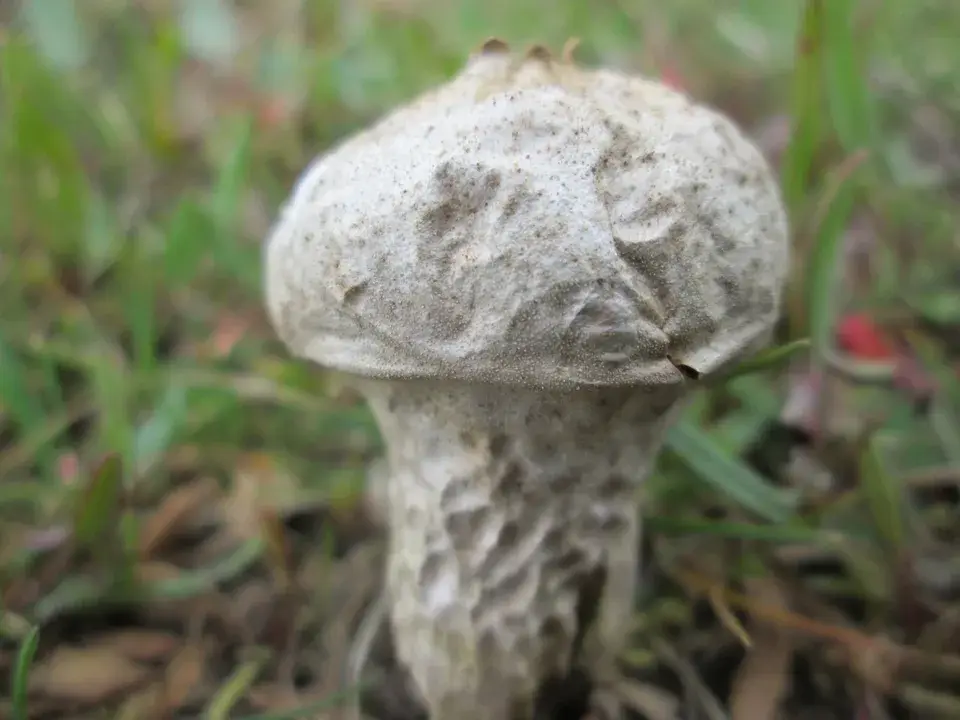
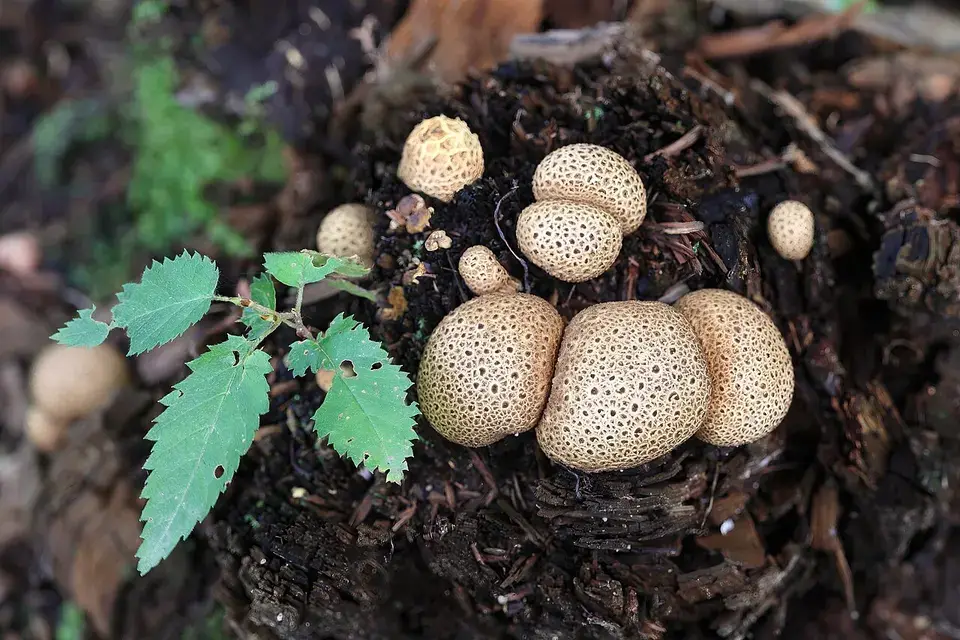
Young puffballs

Lycoperdon spec. Pers. · Agaricaceae

Also: Puffballs

Where is it growing now? Open the map Mushroom alert for this species How the mushroom alert works

Identification in 5 steps

Puffballs of the genus Lycoperdon form pear-shaped, bottle-shaped or round fruiting bodies without a cap or gills. The inside is white and firm when young, and later turns olive-brown and puffs out dust when opened. Only young specimens that are pure white inside are edible. This profile covers the group; individual species such as the common puffball can be identified.

SeasonJune to October
Spore printolive-brown (spore mass in the ripe fruiting body)
FamilyAgaricaceae
  1. Cap. There is no cap in the usual sense. The fruiting body is roundish to pear-shaped, and in many species the surface has granules or small spines that wipe off easily.
  2. Underside. There are no gills and no tubes. In a cut, a young puffball is evenly white and uniform inside, with no recognisable cap, gill or stem shape.
  3. Stem, ring and volva. The fruiting body has a stem-like, spongy lower part, or sits almost stalkless. There is no ring and no volva. A sac-like volva with a recognisable stem points to a deadly amanita.
  4. Smell and taste. The smell is mild and mushroomy, the taste mild.
  5. Flesh and colour change. The key feature is the lengthways cut: the flesh must be pure white all the way through. Yellowish, olive or dark colouring means the mushroom is too old. Black-violet flesh points to an earthball.

Lookalikes

Group profile: young puffballs are considered edible as long as the inside of the fruiting bodies is pure white and firm. When young, they can be confused with deadly poisonous amanitas in the egg stage. So cut every find in half lengthways.

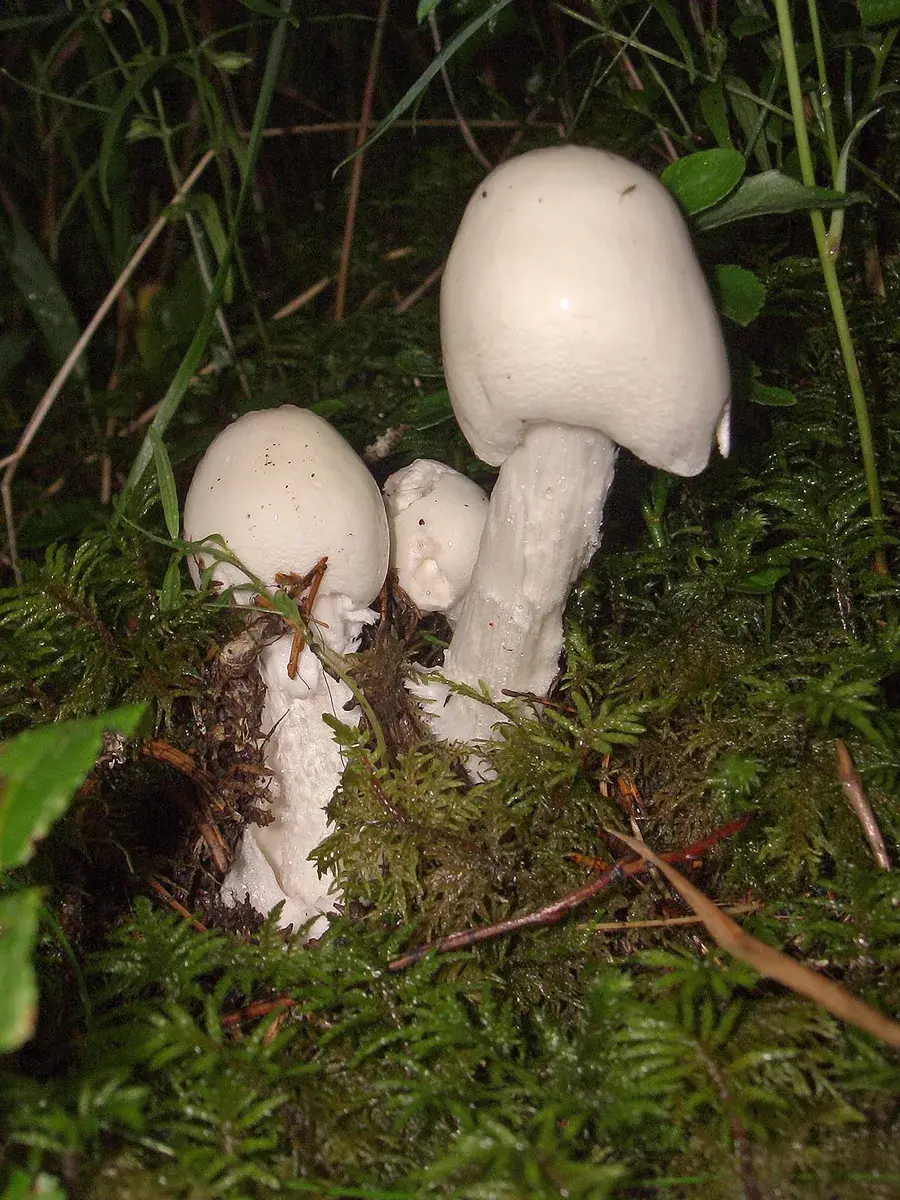
European destroying angel Amanita virosa

deadly poisonous
European destroying angel
Photo: No machine-readable author provided. Bernypisa assumed (based on … · CC BY 2.5 · Wikimedia Commons

Young deadly amanitas in the egg stage can hardly be told apart from puffballs from the outside. In a lengthways cut you can already see the outline of the cap, gills and stem. A young puffball is evenly white inside, without these structures. Deadly poisonous.

View on the map

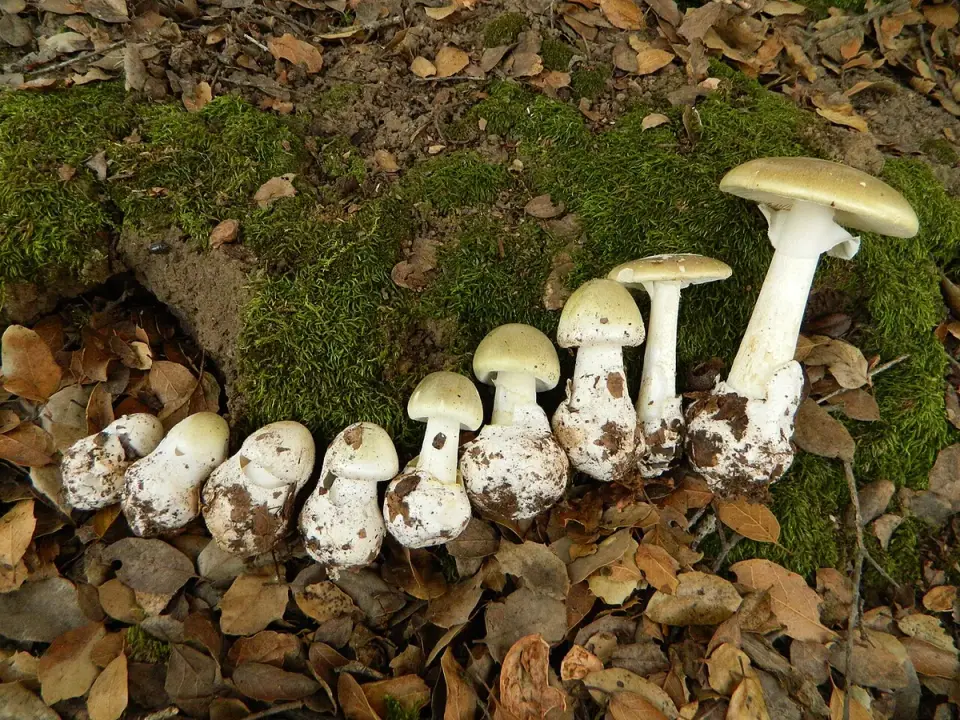
Death cap Amanita phalloides

deadly poisonous
Death cap
Photo: Justin Pierce (Mushroom Observer) · CC BY-SA 3.0 · Wikimedia Commons

In the egg stage it is also enclosed in a sac. In a lengthways cut the cap and gill primordia are visible, which is not the case in puffballs. The sac, the volva, later remains as a volva on the stem. Deadly poisonous.

View on the map

Side by side

Young puffballsEuropean destroying angelDeath capCommon earthball
Caproundish to pear-shaped, no cap, granules or spinescap primordium visible in the cut, whitecap primordium in the cut, often olive-greenishyellow-brown, tough, cracked into scales
Undersideno gills, pure white and uniform inside when younggill primordium visible in the cutgill primordium visible in the cutinside marbled black-violet when young
Stemstem-like spongy lower part, no ring or volvastem primordium with bulb and volvastem primordium with bulb in a volvahardly any stem, with mycelial cords in the soil
Fleshfirm and spongy when young, dusty laterfirm, but with recognisable structurefirm, structuredtough, hard
EdibilityEdibledeadly poisonousdeadly poisonouspoisonous

Habitat & Season

Woods, woodland edges, meadows and path verges, depending on the species. No reliable information.

Host trees

Mostly saprotrophs with no fixed tree partners, on woodland soil, meadows or dead wood, depending on the species.

Season

possible good main season

Rough estimate; the fruiting period varies with the species and the weather.

Mushroom regions with a daily forecast

There are no records per region for this species yet. The country pages lead to all regions with a daily forecast.

All mushroom regions →

Chance near you

How good are the chances of finding this species where you are right now? We calculate it from weather, soil moisture, altitude and forest at your location.

View on the map

Safety

Never eat a mushroom you have not identified with certainty. Only eat mushrooms you have identified beyond doubt, and always cook them thoroughly.

Advice for your country

United Kingdom

Poison centre:

NHS 111 (England)111

Emergency: 999 · 112

Ireland

Poison centre:

National Poisons Information Centre (public line)(01) 809 2166

Emergency: 112 · 999

Germany

Poison centre:

Giftnotruf Berlin030 19240Giftinformationszentrum München089 19240GIZ-Nord Göttingen0551 19240

Emergency: 112

Mushroom advice: DGfM: find a mushroom expert. Certified mushroom experts of the German Mycological Society (DGfM).

Collecting rules: Mushrooms that are not specially protected may be collected in small quantities for personal use unless a protected area or ban applies. Certain specially protected edible species (e.g. cep, chanterelle, birch bolete) may be collected in small quantities for personal use.

Austria

Poison centre:

Vergiftungsinformationszentrale (VIZ)01 406 43 43

Emergency: 112 · 144

Mushroom advice: Austrian Mycological Society (ÖMG): mushroom advice. Mushroom advice by the Austrian Mycological Society or regional services such as municipal market offices.

Collecting rules: At most 2 kg of mushrooms per person per day unless the forest owner has prohibited collecting; organised collecting events are prohibited. Additional state rules apply (collecting hours, closed seasons), e.g. Carinthia, Tyrol, Vorarlberg, Salzburg.

Conservation and collecting rules

Not specially protected.

In the kitchen

Use only young specimens that are pure white inside, peel off the outer skin and cut the flesh into slices. Fry briefly in butter or oil; they turn tough easily when cooked. Cook for at least 15 minutes.

No reliable information on drying. Cut every find in half lengthways. Eat it only if the inside is pure white and uniform all the way through. If the inside has turned yellow or dark, do not use it any more. Confusion with deadly amanitas in the egg stage is life-threatening.

Frequently asked questions

Are puffballs edible?

Young puffballs are edible as long as the inside is pure white and firm. As they ripen, the inside changes colour and the mushroom can no longer be used.

How do I tell young puffballs from deadly amanitas?

By the lengthways cut: a puffball is uniformly white inside, whereas a deadly amanita in the egg stage already shows the outline of the cap, gills and stem. If in doubt, do not eat it.

Why do puffballs turn tough when cooked?

The flesh is spongy and loses its tenderness with long heating. Frying briefly in butter is the usual preparation, but the cooking time must not be under 15 minutes.

What is the difference from the common earthball?

Earthballs have a thick, tough skin and, even when young, a dark, black-violet marbled inside. They are poisonous.

Related species

Mushroom trainer: test yourself

Sources

Photo credits

No substitute for having your finds checked in person. No guarantee of accuracy. Updated: 17.10.2026.

Open the mushroom map