
Horn of plenty Craterellus cornucopioides
edible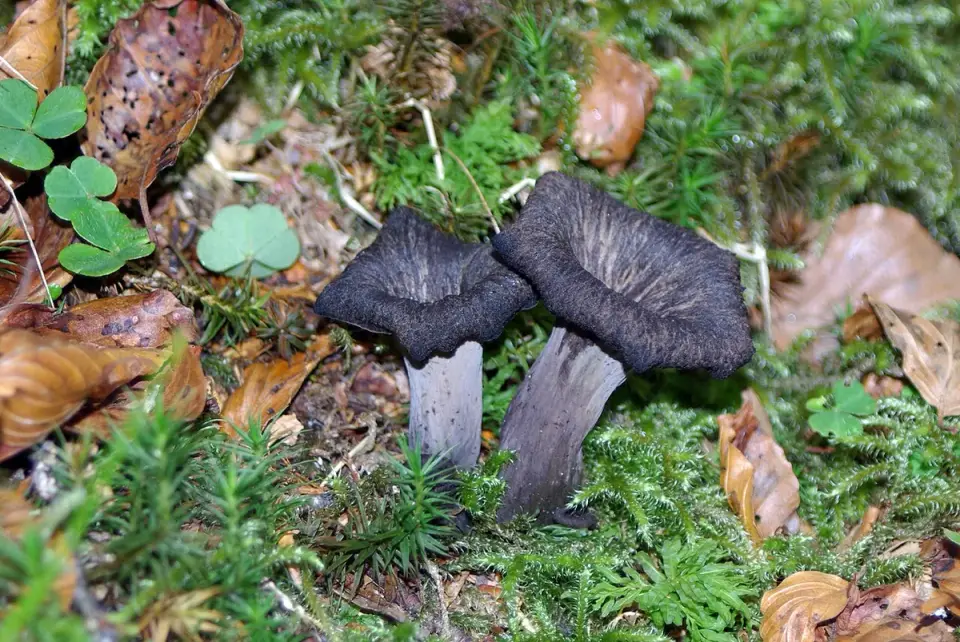

Its underside is smooth to at most slightly wrinkled, without distinct ridges. The ashen chanterelle has forked, grey ridges. Also edible.
View on the map
No matching species found.
Craterellus cinereus (Pers.) Pers. · Hydnaceae
Also: Black chanterelle
Where is it growing now? Open the map Mushroom alert for this species How the mushroom alert works
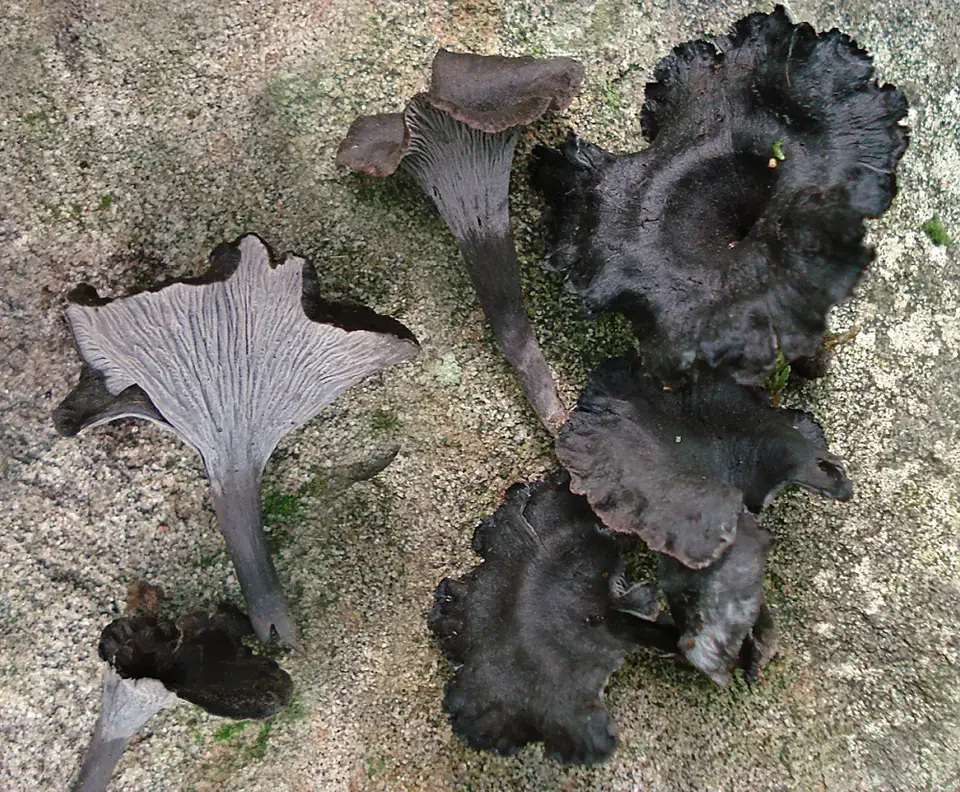
The ashen chanterelle is a small, funnel-shaped, grey to blackish-brown mushroom with forked ridges on the underside. It grows in tufts in deciduous woods and is considered a good edible mushroom. Because it is rare, it deserves protection.
The ashen chanterelle looks like a small horn of plenty, but has distinct, forked grey ridges on the underside instead of a smooth surface. All similar mushrooms are edible; no poisonous look-alikes are known.
Its underside is smooth to at most slightly wrinkled, without distinct ridges. The ashen chanterelle has forked, grey ridges. Also edible.
View on the map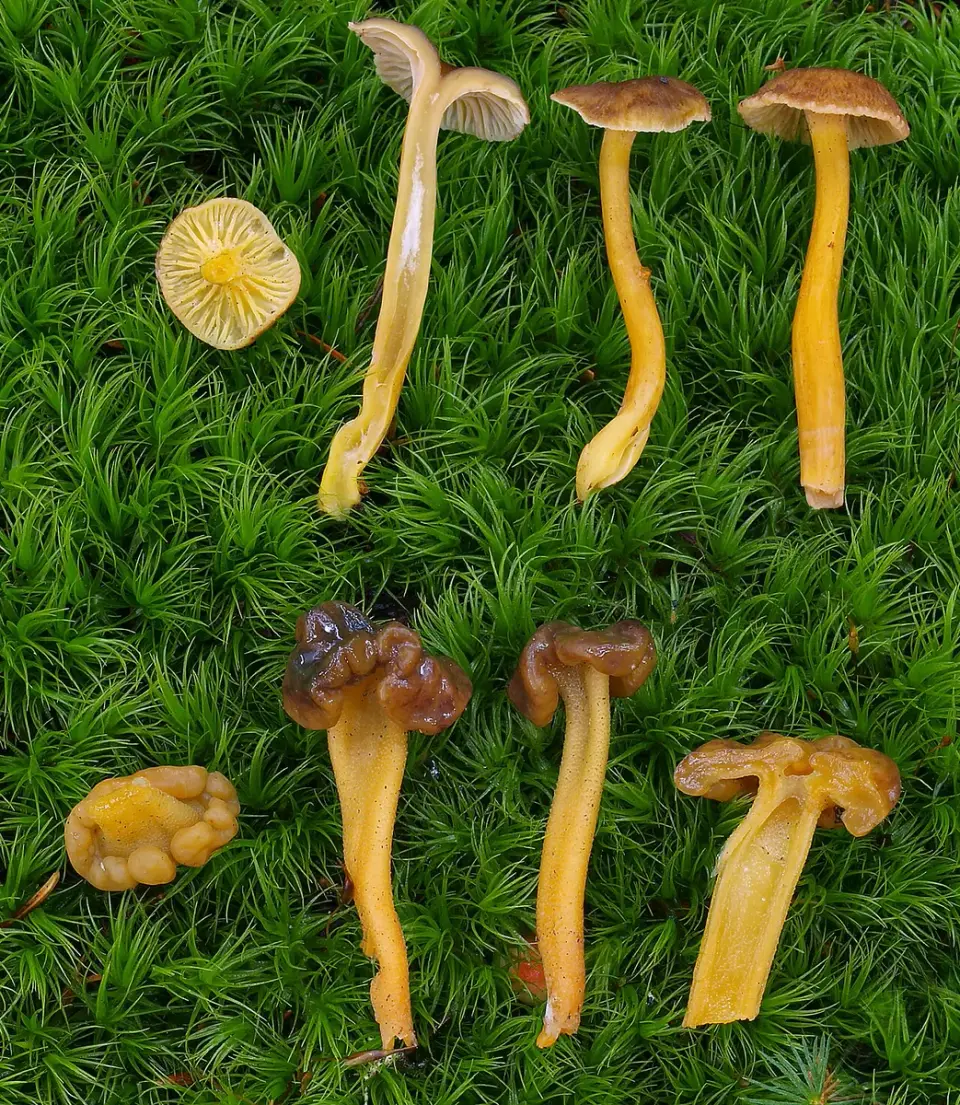
Its stem is yellow to yellow-brown; in the ashen chanterelle it is grey without yellow tones. Also edible.
View on the map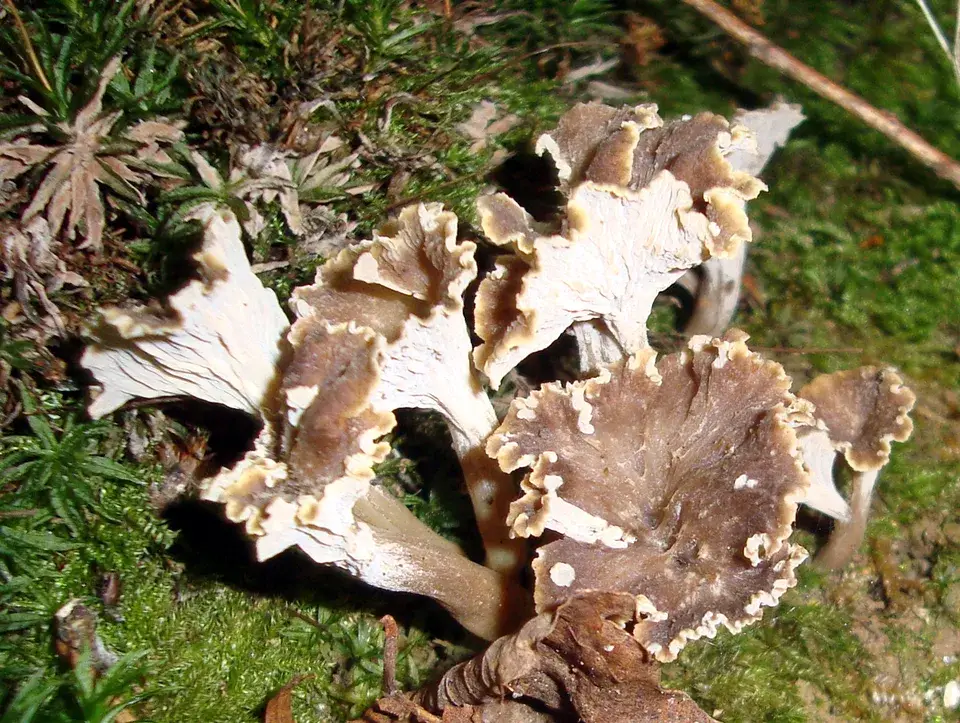
It is light brown to sepia brown, has a frilly, wavy cap margin and a sand-yellow to brown-beige stem. Also edible.
View on the map| Ashen chanterelle | Horn of plenty | Winter chanterelle | Craterellus sinuosus | |
|---|---|---|---|---|
| Cap | blackish brown to ash grey, 1 to 6 cm, funnel-shaped | blackish brown to grey-black, funnel-shaped | brown to yellow-brown, funnel-shaped | loam to sepia brown, margin frilly and wavy |
| Underside | forked, cross-veined, ash-grey ridges | smooth to slightly wrinkled, greyish, no ridges | grey-yellowish, forked ridges | beige to beige-brown, smooth when young, later veined |
| Stem | soot grey, no yellow tones, 3 to 7 cm | hollow, merging into the cap | yellow to yellow-brown, hollow | sand yellow to brown-beige, grooved lengthways |
| Flesh | thin, membranous, brittle | thin, brittle | thin, tough | thin, hollow |
| Edibility | Edible | edible | edible | edible |
Rather base-rich, shallow soils in beech, beech-fir and hornbeam-oak woods. No reliable information.
Mainly European beech, also other deciduous trees, more rarely conifers.
possible good main season
Grows in tufts and likes to grow among horns of plenty.
There are no records per region for this species yet. The country pages lead to all regions with a daily forecast.
How good are the chances of finding this species where you are right now? We calculate it from weather, soil moisture, altitude and forest at your location.
Poison centre:
Emergency: 112 · 999
Poison centre:
Emergency: 112
Mushroom advice: DGfM: find a mushroom expert. Certified mushroom experts of the German Mycological Society (DGfM).
Collecting rules: Mushrooms that are not specially protected may be collected in small quantities for personal use unless a protected area or ban applies. Certain specially protected edible species (e.g. cep, chanterelle, birch bolete) may be collected in small quantities for personal use.
Poison centre:
Emergency: 112 · 144
Mushroom advice: Austrian Mycological Society (ÖMG): mushroom advice. Mushroom advice by the Austrian Mycological Society or regional services such as municipal market offices.
Collecting rules: At most 2 kg of mushrooms per person per day unless the forest owner has prohibited collecting; organised collecting events are prohibited. Additional state rules apply (collecting hours, closed seasons), e.g. Carinthia, Tyrol, Vorarlberg, Salzburg.
Because it is rare, it deserves protection. The German Mycological Society chose it as Mushroom of the Year 2012.
Fried or in sauces. The mushrooms are thin-fleshed and need only short preparation, but must be cooked right through. Cook for at least 15 minutes.
No reliable information on drying.
Yes, it is considered a good edible mushroom. Because it is rare, it deserves protection.
By the small, funnel-shaped, grey to blackish-brown fruiting body with forked grey ridges on the underside and the grey stem without yellow tones.
The horn of plenty has a smooth to at most slightly wrinkled underside, the ashen chanterelle distinct, forked ridges.
From September to October, in tufts in deciduous woods, often among horns of plenty.
No substitute for having your finds checked in person. No guarantee of accuracy. Updated: 17.10.2026.

