
Tripe fungus Auricularia mesenterica
inedible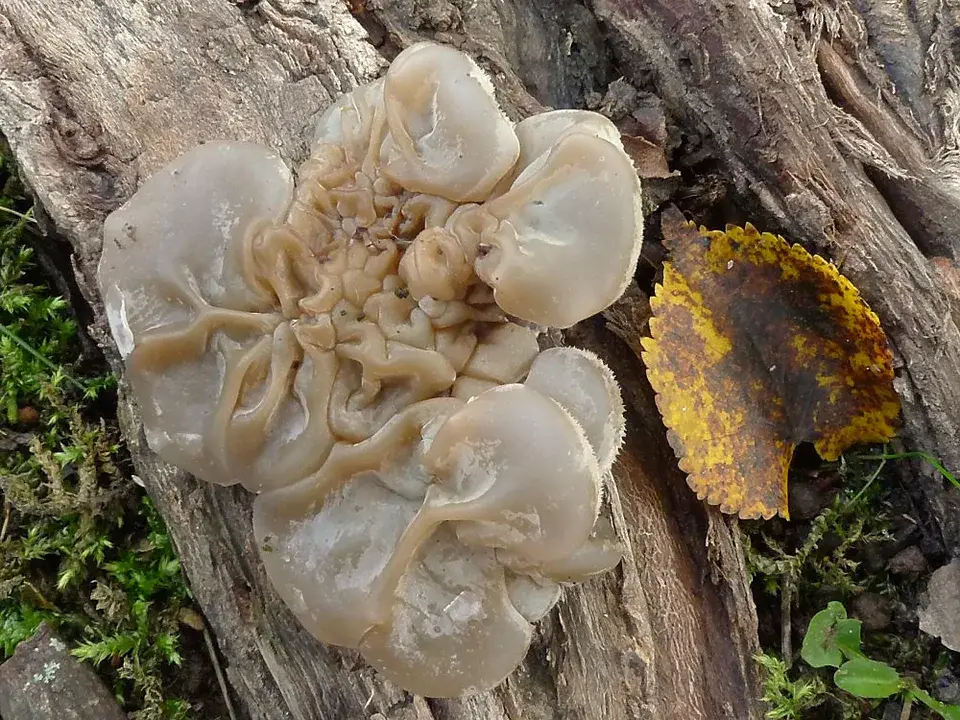

It has a zoned, shaggy-haired upper side and tends to grow in overlapping tiers on deciduous wood.
View on the map
No matching species found.
Peziza spec. Dill. · Pezizaceae
Where is it growing now? Open the map Mushroom alert for this species How the mushroom alert works
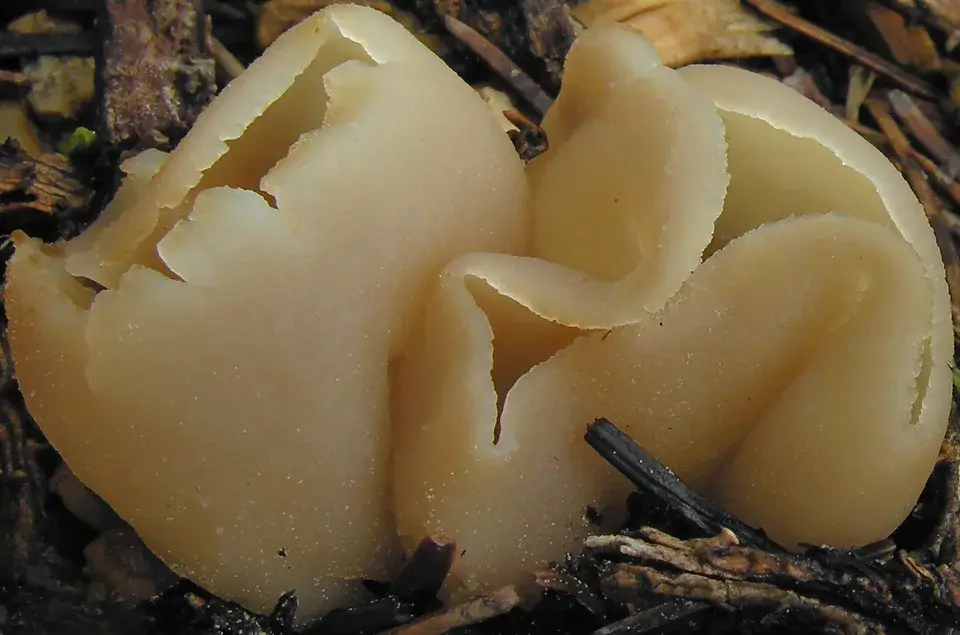
Cup fungi form cup-shaped or bowl-shaped fruiting bodies on soil or wood. A few species are edible, but many are inedible or not tolerated raw, so do not collect them for the kitchen without reliable identification to species.
Many species are inedible or of unknown culinary value, and raw they are not tolerated.
It has a zoned, shaggy-haired upper side and tends to grow in overlapping tiers on deciduous wood.
View on the map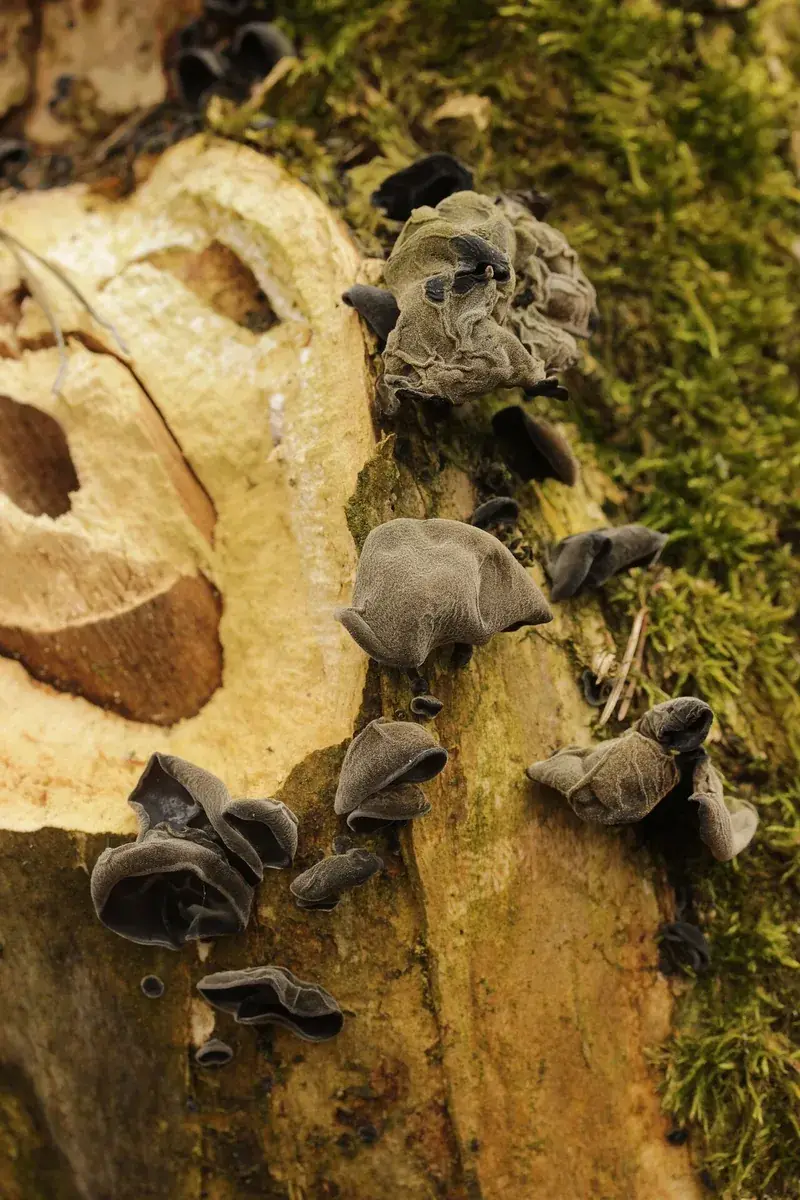
It has hardly any smell or taste, and its spore print is white. Cup fungi, by contrast, are brittle rather than gelatinous and mostly grow on the ground.
View on the map| Cup fungi | Tripe fungus | Wood ear | |
|---|---|---|---|
| Cap | fruiting bodies 2 to 10 cm wide, cup-shaped | 2 to 6 cm, shell- to ear-shaped, zoned, shaggy-haired | 3 to 10 cm, ear-shaped to bowl-shaped, red-brown, velvety |
| Underside | smooth spore layer inside, outside often duller | smooth to veined, grey to brown | spore layer smooth to veined, glossy |
| Stem | stem absent or only hinted at, no ring or volva | absent, attached at the side to wood | absent, narrow point of attachment to wood |
| Flesh | brittle and pale | gelatinous, hard when dry | gelatinous, elastic; hard when dry |
| Edibility | Inedible | inedible | edible |
Open, often chalky or nutrient-rich soils. From the lowlands up to the hills and mountains.
Humus, burnt wood, garden beds.
possible good main season
After rain on open ground.
There are no records per region for this species yet. The country pages lead to all regions with a daily forecast.
Poison centre:
Emergency: 112 · 999
Poison centre:
Emergency: 112
Mushroom advice: DGfM: find a mushroom expert. Certified mushroom experts of the German Mycological Society (DGfM).
Collecting rules: Mushrooms that are not specially protected may be collected in small quantities for personal use unless a protected area or ban applies. Certain specially protected edible species (e.g. cep, chanterelle, birch bolete) may be collected in small quantities for personal use.
Poison centre:
Emergency: 112 · 144
Mushroom advice: Austrian Mycological Society (ÖMG): mushroom advice. Mushroom advice by the Austrian Mycological Society or regional services such as municipal market offices.
Collecting rules: At most 2 kg of mushrooms per person per day unless the forest owner has prohibited collecting; organised collecting events are prohibited. Additional state rules apply (collecting hours, closed seasons), e.g. Carinthia, Tyrol, Vorarlberg, Salzburg.
Culinary value varies by species; many are inedible.
Not for the kitchen. Many species are inedible, and the few edible ones need expert identification.
No, cup fungi are considered inedible. Many species are unpalatable or of unknown culinary value, and raw they are not tolerated.
Cup fungi grow from March to November on open, often chalky or nutrient-rich soils, mainly after rain, on humus, burnt wood and in garden beds.
You can confuse them with the wood ear and the tripe fungus. The wood ear has hardly any smell or taste and a white spore print, whereas cup fungi are brittle rather than gelatinous and mostly grow on the ground. The tripe fungus has a zoned, shaggy-haired upper side and tends to grow in overlapping tiers on deciduous wood.
The spore print is white. The fruiting bodies are 2 to 10 cm wide, cup-shaped, brown to olive-brown, smooth to slightly shaggy.
No substitute for having your finds checked in person. No guarantee of accuracy. Updated: 17.10.2026.
