
Tripe fungus Auricularia mesenterica
inedible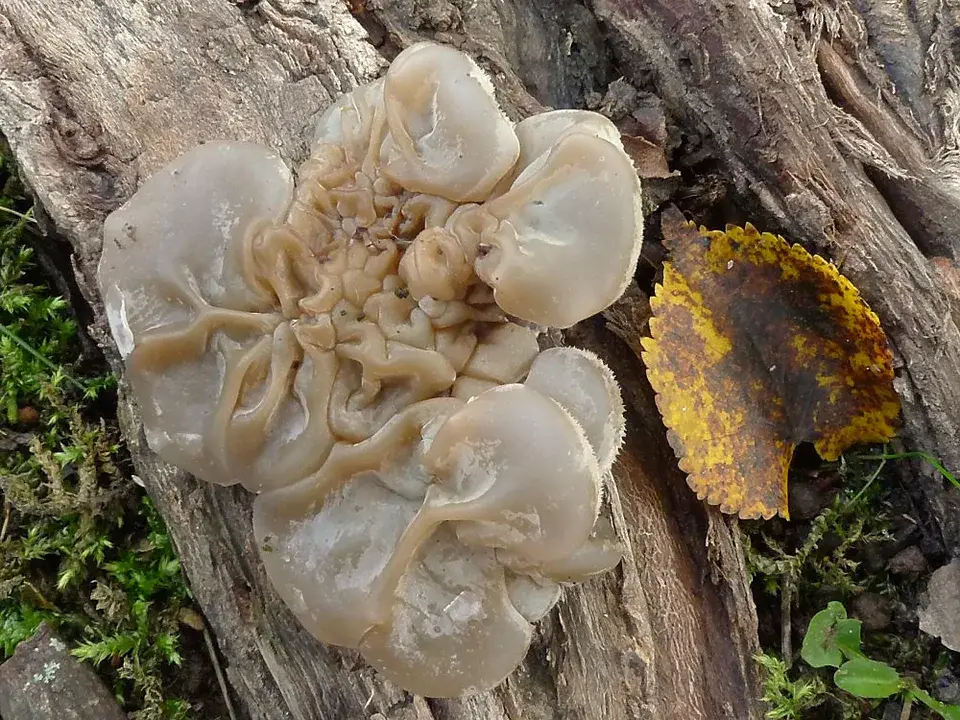

It has a zoned, shaggy-haired upper side and tends to grow in overlapping tiers on broadleaved wood.
View on the map
No matching species found.
Auricularia auricula-judae (Bull.) Quél. · Auriculariaceae
Also: Jelly ear, Jew's ear
Where is it growing now? Open the map Mushroom alert for this species How the mushroom alert works
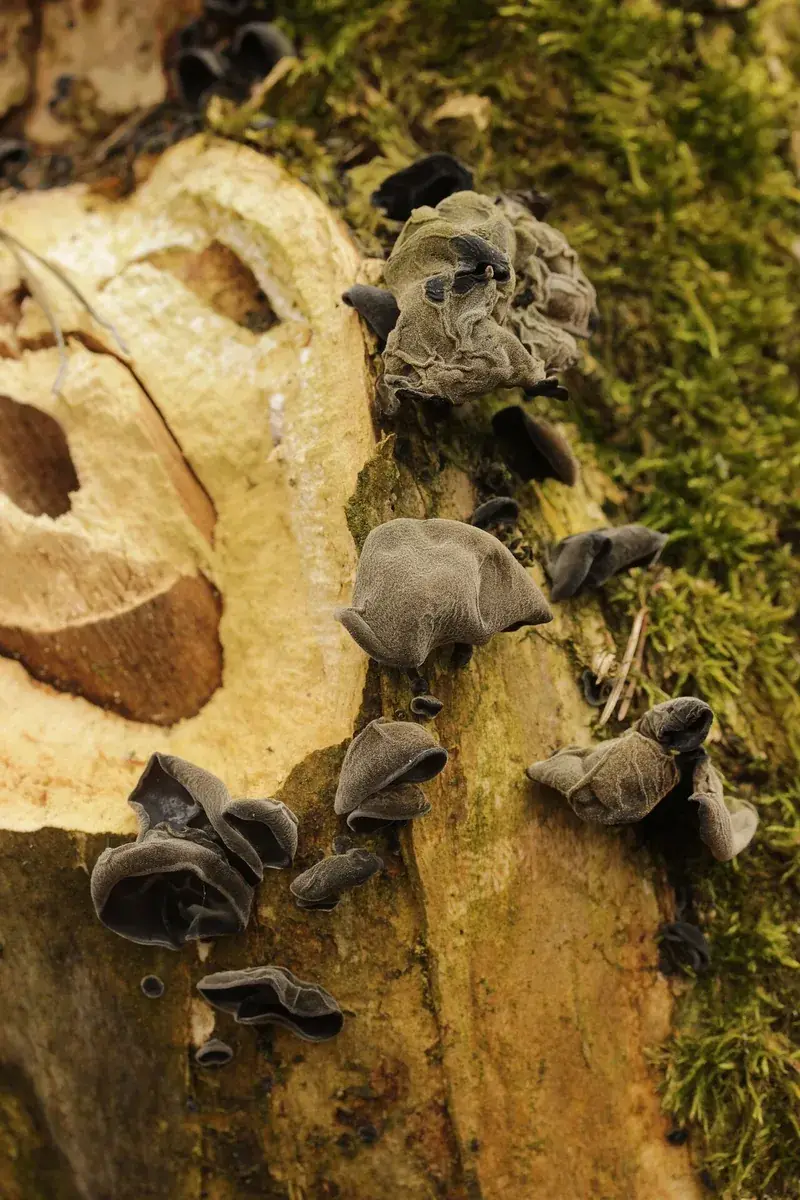
The wood ear is an ear-shaped, jelly-like, reddish-brown fungus that grows mainly on elder. It is edible and related to the Asian mu-err.
It is a filler mushroom without much flavour of its own; cook it well.
It has a zoned, shaggy-haired upper side and tends to grow in overlapping tiers on broadleaved wood.
View on the map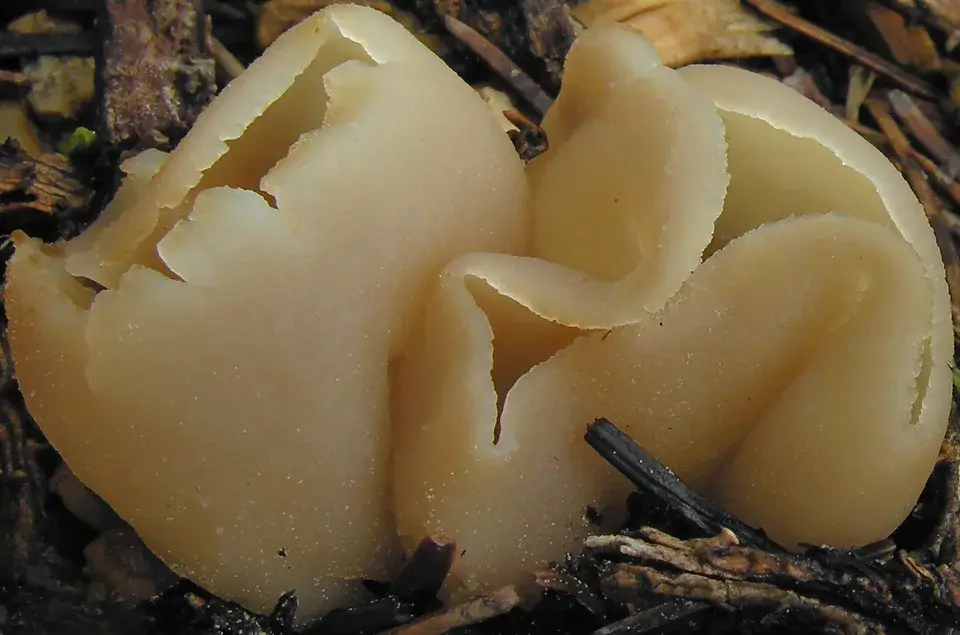
They are brittle rather than jelly-like and mostly grow on the ground.
View on the mapLiving or dead broadleaved wood. Mainly lower altitudes.
Mainly black elder, also false acacia, elm, birch.
possible good main season
All year round, especially in damp winter months.
There are no records per region for this species yet. The country pages lead to all regions with a daily forecast.
How good are the chances of finding this species where you are right now? We calculate it from weather, soil moisture, altitude and forest at your location.
Poison centre:
Emergency: 112 · 999
Poison centre:
Emergency: 112
Mushroom advice: DGfM: find a mushroom expert. Certified mushroom experts of the German Mycological Society (DGfM).
Collecting rules: Mushrooms that are not specially protected may be collected in small quantities for personal use unless a protected area or ban applies. Certain specially protected edible species (e.g. cep, chanterelle, birch bolete) may be collected in small quantities for personal use.
Poison centre:
Emergency: 112 · 144
Mushroom advice: Austrian Mycological Society (ÖMG): mushroom advice. Mushroom advice by the Austrian Mycological Society or regional services such as municipal market offices.
Collecting rules: At most 2 kg of mushrooms per person per day unless the forest owner has prohibited collecting; organised collecting events are prohibited. Additional state rules apply (collecting hours, closed seasons), e.g. Carinthia, Tyrol, Vorarlberg, Salzburg.
Not specially protected.
No species-specific rule known.
Red List Germany: Least concern
In strips for soups, stir-fries and mixed dishes. Cook thoroughly.
Very well suited; it swells up again when soaked. There are indications that Auricularia has a blood-thinning effect; be cautious if you take anticoagulants.
Yes, it is regarded as an edible mushroom. Cook thoroughly. It is a filler mushroom without much flavour of its own; cook it well.
It can be found all year round. All year round, especially in damp winter months. Partner and habitat: mainly black elder, also false acacia, elm, birch. Soil: living or dead broadleaved wood. Altitude: mainly lower altitudes.
The most important one to rule out is the tripe fungus (Auricularia mesenterica, inedible): it has a zoned, shaggy-haired upper side and tends to grow in overlapping tiers on broadleaved wood. Other lookalikes: cup fungi.
No substitute for having your finds checked in person. No guarantee of accuracy. Updated: 17.10.2026.
