FungiFindFungiFind

FungiFind › Mushroom species

Lung oyster

Pleurotus pulmonarius (Fr.) Quél. · Pleurotaceae

Also: Summer oyster mushroom, Indian oyster

Where is it growing now? Open the map Mushroom alert for this species How the mushroom alert works

Identification in 5 steps

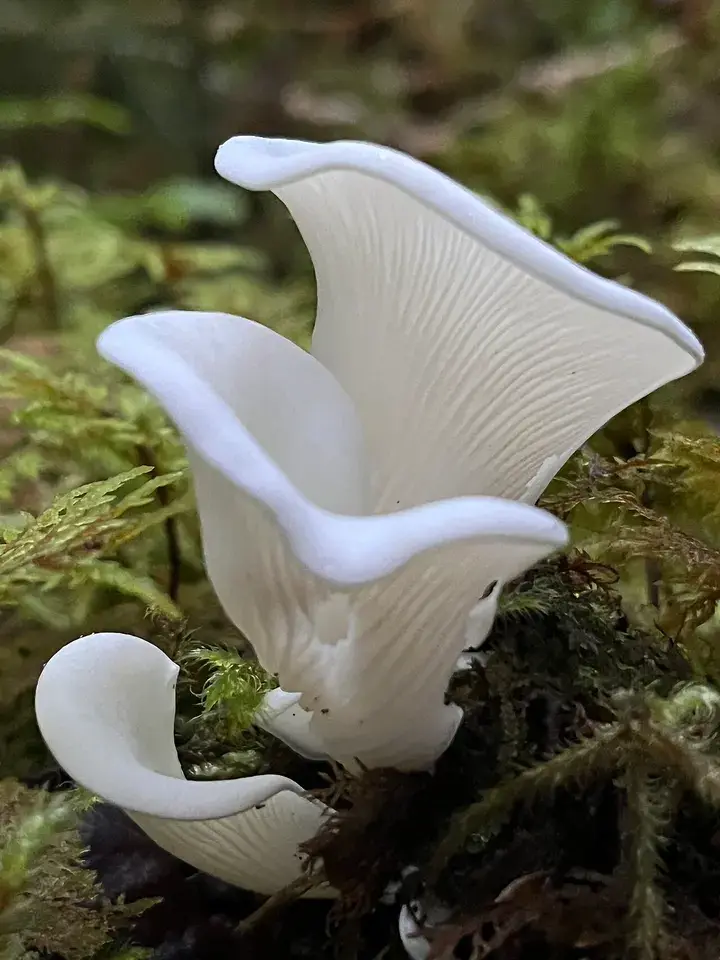
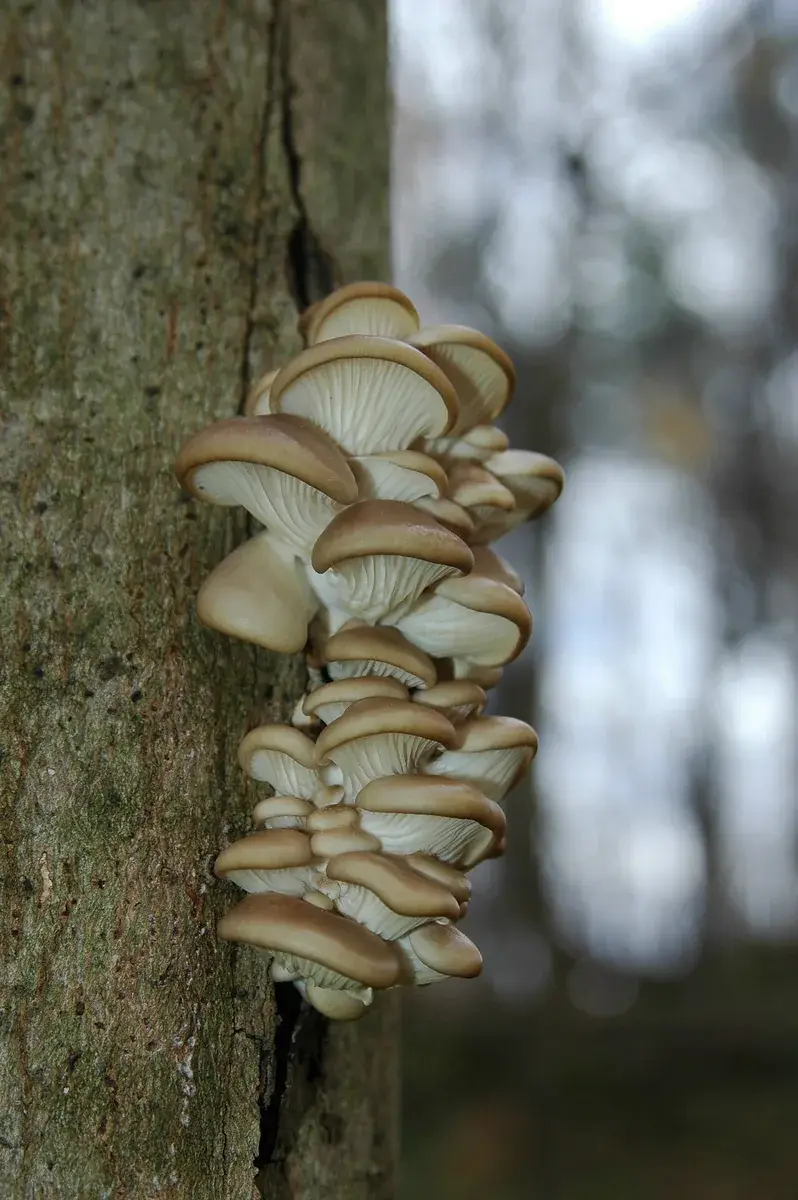
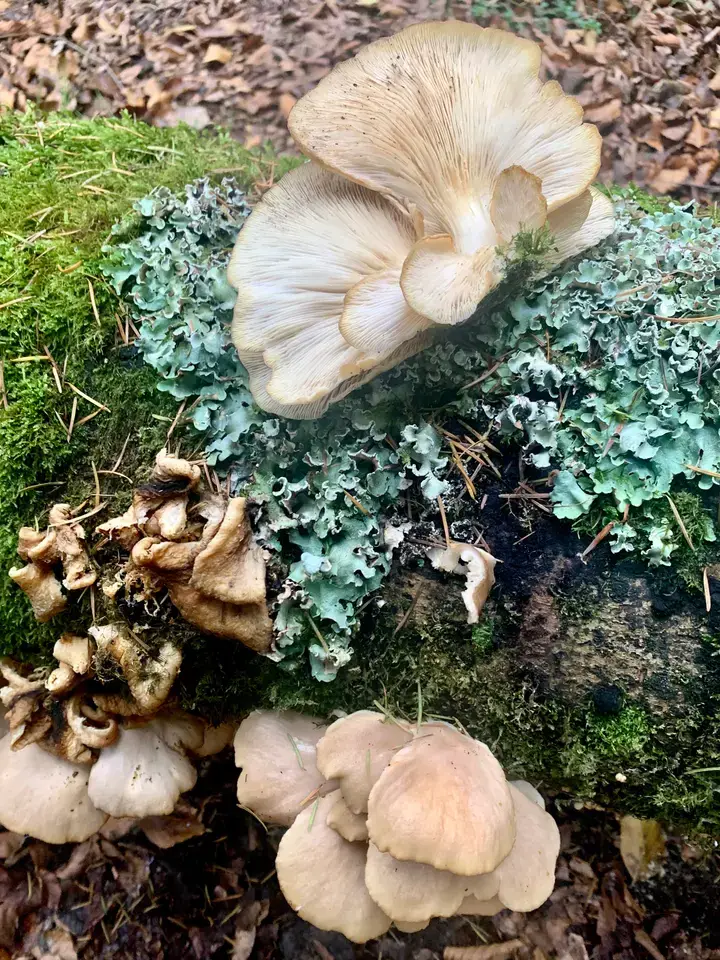
The lung oyster grows in clusters on deciduous wood and is smaller and more delicate than the oyster mushroom. The cap is cream-white to pale beige, never bluish. Fresh fruiting bodies smell of aniseed. It appears in summer and early autumn.

SeasonJune to October
Spore printwhitish to pale lilac-grey
FamilyPleurotaceae
  1. Cap. The cap is shell-shaped to tongue-shaped, cream-white to pale beige, slightly yellowing with age, and without blue tones.
  2. Underside. The gills run down the stem, are white to cream and closer together than in many similar species.
  3. Stem, ring and volva. The stem is short, attached at the side or almost absent, and white-haired at the base. There is no ring and no volva.
  4. Smell and taste. When fresh, the smell is pleasantly of aniseed, and the taste is mild.
  5. Flesh and colour change. The flesh is white and yellows with age.

Lookalikes

The lung oyster is an edible mushroom and very similar to the oyster mushroom. It grows on deciduous wood. It can be confused with angel's wings, which grows only on conifer wood and is considered poisonous.

Branched oyster Pleurotus cornucopiae

edible

The gills run far down the stem and form grooves. The cap is ochre-brownish. The lung oyster usually has only a very short, lateral stem. Also edible.

Side by side

Lung oysterAngel's wingsOyster mushroomBranched oyster
Capshell-shaped, cream-white to pale beige, no blue tonesear-shaped, pure white, thingrey to grey-brown, sometimes bluishochre-brownish to light brown, funnel-shaped
Undersidedecurrent, white to cream gillscrowded, white gillsdecurrent, whitish gillsgills running far down, forming grooves
Stemshort, lateral, white-haired at the baseabsent, cap sits directly on the woodshort, lateral, felty at the baselonger, grooved by the gills
Fleshtender to firm, older mushrooms toughthin, delicate, brittlefirm, fleshyfirm, fleshy
EdibilityEdiblepoisonousedibleedible

Habitat & Season

Dead wood and weakened trunks of deciduous trees. No reliable information.

Host trees

Deciduous wood such as beech, ash, poplar, birch and walnut, as a wood decomposer.

Season

possible good main season

Rough estimate; the fruiting period depends on the weather. The lung oyster appears mainly in summer and early autumn.

Mushroom regions with a daily forecast

There are no records per region for this species yet. The country pages lead to all regions with a daily forecast.

All mushroom regions →

Chance near you

How good are the chances of finding this species where you are right now? We calculate it from weather, soil moisture, altitude and forest at your location.

View on the map

Safety

Never eat a mushroom you have not identified with certainty. Only eat mushrooms you have identified beyond doubt, and always cook them thoroughly.

Advice for your country

United Kingdom

Poison centre:

NHS 111 (England)111

Emergency: 999 · 112

Ireland

Poison centre:

National Poisons Information Centre (public line)(01) 809 2166

Emergency: 112 · 999

Germany

Poison centre:

Giftnotruf Berlin030 19240Giftinformationszentrum München089 19240GIZ-Nord Göttingen0551 19240

Emergency: 112

Mushroom advice: DGfM: find a mushroom expert. Certified mushroom experts of the German Mycological Society (DGfM).

Collecting rules: Mushrooms that are not specially protected may be collected in small quantities for personal use unless a protected area or ban applies. Certain specially protected edible species (e.g. cep, chanterelle, birch bolete) may be collected in small quantities for personal use.

Austria

Poison centre:

Vergiftungsinformationszentrale (VIZ)01 406 43 43

Emergency: 112 · 144

Mushroom advice: Austrian Mycological Society (ÖMG): mushroom advice. Mushroom advice by the Austrian Mycological Society or regional services such as municipal market offices.

Collecting rules: At most 2 kg of mushrooms per person per day unless the forest owner has prohibited collecting; organised collecting events are prohibited. Additional state rules apply (collecting hours, closed seasons), e.g. Carinthia, Tyrol, Vorarlberg, Salzburg.

Conservation and collecting rules

Not specially protected.

In the kitchen

Fried, in sauces or as a vegetable side dish. Use only young, firm caps; older mushrooms turn tough. Cook for at least 15 minutes.

No reliable information on drying. Use only specimens that grow on deciduous wood; on conifer wood the poisonous angel's wings is possible. Stems and older mushrooms are often tough.

Frequently asked questions

Is the lung oyster edible?

Yes, it is considered an edible mushroom, similar to the oyster mushroom. It must be cooked thoroughly.

How do I tell it from the oyster mushroom?

The lung oyster is smaller, more delicate and paler, cream-white to pale beige, without blue tones. It appears earlier in the year, mostly in summer and early autumn.

What can it be confused with?

With angel's wings, which grows only on conifer wood, has no stem and is considered poisonous.

Related species

Mushroom trainer: test yourself

Sources

Photo credits

No substitute for having your finds checked in person. No guarantee of accuracy. Updated: 17.10.2026.

Open the mushroom map